

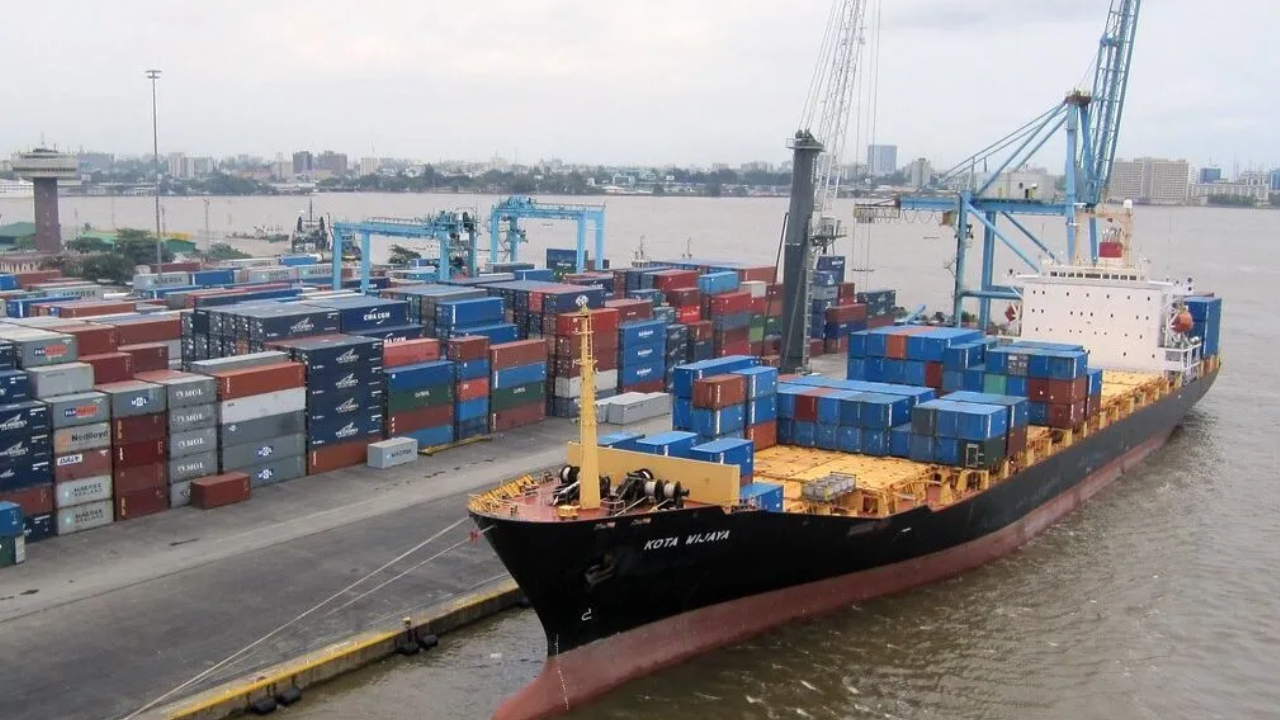

The federal government has launched a Ports and Customs Efficiency Committee (PCEC) to tackle longstanding dysfunction at Nigeria’s ports, where inefficiencies are costing the economy trillions annually.
“This is not just another committee,” said Princess Audu, director-general of the Presidential Enabling Business Environment Council (PEBEC). “It’s a call to action to stop missing opportunities and start implementing the solutions we all agree are overdue.”
The new committee, set up by PEBEC in collaboration with the Nigerian Ports Authority (NPA), will work to reduce cargo dwell time, vessel turnaround time, and eliminate the duplication of manual processes that have plagued Nigerian ports for years.
According to the Lagos Chamber of Commerce and Industry (LCCI), Nigeria loses an estimated ₦6.7 trillion annually to gridlock and inefficiencies at the ports.
“These are not just numbers, these are missed opportunities,” Audu said. “They represent jobs not created, goods not delivered, investments not realised, and economic growth that is unnecessarily delayed.”
Abubakar Dantsoho, director of the NPA, said the authority is focusing on four key pillars including infrastructure, equipment, technology, and human capital, according to BusinessDay.
“Tin Can was built 48 years ago, Apapa nearly a century. No major rehabilitation has taken place. That’s unacceptable,” he said, adding that the recent government approval to reconstruct both ports will increase berth depth and improve cargo capacity.
About 5,000 trucks seek access to Apapa and Tin Can ports in Lagos every day, though they were originally built to accommodate only 1,500 trucks daily.
Dantsoho also announced that the NPA is working with the International Maritime Organization (IMO) to deploy a Port Community System (PCS), a digital backbone for the National Single Window.
“PCS will reduce paperwork, limit human interference, improve transparency, and cut costs,” he said.
But both officials agree the real test is execution.
“NPA cannot do it alone,” Dantsoho said. “Efficiency must cut across every segment if we’re serious about competing globally.