

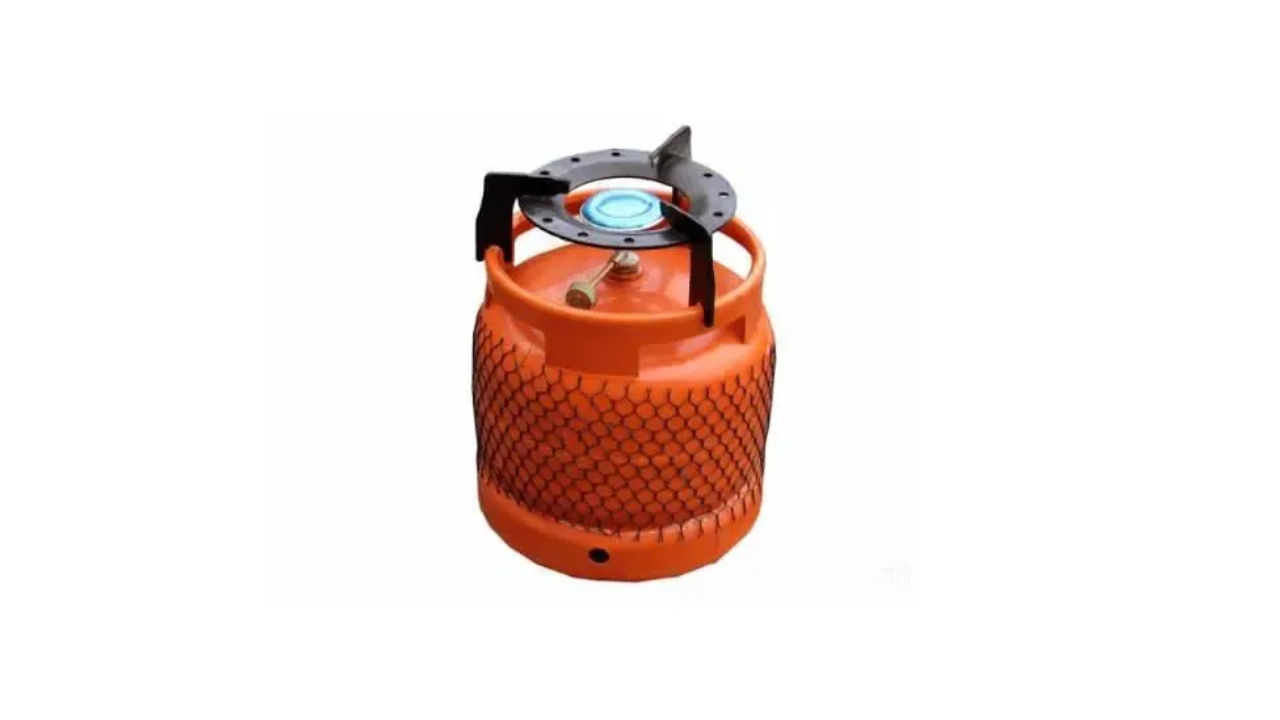

Many Nigerian households are being forced to make difficult choices to cope with the rising expense of cooking gas as the cost of refilling continues to surge.
The latest report from the National Bureau of Statistics (NBS) shows a significant increase in the average price of Liquefied Petroleum Gas (LPG), commonly known as cooking gas, adding to the burden of Nigerians already grappling with high inflation and economic strain.
The average cost of refilling a 5kg cylinder of cooking gas rose by 7.69 per cent in April 2025 to ₦7,885.60, up from ₦7,322.49 in March.
On a year-on-year basis, the increase is even more stark, 20.92 per cent higher than the ₦6,521.58 recorded in April 2024.
For larger families depending on a 12.5kg cylinder, the situation is bleaker.
The average price rose by 9.82 per cent to ₦20,268.06 in April 2025, up from ₦18,456.24 in March. Compared to April 2024, when the price was ₦15,637.74, this marks a 29.61 per cent increase.
Mary Effiong, a caterer, wife, and mother of four, voiced her frustration over the rising cost of gas.
“My children are used to boiling water every time they want to bathe, but with the way gas prices keep skyrocketing, I’ve had to stop them,” she said.
“If there’s no electricity to use the kettle, everyone has to bathe with cold water. Even at my restaurant, we turn off the burner the moment nothing is cooking. There’s no room for ‘I’m washing rice, I’ll use the gas soon,’” she added.
Favour Okpara, a youth corps member, also shared her coping mechanism. “Most times, I end up buying food outside just to save gas.”
While gas prices are rising nationwide, the impact is uneven across states.
Households in Rivers State paid the highest average price for a 5kg refill in April at ₦9,103.82, followed by Ebonyi at ₦8,867.24 and Akwa Ibom at ₦8,655.59.
In contrast, Niger State recorded the lowest average at ₦7,006.15, closely followed by Plateau at ₦7,014.87 and Kebbi at ₦7,032.11.
These disparities highlight the uneven economic pressures faced by Nigerians depending on their region.
A zonal analysis reveals that the South-South region recorded the highest average price for refilling a 5kg cylinder at ₦8,447.78, followed by the South-East at ₦8,351.29. The North-Central had the lowest average at ₦7,432.22.
For the 12.5kg cylinder, Imo State recorded the highest average retail price at ₦22,938.73, followed by Delta at ₦22,831.70 and Rivers at ₦22,759.56. On the lower end, Kebbi had the cheapest refill at ₦18,080.27, followed by Nasarawa and Kwara at ₦18,106.85 and ₦18,173.67, respectively.
Regionally, the South-South again led with the highest average for a 12.5kg refill at ₦21,536.12, followed closely by the South-East at ₦21,528.23. The North-Central zone recorded the lowest average price at ₦19,330.55.
With the continued rise in cooking gas prices, many Nigerians are questioning how long they can sustain the financial strain.
For households already stretched by surging food prices, rent, and transport costs, the rising cost of cooking gas is yet another blow.
A previous report by the NBS revealed that 67.8 per cent of Nigerian households now rely on fuelwood for cooking, with 40.7 per cent having purchased it recently.
This shift to traditional fuels like firewood, charcoal, and kerosene poses environmental and health threats.
The widespread use of these fuels contributes to deforestation, biodiversity loss, and soil degradation, worsening Nigeria’s ecological challenges.
Health experts, including the World Health Organisation (WHO), have warned that indoor use of firewood and charcoal generates toxic smoke, increasing the risk of respiratory diseases, especially for women and children.
In February 2024, the federal government banned the export of LPG in a bid to stabilise domestic prices.
However, the policy has done little to reverse the trend, and many households across the country continue to face an uncertain future, where even the simple act of cooking is becoming a luxury.
BusinessDay