


Heads of federal tertiary institutions have raised the alarm over worsening funding constraints and critical staffing shortages that continue to cripple the smooth running of universities, polytechnics, and colleges of education across Nigeria.
Speaking during a one-day interactive meeting in Abuja with Vice-Chancellors, Rectors, Provosts, and regulatory agencies of federal tertiary institutions in Abuja, the institution leaders painted a bleak picture of delayed salaries, underfunded governing councils, and cumbersome recruitment processes that have left many campuses relying on visiting lecturers due to their inability to hire permanent staff.
As the sector transitions from the Integrated Personnel and Payroll Information System (IPPIS) to the Government Integrated Financial Management Information System (GIFMIS), the officials called for urgent interventions to address persistent bureaucratic bottlenecks and ensure more efficient use of already allocated funds.
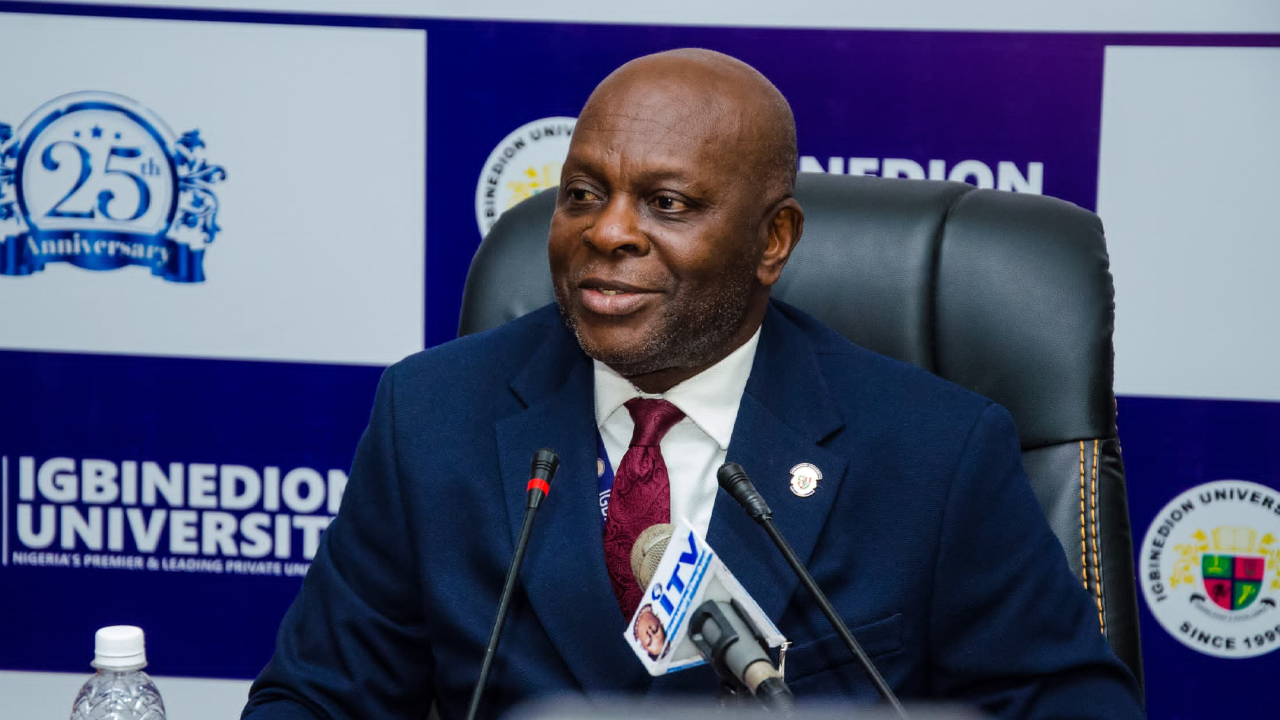
Lawrence Ezemonye, Chairman of the Committee of Vice-Chancellors of Nigerian Universities, decried the dire financial and administrative challenges plaguing Nigeria’s tertiary institutions.
Ezemonye detailed a long list of bottlenecks, including a lack of funding for governing council operations, ambiguity in pension remittances, stalled staff recruitment processes, and delayed budget implementation, hampering the smooth running of polytechnics and universities nationwide.
Ezemonye noted that while governing councils are federally constituted and serve as representatives of the President, there is no line item in the federal budget to cater for their meetings and allowances.
He warned that this oversight puts enormous pressure on limited institutional resources, as management is forced to divert already-constrained funds to support statutory council functions.
He further criticised the complexity and excessive involvement of multiple actors in the payroll processing system, which, he said, often leads to confusion, delays, and errors.
According to him, institutional leaders are constantly being inundated with reminders and redundant instructions, making it difficult to concentrate on key administrative responsibilities.
Ezemonye recommended streamlining roles on the platform to minimise unnecessary role-playing and expedite approvals.
On pension remittances, Ezemonye flagged persistent confusion across institutions regarding who is responsible for deductions, whether it is the Office of the Accountant General or the institutions themselves.
This uncertainty, he said, has fueled disagreements and operational delays, which the current stakeholder engagement ought to clarify once and for all.
A more pressing issue, however, is the worsening staff shortage in tertiary institutions.
Ezemonye disclosed that many institutions are currently relying heavily on visiting lecturers, not out of choice, but due to their inability to employ new full-time staff.
He explained that even when institutions have adequate budgetary provisions for salaries, bureaucratic delays in uploading new staff data to relevant platforms render them unable to pay the newly engaged workers.
“In some cases, institutions wait up to five months for approvals to be processed”, Ezemonye said.
He shared a personal experience where, despite having budgetary approval to hire staff, a letter requesting the upload of new employees remained unattended for weeks.
He expressed frustration that while institutions await clearance to pay small salaries, approvals for large infrastructure spending often sail through unchallenged. This, he argued, undermines efficiency and development in the education sector.
Ezemonye also highlighted the dire state of capital project funding. With the 2024 budget cycle drawing to a close, many institutions have reportedly accessed only 10 to 20 per cent of their allocations.
While implementation delays have consumed up to 50 per cent of available funds, payments have not followed. “Contractors who had completed projects based on anticipated payments are now left stranded,” he said.
Ezemonye urged the Accountant General’s Office to expedite payments so institutions can move forward with the 2025 budget and not remain trapped in backlogs.
Monthly overhead releases, according to him, are also far from satisfactory. “Many institutions have only received two or three releases for the year, and even those were based on outdated budget frameworks”, he added.
He criticised this as a violation of the current fiscal law signed by the President, emphasising that institutions cannot continue operating with allocations based on the previous year’s legislation.
He said the inconsistency is paralysing operations and pushing institutional heads to seek personal loans just to keep things running.
On the issue of payroll transition, Ezemonye applauded the return of the Office of the Accountant General’s officials to campuses but lamented that staff salaries could still not be paid because the Integrated Payroll and Personnel Information System (IPPIS) had yet to re-upload their data to institutional platforms.
He reiterated that tertiary institutions continue to face severe staffing gaps due to deaths, retirements, and transfers. “Though the personnel cost budgets for these positions remain intact, current financial frameworks do not allow institutions to reinvest the savings from these exits into hiring replacements”, he noted.
He warned that this disconnect not only undermines the quality of education and service delivery but also renders the role of governing councils ineffective.
Ezemonye also stressed that the inability to replace existing staff contradicts the government’s commitment to institutional autonomy and disrupts efforts to optimise existing resources.
He called for an immediate review of the framework to ensure that funds earmarked for personnel costs are utilised efficiently and promptly.
While acknowledging the transition from IPPIS to the Government Integrated Financial Management Information System (GIFMIS), Ezemonye maintained that critical issues such as timely salary payments, staff replacement, and better utilisation of personnel budgets must be addressed if the reform is to succeed.
He urged the Accountant General, in collaboration with the Budget Office and the Federal Ministry of Education, to maintain continuous dialogue with the Committee of Federal Rectors and other stakeholders.
According to him, only a reformed GIFMIS framework can effectively meet the needs of Nigeria’s overstretched tertiary institutions.
He appealed on behalf of his colleagues, noting that many rectors and vice-chancellors are under immense pressure to keep their institutions afloat.
He also called for a sufficient and timely allocation of funds, insisting that what institutions need is not favour but rightful access to the resources due to them under law.
“Some of us here have borrowed money just to be present today,” he said, underscoring the depth of the financial strain faced by institutional heads across the country.
The Office of the Accountant General of the Federation (OAGF) has reaffirmed the federal government’s commitment to addressing long-standing payroll challenges in tertiary institutions through a transition from the Integrated Personnel and Payroll Information System (IPPIS) to the Government Integrated Financial Management Information System (GIFMIS), also known as the Government Payroll System (GPs).
Shamsudeen Ogunjimi, Accountant General of the Federation, said the transition is aimed at ensuring a more transparent, flexible, and institution-specific payroll structure that aligns with the operational realities of Nigeria’s tertiary education sector.
Ogunjimi noted that on assumption of office in March 2025, he was confronted with a barrage of complaints from pension fund administrators, state internal revenue services, trade unions, and microfinance institutions over non-remittance of statutory deductions.
These issues, he said, were linked to the abrupt and uncoordinated migration from IPPIS to the new system.
In response, an inter-ministerial technical committee was established to design a framework for a seamless transition, drawing membership from across the tertiary education ecosystem.
According to OAGF, the committee’s report was approved by the Minister of Finance and Coordinating Minister of the Economy and is currently being implemented.
He explained that part of the implementation process required institutions to complete payroll processes on the IPPIS platform for October 2024, create user roles for GPs’ access before the end of that month, and ensure that individual staff accounts were validated and uploaded onto the new platform.
In addition to the payroll transition steps, Ogunjimi said the federal government had resolved to settle outstanding salary payments, promotion and salary arrears, and third-party deductions, while also urging institutions to strictly comply with all operational guidelines.
He acknowledged that non-compliance with some of the initial directives contributed to the complications now being experienced.
To address ongoing concerns, he approved a request by the Bursars of Nigerian Universities (BOSAs) for a collaborative training program on the GPs transition.
The feedback from the Abuja meeting, he added, will be integrated into the curriculum of the proposed training program, which institutions are encouraged to attend when rescheduled.
Steve Ehikhamenor, Director of Funds at the OAGF, welcomed participants and expressed appreciation for the presence of permanent secretaries, heads of institutions, and regulatory agency leaders.
He emphasised that payroll administration remains a cornerstone of financial integrity in tertiary institutions and noted that the meeting presented an opportunity to critically evaluate the migration process, identify issues, and propose practical solutions.
He reiterated that the government’s goal is to strengthen public financial management in the education sector by offering institutions a more flexible and autonomous payroll framework through GPs.
Shaakaa Chira, Auditor General of the Federation, praised the Accountant General for initiating the dialogue, describing it as a timely and strategic move toward improving public financial accountability.
He highlighted recurring issues discovered during statutory audits of federal institutions, such as overpayments, illegal recruitment and placements, non-remittance of statutory deductions, and the payment of unapproved allowances.
These irregularities, he said, have not only led to audit queries and financial losses but have also affected the reputations of several institutions.
Chira called for proactive engagement among stakeholders to diagnose and resolve the root causes of payroll inefficiencies.
He assured participants that the Auditor-General’s office is not only concerned with identifying gaps but also committed to recommending and supporting workable reforms that enhance fiscal discipline and compliance.
On his part, Salisu Shehu Umar, Chairman of the Committee of Federal Polytechnic Rectors (COFER), said the transition to GPs marks a significant milestone in Nigeria’s efforts to modernize tertiary payroll systems.
While acknowledging the initial purpose of IPPIS in curbing payroll fraud and centralising data, he noted that GPs offers much-needed flexibility and institutional ownership by integrating business and financial operations under a single platform.
He encouraged stakeholders to use the forum to clarify roles, set expectations, and resolve operational concerns collaboratively.
He also stressed the need to reposition payroll units within tertiary institutions to meet the technical and administrative demands of the new system.
BusinessDay