

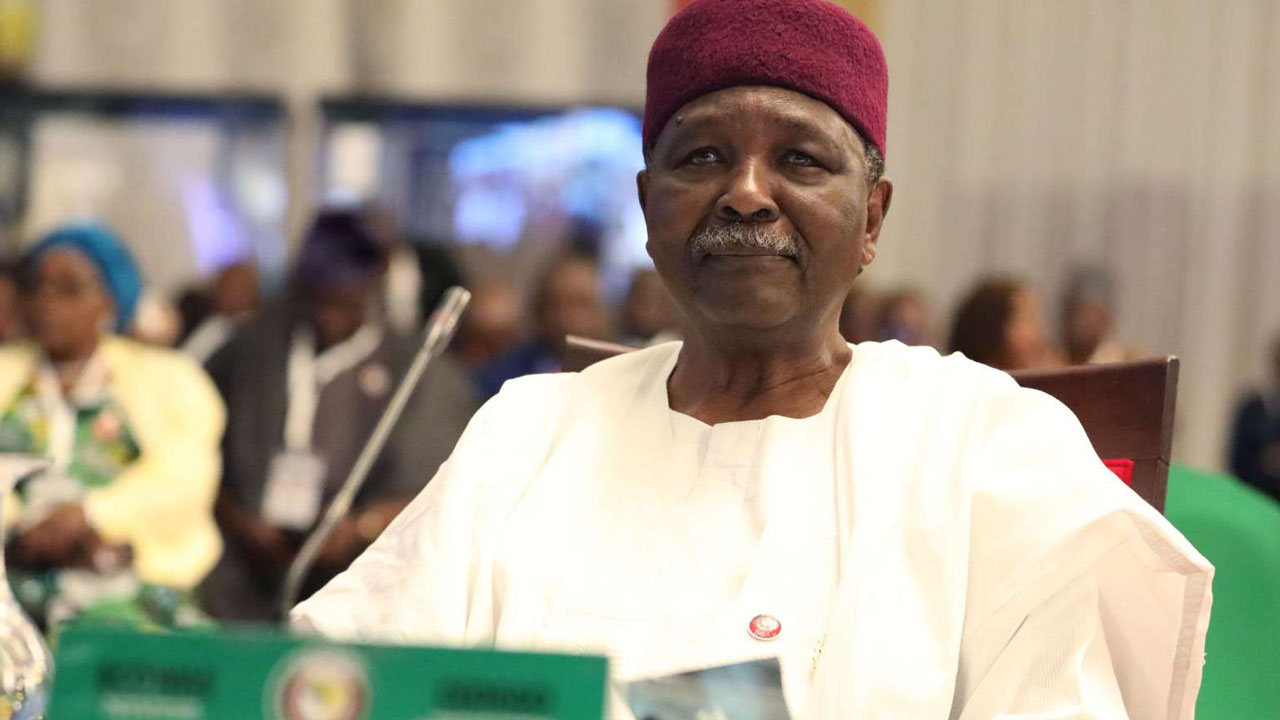

Former Head of State General Yakubu Gowon says the Aburi Accord fell apart mainly because he and Ojukwu disagreed over who would control military forces in Nigeria’s regions, which ultimately derailed efforts to prevent the civil war.
In an interview on Arise TV on Wednesday, Gowon said that while both sides had honest talks at the January 1967 Aburi summit in Ghana, Eastern leader Ojukwu later demanded regional autonomy, which the federal government couldn’t agree to.
Gowon said, “Although we said that the military would be zoned, you know, but the control… he wanted, you know, those zones to be commanded by the governor. Say you have a military zone in the north, it would be commanded by the governor of the military in the east, it would be commanded by, you know, by him.
“And, of course, we did not agree with that one,” Gowon said.
He further explained that the Federal delegation never viewed the Aburi meeting as a forum for constitutional restructuring or military devolution.
“We just went there as far as we are concerned to be able to meet as officers now, and then to agree to be able to get back home and resolve a problem at home. That was my understanding. But that is not his understanding,” he added.
Gowon also revealed that upon returning to Nigeria after the summit, he was ill and unable to immediately respond to the terms Ojukwu had publicly announced. This delay, he said, created space for misunderstanding and unilateral declarations.
“Unfortunately… I was having a serious attack of a kind of fever or whatever it is, and I could not make a decision,” the former Head of State said.
He accused Ojukwu of making unauthorised statements about the Accord without waiting for joint clarification.
“Ojukwu was one who, when he came, he went and made… a statement about the Aburi Accord,” Gowon said.
To address the confusion, Gowon said the federal government convened a follow-up meeting in Benin, inviting all regional governors to agree on the path forward — but Ojukwu declined to attend.
“We had to organise that, you know, a meeting of all the governors. And he was invited to attend so that we can deal with the Accord. And we met at Nifo in Benin. And he did not turn up,” he said.
Gowon insisted that had Ojukwu attended the Benin meeting, the parties might have been able to avoid escalation.
Gowon said the government was willing to work in the “spirit of Aburi,” but would never concede national military control to regional governors, nor accept the possibility of secession.
“The only thing that I added was that no region, you know, will, you know, can secede from the country.”
The collapse of the Aburi Accord is widely regarded as a decisive moment that led to the outbreak of the Nigerian Civil War in July 1967, a conflict that lasted until 1970 and claimed over a million lives.
Gowon’s remarks shed new light on the irreconcilable differences between both sides and reveal that the push for regional military control, rather than just political autonomy, was a red line for the federal government.
The PUNCH