

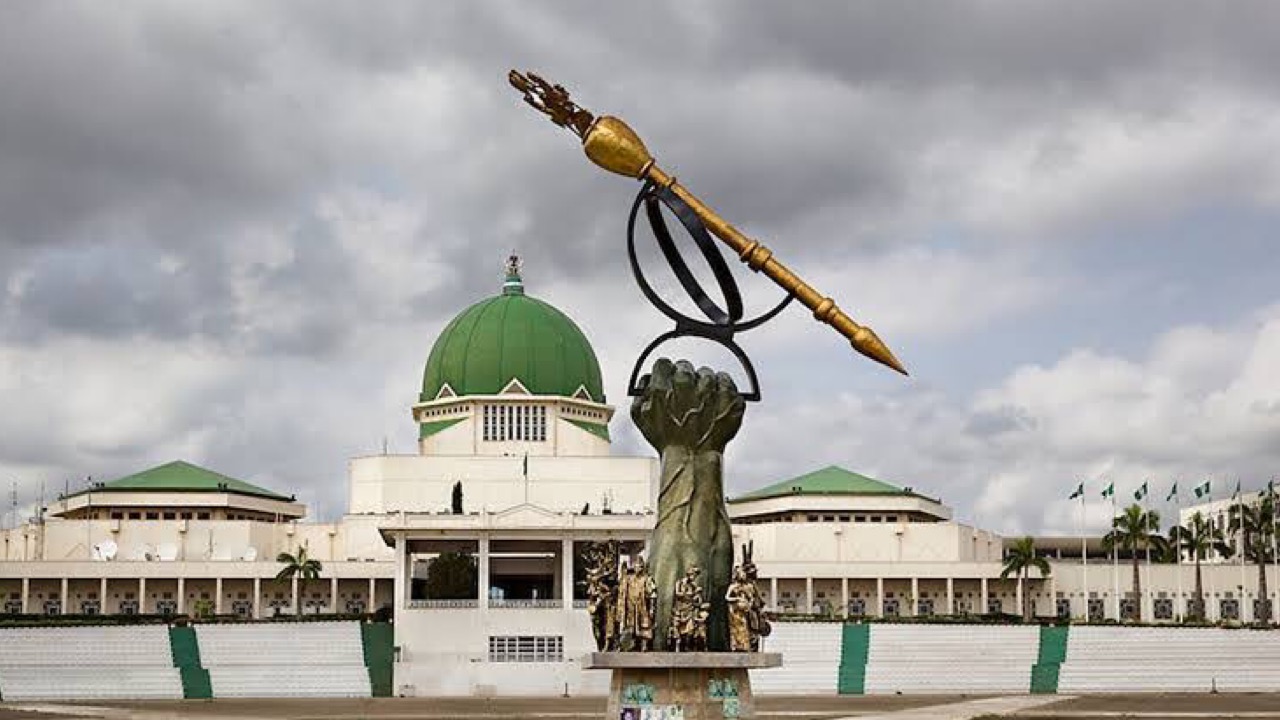

The National Assembly announced on Sunday that it would reconvene its plenary session on Tuesday, February 17, 2026, cutting short its recess amid indications that lawmakers may review the date set for the 2027 presidential election.
Findings showed that the National Assembly may shift the presidential poll to February 13, 2027.
In a notice signed by the Clerk to the National Assembly, Kamoru Ogunlana, senators and members of the House of Representatives were directed to resume sitting at 11 am and adjust their schedules accordingly, as “very crucial decisions” are expected to be taken during the session.
“I am directed to inform all Distinguished Senators and Honourable Members of the National Assembly that the Senate and House of Representatives shall reconvene plenary session at 11:00 am on Tuesday, 17th February 2026, respectively,” the notice read.
“Consequently, all Distinguished Senators and Honourable Members are kindly requested to take note and reschedule their engagements accordingly to enable them attend the session, as very crucial decisions shall be taken by each Chamber during the session,” Ogunlana added.
However, sources within the National Assembly revealed that the public notice masks a more pressing agenda.
“It is more of an extraordinary plenary session to review the 2027 presidential election date as stipulated in the Electoral Act amendment.
That is why our recess has been cut short through the announcement made by the Clerk of the National Assembly,” a senator confided.
“The ultimate aim is to give legislative backing to INEC’s request to address the concerns raised regarding the 2027 election slated to hold during Ramadan,” the lawmaker added.
Another Senate insider said: “If all goes according to plan, the presidential poll date may be brought forward to February 13 from the previously announced February 20 by INEC.”
Similarly, a Senate source said: “This session is crucial. It is about more than dates—it is about ensuring that every Nigerian, regardless of faith, has a fair opportunity to participate in the electoral process. The decisions we take here could define the credibility of the 2027 elections.”
Earlier, INEC acknowledged public concerns over the timing of the 2027 general elections, which coincides with the holy month of Ramadan, a period of fasting and spiritual reflection for millions of Nigerian Muslims.
The commission indicated that it may seek legislative intervention if necessary.
The National Commissioner and Chairman of the Information and Voter Education Committee, Mohammed Haruna, disclosed the development in a statement last Friday, clarifying that the Timetable and Schedule of Activities for the 2027 elections were developed in strict compliance with the Constitution, the Electoral Act 2022, and INEC’s Guidelines and Regulations for the Conduct of Elections, 2022.
According to the statement, INEC had initially slated Saturday, February 20, 2027, for the presidential and National Assembly elections, and Saturday, March 6, 2027, for governorship and state Houses of Assembly elections.
However, Muslim Rights Concern and other Islamic stakeholders rejected the proposed timetable, arguing that it clashes with the Ramadan fasting period, which they consider insensitive to Muslim voters, election officials, and observers.
Former presidential candidate of the Peoples Democratic Party, Atiku Abubakar, was among the notable voices calling for reconsideration.
The latest move by the National Assembly builds on prior proposals to adjust the timing of the 2027 elections.
The PUNCH