

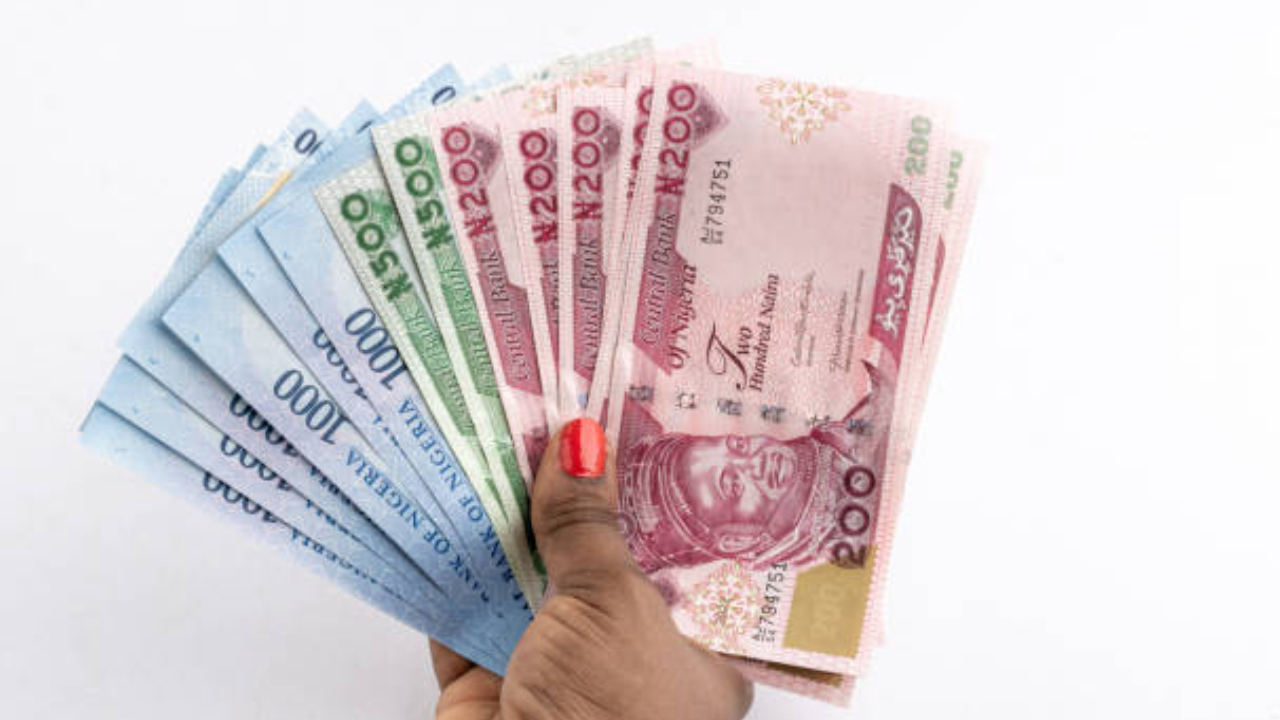

Ministers in charge of key infrastructure and service-delivery agencies are grappling with a severe funding squeeze, as figures obtained showed that MDAs received less than ₦1 trillion for capital projects in the first seven months of 2025.
The data used for this report was the most updated available from the Budget Office of the Federation, as the agency had yet to release comprehensive full-year implementation figures, despite the fiscal year being well advanced.
An analysis of data from the Budget Office of the Federation’s Medium-Term Expenditure Framework and Fiscal Strategy Paper (2026–2028) showed that while ₦18.53 trillion was appropriated for capital expenditure for “MDAs and others” in 2025, the January–July pro rata benchmark stood at ₦10.81 trillion.
However, actual capital releases to MDAs and related entities during the period amounted to just ₦834.80 billion. That left a pro rata shortfall of about ₦9.98 trillion and a performance rate of only 7.72 per cent within the seven-month window.
The numbers show that the capital drought was not occurring in isolation. On the revenue side, aggregate Federal Government revenue for January to July was ₦13.67 trillion, below the pro rata target of ₦23.85 trillion. Oil revenue underperformed sharply, dragging down overall collections despite improvements in some non-oil lines, such as Company Income Tax and VAT.
When placed side by side, the figures highlight how limited capital releases to MDAs were relative to available resources. The ₦834.80 billion spent on MDA capital projects accounted for just about 6.1 per cent of total Federal Government revenue of ₦13.67 trillion during the period. It also represented roughly 4.1 per cent of the Federal Government’s total expenditure of ₦20.40 trillion between January and July.
Even within the total capital envelope recorded, MDAs accounted for a relatively small share. Of the ₦3.60 trillion in total capital expenditure during the seven months, the ₦834.80 billion going to MDAs and related capital votes represented about 23 per cent.
A significant portion of capital spending instead flowed through multilateral and bilateral project-tied loans, which stood at ₦1.68 trillion during the period—roughly double the amount released directly to MDAs. This funding structure underscores the Federal Government’s growing reliance on externally linked financing to sustain capital activity in 2025.
Ministers lament
The Federal Ministry of Health and Social Welfare was unable to implement its 2025 capital budget because only ₦36 million of the ₦218 billion appropriated for the sector was released, according to a disclosure by the Minister of Health, Prof Mohammed Pate.
Pate, who spoke during the Ministry’s 2026 budget defence before the House Committee on Healthcare Services, attributed the poor capital budget performance to cash flow constraints and systemic bottlenecks in the Federal Government’s budget execution process.
“Out of the N218bn appropriated to the health sector by the parliament for the execution of capital projects in the 2025 fiscal year, only N36m was released,” the minister told the committee.
The Federal Ministry of Transportation received only about one per cent of its ₦256.73 billion capital allocation under the 2025 Appropriation Act.
The Minister of Transportation, Senator Saidu Alkali, made this known in Abuja during the ministry’s budget defence before the Joint Senate and House of Representatives Committee on Land Transport.
He noted that the 2026 proposal essentially builds on the 2025 budget, as nearly 70 per cent of projects had to be carried forward into the new fiscal year because of funding shortfalls and delayed releases.
The Federal Ministry of Marine and Blue Economy got only ₦202 million of its ₦3.53 billion capital budget allocation in 2025, representing just 1.7 per cent of budgeted funds, while overhead releases stood at 35 per cent.
The Minister of Marine and Blue Economy, Adegboyega Oyetola, said this while defending the ministry’s budget before a joint sitting of the Senate Committee on Marine Transport and the House of Representatives Committees on Ports and Harbours; Maritime Safety, Education and Administration; Shipping Services; and Inland Waterways, Ocean and Fisheries.
The Minister of Women Affairs and Social Development, Imaan Sulaiman-Ibrahim, also lamented the zero release of the capital component of the ministry’s 2025 budget.
Sulaiman-Ibrahim, on Monday, appeared before the Senate Committee on Women Affairs to defend the ministry’s 2025 budget performance and proposal for the 2026 fiscal year.
According to her, of the ₦89.8 billion approved for capital expenditure for 2025, only ₦394.8 million was released. This, she said, represented 0.44 per cent release, with 99.56 per cent not released, a development the minister attributed to non-performance of the ministry’s capital projects.
The Accountant-General of the Federation, Dr Shamseldeen Ogunjimi, came under intense scrutiny as the Senate Committee on Finance grilled him over zero capital allocations to several MDAs, non-payment of executed contracts, and complaints surrounding the Centralised Payment System.
Responding, Ogunjimi attributed the crisis to what he described as indiscriminate contract awards by MDAs without confirmed funding, prompting a directive barring agencies from awarding contracts without available funds.
He acknowledged operational challenges with the Centralised Payment System but assured lawmakers that the issues were being addressed to ensure seamless implementation.
However, the Minister of Budget and Economic Planning, Senator Abubakar Bagudu, earlier dismissed claims that the Federal Government’s budget is in disarray, insisting that while revenue pressures exist, the fiscal situation is not unusual.
Speaking last Wednesday on ARISE NEWS, Bagudu rejected assertions that the 2025 budget was in “shambles,” saying: “The budget, which you said is in shambles, no, I disagree with you.”
He added that Nigeria, like many democracies, is contending with revenue constraints and competing expenditure demands. “We are like many countries, we are struggling with many pressures to raise revenue to where it should fund our budget to 100 per cent, to ensure that we meet our obligations, particularly debt service.”
He explained that global economic headwinds were also affecting revenue flows and budget planning, noting that revenue and expenditure mismatches are not peculiar to Nigeria, describing them as “a fact of life in any budget system, particularly in a democratic system.”
He pointed out that even advanced economies have faced similar challenges, citing instances of budget shutdowns abroad, and recalled that capital budget implementation had historically been weak in some years.
“In some years, even when oil prices were 147, our capital budget performance was significantly lower than 40 per cent,” he said, arguing that the current situation must be viewed within a broader historical context.
The minister maintained that the administration’s reforms were designed to stabilise public finances and improve revenue generation across all tiers of government. While acknowledging that “we are not where we want to be,” he stressed that the government was taking steps to strengthen fiscal performance.
The PUNCH