

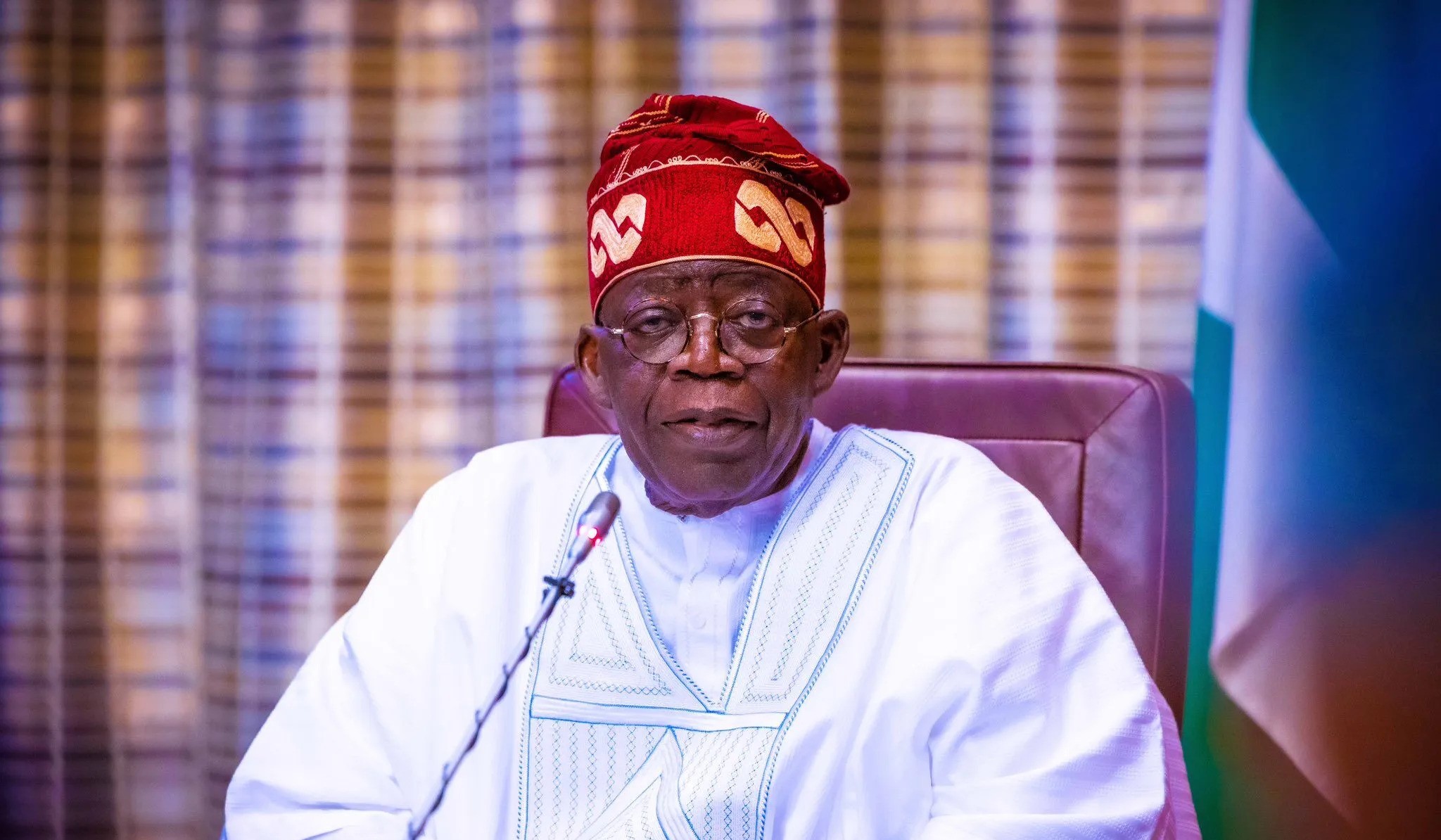

Opposition parties and civil society organisations have condemned President Bola Tinubu’s assent to the Electoral Act 2026 (Amendment), describing the move as a setback to Nigeria’s democratic progress and a legalisation of electoral manipulation ahead of the 2027 general elections.
The Peoples Democratic Party (PDP), on Wednesday, alleged that the ruling All Progressives Congress’s fear of losing the upcoming elections drove what is called the rushed approval of the contentious legislation, which the party described as a threat to the country’s democratic process.
President Tinubu signed the Electoral Act 2026 (Amendment) into law around 5pm on Wednesday at the Aso Rock Presidential Villa, Abuja, with senior National Assembly officials in attendance.
It came barely 24 hours after the bill was passed by both chambers of the National Assembly.
During the ceremony, Tinubu raised concerns about Nigeria’s current broadband infrastructure and technical capacity to handle real-time electronic transmission of election results, even as he signed the Electoral Act 2026 (Amendment) into law.
At the signing ceremony, President Tinubu raised concerns about Nigeria’s current broadband infrastructure and technical capacity to handle real-time electronic transmission of election results.
“Maybe Nigeria should question our broadband capability. How technically are we today? How technically will we be tomorrow to answer the call of either real-time or not,” the President said, addressing principal officers of the National Assembly who had transmitted the bill to him for assent.
The President emphasised that the credibility of elections depends more on proper human management and oversight than on electronic systems, noting that voters still cast their ballots manually, and results are still counted and sorted manually at polling units.
“No matter how good a system is, it’s managed by the people, promoted by the people, and result is finalised by the people.
“In fact, for final results, you are not going to be talking to the computer.
“You are going to be talking to human beings who announce the results,” he said.
But in a statement by its National Publicity Secretary, Ini Ememobong, the PDP called the development “a dark day for democracy.”
He stated, “The hurried grant of presidential assent to the contentious bill, as passed by both chambers of the National Assembly, despite widespread opposition from Nigerians, confirms that this was a well-choreographed drama by the APC.
“The party’s fear of inevitable defeat in a free and fair election is palpable, and they can no longer conceal it. This is indeed a sad day for democracy.
“The Nigerian people have been dealt a bad hand, one that existentially threatens democratic governance. The President has demonstrated an inability to rise above partisanship in the art of governance.”
The Executive Director of YIAGA Africa, Samson Itodo, described the bill as “a step backward rather than a reform.”
He also criticised provisions related to INEC’s independence and electronic transmission of results, saying, “When you look at electronic transmission of results, the provision adopted by the National Assembly is completely against what citizens demanded because what they have done is they have made the process more vulnerable to manipulation.”
Meanwhile, the Country Director of Accountability Lab, Friday Odeh, described the amendments as a potential threat to election integrity.
Odeh stated, “There is a huge danger of rigging. We know there has been progress made, but again, for me, it looks like a huge reversal of the progress that has been made. And this is legalising rigging in a very formal way.”
However, the Executive Director of the Civil Society Legislative Advocacy Centre, Auwal Musa, offered a more measured perspective, acknowledging that while the law was not perfect, it provided a framework for future improvement.
“Well, as it is now, since the National Assembly and the President did not yield to the call by Nigerians to ensure that we have electoral law that is acceptable by us, improve the electoral transparency and boost confidence of Nigerians to even participate in the election, I think whatever it is, we just have to manage with what we have now.
“We just have to accept this law and continue to advocate for an improved electoral law in Nigeria,” Musa explained.
Opposition kicks
The Labour Party caucus in the House of Representatives also condemned what it called the hurried assent granted to the Electoral Act Amendment Bill 2026 by President Tinubu..
Despite an overwhelming rejection of the altered version, which recognised both electronic transmission and manual transmission in the event of the failure of technology, the APC lawmakers voted in the majority, forcing the opposition to stage a walkout.
Reacting to President Tinubu’s assent to the legislation, leader of the caucus, Mr Afam Ogene, said he wondered why the development took place at the speed of light.
In a statement issued on Wednesday, the Anambra lawmaker said, “It is quite interesting that, even before the ink with which the parliament crossed the t’s and dotted the i’s on the clean copies of the bill dried up, the President has gleefully put his imprimatur on the bill, leaving Nigerians to wonder if, indeed, the executive had ample time to look through the document.”
He added, “Gone with the signing are the genuine concerns of apprehensive Nigerians regarding what the new Act portends to the integrity of the country’s future elections.
“In fact, Nigerians and indeed the world must now begin to see the clear difference between campaign promises and actual motives of political players.
“While it is convenient outside the confines of power to oppose incremental increase in the price of petroleum products, it is convenient to pronounce ‘subsidy gone’ when they have the opportunity.”
CUPP slams Tinubu
The Coalition of United Political Parties also criticised the President and the National Assembly for undermining the will of Nigerians.
CUPP National Secretary, Peter Ameh, stated, “President has been collaborating with the National Assembly all along to undermine the wishes and aspirations of our citizens.
“The effort for a mandatory electronic transmission of election results had already been approved, but they were attempting, using their majority, to brazenly act in disregard of the people.
“Democracy is not built around elective officials; it is built around the citizens.”
Ameh said after prior consultation with all zones, it was agreed that electronic transmission should be mandatory.
Yet, resources were spent on charades, traveling from one zone to another, pretending to act transparently and truthfully for the benefit of the election, only to reverse provisions that would have strengthened the electoral process, he stated.
“The President quickly signed the Electoral Act into law after working with the National Assembly to include manual transmission, against the demand of many Nigerians, instead of mandating only electronic transmission of results,” he asserted.
According to Ameh, the new mandate for electronic and real-time transmission of results will empower more Nigerians and strengthen the electoral process against rigging, and they will be voted out in 2027.
“However, they colluded against the Nigerian people by adding a manual transmission clause for their convenience and hurriedly signing it into law, because they fear credible elections.
“This is totally disheartening and disappointing. I am also disappointed with the opposition,” he lamented, adding that they should not rely solely on breakthroughs or isolated issues but must collaborate and develop a stronger, more coherent strategy.
“Leadership requires putting pressure on the National Assembly, which has surrounded itself with the executive and consistently underperformed.
“They are clearly afraid of elections, which makes the times ahead very challenging,” he argued.
The PUNCH