

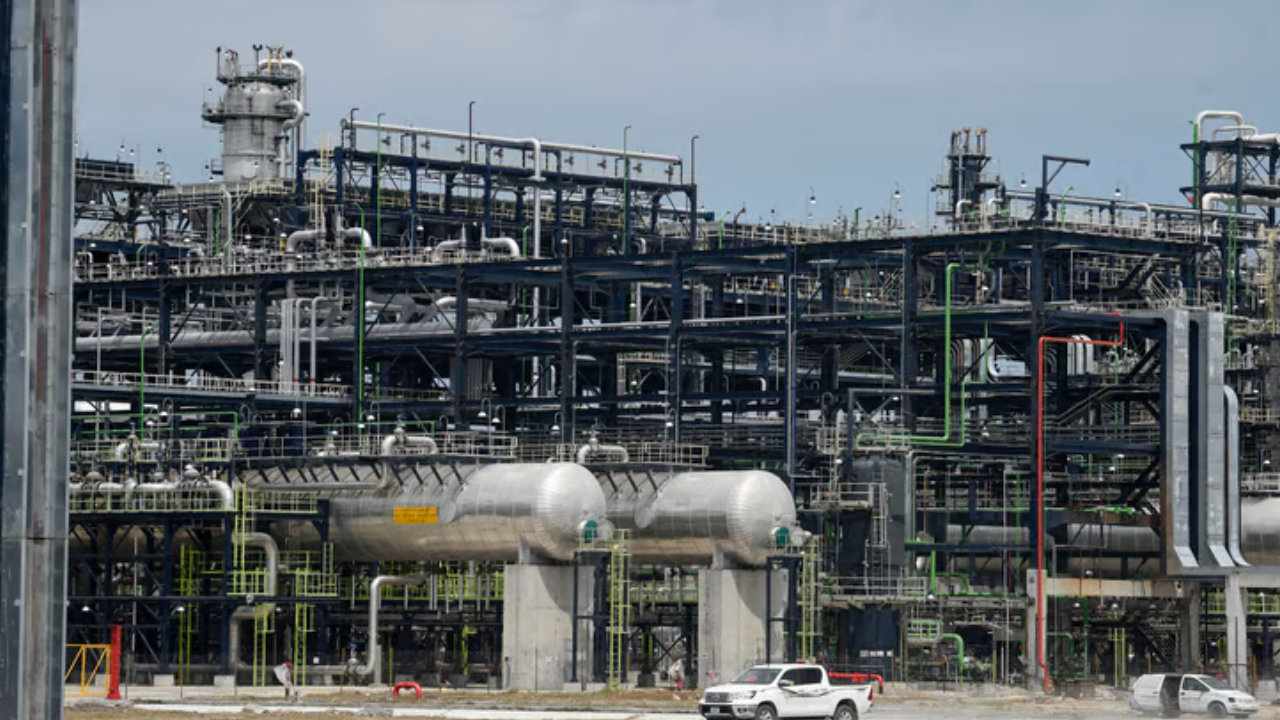

The Dangote Petroleum Refinery accounted for about 92 per cent of Nigeria’s daily petrol supply in February, as the Federal Government has paused the importation of Premium Motor Spirit (petrol).
This came as filling stations on Tuesday retained petrol prices at above ₦1200 per litre despite a ₦100 reduction in the gantry price by the Dangote refinery.
Multiple sources at the Nigerian Midstream and Downstream Petroleum Regulatory Authority and among major fuel-importing companies confirmed on Tuesday that no licences had been issued for fuel imports this year.
According to sources at the NMDPRA, the country does not need to import petrol now, as local refining can meet the country’s daily fuel needs.
“It’s correct that we’ve not issued import licences this year. It is obvious that the local production has met national requirements. So, there’s no need for importation,” an impeccable source at the NMDPRA, who spoke to one of our correspondents in confidence due to the lack of authorisation to speak on the matter, stated.
Figures released in the February 2026 fact sheet by the NMDPRA show that local refineries supplied 36.5 million litres per day of petrol in February 2026, while imports contributed just three million litres per day.
This brought the total national daily supply for February to 39.5 million litres, with domestic refining accounting for roughly 92 per cent of the volume, a sharp shift from the long-standing dependence on imported fuel. The data indicates a drastic drop in imports compared with the previous month.
Currently, the Dangote refinery is the only plant that produces petrol, as other modular refineries basically refine crude for the production of Automotive Gas Oil (diesel).
In January 2026, petrol imports by oil marketing companies and the Nigerian National Petroleum Company Limited averaged 24.8 million litres per day, while domestic refineries supplied 40.1 million litres per day, pushing total daily supply to 64.9 million litres.
The NMDPRA noted that the sharp reduction in imports caused overall supply to decline significantly in February. The regulator’s report stated, “PMS supply in February 2026 reduced by 25.4 million litres per day due to a significant drop in imports.”
The trend signals a major restructuring of Nigeria’s fuel supply chain, with local refining—particularly output from the Dangote facility—beginning to dominate the market.
Earlier data in the fact sheet show that imports historically accounted for a substantial portion of the petrol supply in Nigeria. For instance, in December 2025, imports averaged 42.2 million litres per day, compared with 32.0 million litres per day from domestic refineries, resulting in a total daily supply of 74.2 million litres.
In the early months of 2025, total daily supply hovered between 43.7 million litres in January and 57.1 million litres in May, with domestic refineries contributing a modest 18 to 25 million litres per day, representing about 32 to 47 per cent of the market.
Imports filled the gap, peaking at 38.6 million litres per day in May 2025 as demand pressures mounted. September 2025 recorded the lowest total supply of 39.7 million litres. Dangote supplied 17.6 million litres daily, while 22.1 million litres were imported each day. The NMDPRA said there was a low petrol supply in September, prompting the granting of licences for importation.
However, a recovery began in October with a total of 46 million litres per day, out of which Dangote supplied just 17.1 million litres daily. November 2025 recorded huge petrol imports. Total supply jumped to 71.5 million litres per day, driven largely by a surge in imports to 52.1 million litres per day – the highest import volume in the dataset. The Dangote refinery domestically supplied a paltry 19.5 million litres per day in the 11th month.
Dissatisfied, the President of the Dangote Group, Aliko Dangote, accused the former Chief Executive of the NMDPRA, Farouk Ahmed, of economic sabotage, saying he issued “reckless” licences even while his tanks were full.
By December 2025, the Dangote refinery’s influence became evident: domestic supply doubled to 32 million litres per day, pushing the total to a peak of 74.2 million litres per day, even as imports eased slightly to 42.2 million litres per day.
However, the steady ramp-up of local refining capacity has begun to reverse that trend. The January and February figures showed that the Dangote refinery has overtaken importers to dominate the petrol market, especially under the new leadership of the NMDPRA.
The surge in domestic supply in late 2025 and early 2026 is significantly reducing Nigeria’s reliance on imported petrol. While many stakeholders said the development could reshape the downstream sector by reducing foreign exchange demand for fuel imports and altering the role of traditional fuel importers, some feared that it could promote monopolistic tendencies.
But the Dangote refinery said it had hit its full capacity of 650,000 barrels per day, supplying over 50 million litres of petrol to the domestic market daily.
However, an operator, who sought anonymity due to the sensitive nature of his position, expressed concern over the development, saying Nigerians may be at the receiving end.
“The NMDPRA has not issued any licence for petrol imports this year. Dangote is gradually enjoying a monopoly in the downstream, and we all know that this is not healthy for any sector.
“The price of imported petrol was lower than the locally produced petrol from the refinery, and this was captured by MEMAN in their last report. This tells you that it won’t be right to allow a monopoly in the downstream. It won’t be in the interest of the country.”
Amid the ongoing tension in the Middle East and its attendant fuel price hikes, Dangote assured Nigerians of a sufficient fuel supply.
The February data showed that the country’s average daily supply of petrol dropped to 39.5 million litres per day, down from 64.9 million litres per day in January 2026, due to a lack of imports. The figures indicate a decline of 25.4 million litres per day, representing a 39.1 per cent drop month-on-month.
NMDPRA said oil marketers imported an average of three million litres of petrol per day in February, amounting to 84 million litres for the 28-day period, compared with an average daily supply of 36.5 million litres from domestic refineries, which translated to about 1.022 billion litres within the same period.
The PUNCH