

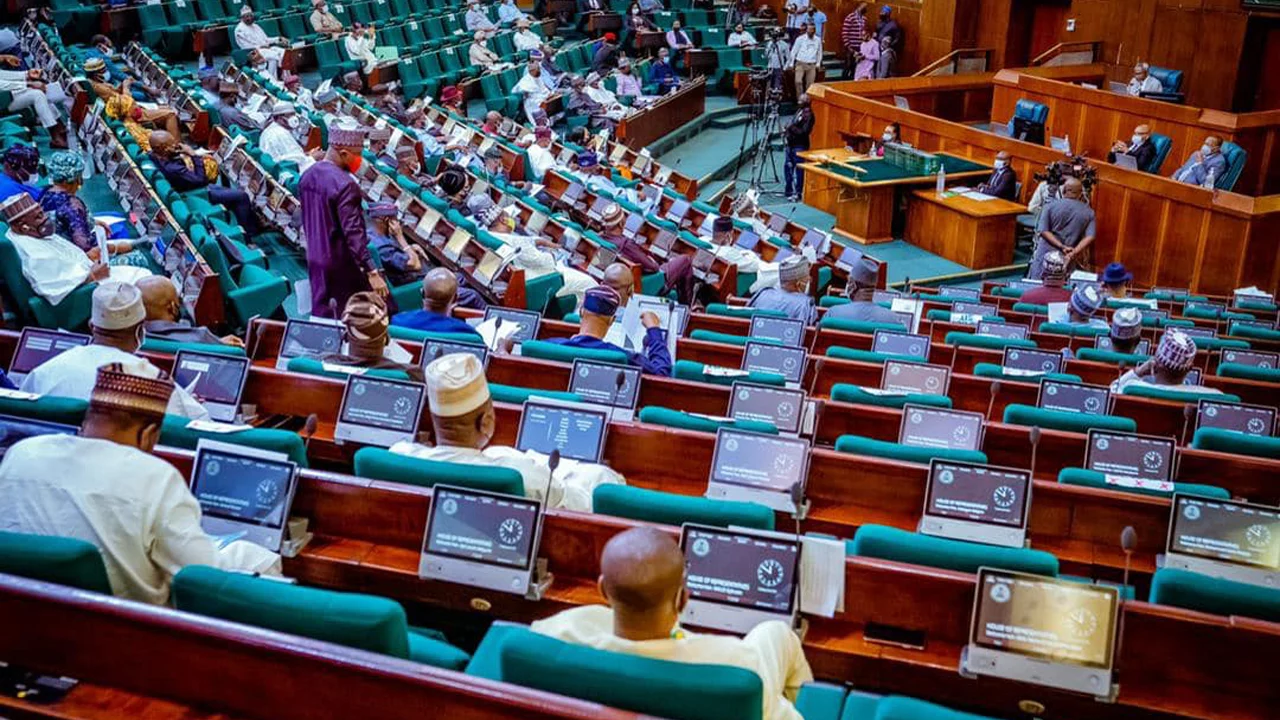

The House of Representatives on Wednesday amended the Electoral Act 2026 to prohibit individuals from holding membership in more than one political party at the same time.
Under the amendment, anyone found guilty of belonging to multiple political parties simultaneously could face a fine of ₦10 million, a maximum prison term of two years, or both.
The proposed amendment introduces three new subsections to Section 77 of the Act, which deals with political party membership.
The provision states that any individual discovered to be registered in more than one political party at the same time would have such memberships declared invalid.
“A person shall not be registered as a member of more than one political party at the same time.
“Where it is established that a person is registered as a member of more than one political party at the same time, such dual membership shall be void, and the person shall cease to be recognised as a valid member of any political party pending regularisation in accordance with the provisions of this Act and the constitution of the political party concerned.
“A person who knowingly registers or maintains membership in more than one political party at the same time commits an offence and is liable on conviction to a fine of N10m or to imprisonment for a term of two years, or both,” the provision read.
If eventually signed into law, the amendment is expected to strengthen the legal framework regulating party affiliation and introduce criminal penalties for violations relating to party membership.
The move by the House comes amid growing concerns over cases of politicians allegedly maintaining links with multiple political parties, a practice critics say undermines party discipline and weakens Nigeria’s electoral system.
While the law already requires citizens to belong to only one political party at a time, enforcement has largely been administrative, with limited legal consequences for violations. Lawmakers pushing the amendment argue that the absence of clear criminal sanctions has allowed some politicians to exploit loopholes in the system.
The issue has gained prominence in recent years following frequent political defections and disputes over party membership registers, particularly during primary elections and candidate nominations.
Observers have also linked the problem to the internal crises that often plague major political parties such as the All Progressives Congress and the Peoples Democratic Party, where allegations sometimes emerge that individuals maintain parallel affiliations in order to influence party processes or hedge political interests.
Supporters of the amendment argue that introducing strict penalties for dual party membership would help reinforce party discipline, improve transparency in party registers and strengthen the integrity of Nigeria’s electoral process overseen by the Independent National Electoral Commission.
The PUNCH