

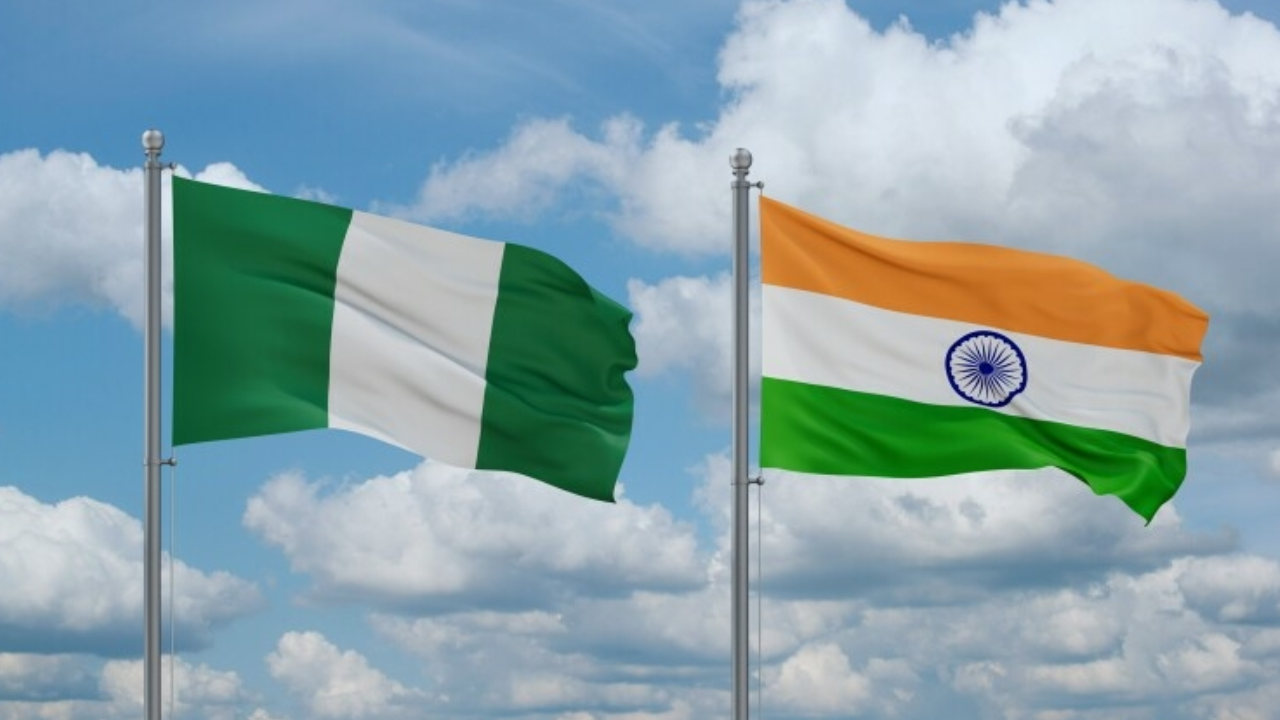

Some Nigerians in India have raised the alarm over what they described as increased racial profiling and brutalisation by the Indian police.
They lamented visa regularisation challenges and high renewal fees, which they said had made life unbearable in the Asian country.
Some of the residents alleged that some Nigerian students were physically assaulted, adding that reporting to the authorities had changed nothing.
NANs outcry
The allegations are coming amid growing agitations by student bodies demanding urgent diplomatic intervention in the situation.
The National Association of Nigerian Students (NANS) recently staged a peaceful protest at the Indian High Commission in Abuja over what it described as “alarming reports” of inhumane treatment of Nigerian students in India.
NANS issued a seven-day ultimatum to the Federal Government for urgent diplomatic engagement, warning that it would escalate advocacy actions nationwide if the issues were not addressed.
Speaking with journalists during the demonstration, the NANS Vice President (Special Duties), Abubakar Mallawa, decried the alleged ill-treatment of Nigerians, adding that the association had received multiple distress reports from students in Indian cities, particularly Mumbai, over visa challenges, discriminatory practices and systematic profiling.
He noted that the affected students and other Nigerians engaged in legitimate businesses had faced difficulties in renewing visas, mass arrests linked to immigration status, denial of rental accommodation based solely on nationality, closure of Nigerian-owned shops, confiscation of goods, and, in some cases, forceful entry into residences and detention under degrading conditions.
The group also raised concerns over the visa application process, alleging that Nigerian applicants were often required to pay interview and processing fees but denied visas without clear explanations.
In a recent interview on Arise TV, the National Secretary of NANS, Anzaku Shedrack, said the group had been receiving disturbing videos showing the brutalisation of Nigerians in several parts of India, and called on the Ministry of Foreign Affairs to intervene.
A video clip played by the TV station showed some suspected Indians attacking and stoning an individual, said to be a Nigerian, on the floor.
In an interview, the Education Coordinator of the Association of African Students in India, Rajasthan chapter, Abisola Williams, said Nigerians were going through tough times in India.
Williams also admitted that Nigerian students were seriously affected by regularisation challenges.
The third-year physiotherapy student explained that India does not grant permanent residency to international students.
“It’s either you’re a student or a professional with a work visa. As for Nigerians, we have to renew our visas every year, as students or professionals,” she said.
Williams noted that Indian authorities reserved the right to deny visa extensions to students who failed to meet academic or financial obligations.
Another Nigerian student in Delhi, who spoke on condition of anonymity, alleged that Nigerians were required to pay 10,000 rupees (about N146,000) every three months to renew their visas, a fee she claimed is lower for students from other African countries.
“Other students from other African countries do not pay for it. We were told it was an agreement between the Indian and Nigerian governments for students to pay every three months. I know Zimbabweans who are not paying to renew visas, while Ghanaians pay a maximum of 500 rupees, which is about N8,000. This is just unfair. That’s the cross Nigerians bear to regularise their stay in India. They don’t give us enough time to raise the money. But for other nationals like Zimbabweans, they get about eight months before their next visa expires,” the student said.
She added that the fee was not disclosed during visa processing in Nigeria and that many students only became aware of it after arriving in India.
The student further alleged that Indian police actively track Nigerians, whose visas had expired, leading to arrests, intimidation and deportation.
“When my visa was about to expire, I went to renew it, but was surprised to learn it was 10,000 rupees. After that, the police came looking for me because I had not renewed my visa.
“I have seen male students who were bullied and harassed because of this. They don’t believe we live by the rules. Anything that goes wrong is attributed to Nigerians, and it’s unfair.
“There are people who have faced serious injustice in the hands of these officers. Some were taken to deportation camps. I knew someone who was deported to Nigeria for this,” she said.
Drug crimes in India
No fewer than 50,000 Nigerians are believed to be resident in India.
Analysts believe that the Nigerian community is being targeted due to increased arrests of some people from the country for alleged drug trafficking.
In 2024, Indian agencies arrested 660 foreign nationals for drug-related crimes.
No fewer than 106 of the suspects were reported to be Nigerians, the second highest. Nepal was first on the list with 203 nationals.
Also, 2,356 Nigerians were deported by India between 2019 and 2024, with removals quadrupling from 339 in 2021 to 1,470 in the 2023-2024 fiscal year.
Nigerians are police informants – Diplomat
But a diplomat in India said some Nigerians were being used as informants by the Indian police.
The official, who spoke on condition of anonymity, alleged that such people were usually induced with money.
“Fellow Nigerians report one another to the police when they have disputes. They become informants because the authorities give them a share. When Nigerians are arrested, the police extort money from them, and the informants take a cut. These practices put the country in a bad light,” the source said.
The envoy urged the Federal Government to pursue reciprocity so that Indian students in Nigeria would receive similar visa terms.
“Sometimes, people assume any black person involved (in a crime) is Nigerian, which is not always the case. Due diligence is necessary before drawing conclusions.”
The source also urged Nigerians to comply with local laws.
The official added, “People should ask why Nigerians are being maltreated. What offence did they commit? You are in another country and must obey their laws. Some individuals have overstayed for years without valid visas. Once caught, there may be consequences.”
On the quarterly visa renewal, the official said the issue also affects Nigerian diplomats and called for reciprocal measures.
“As diplomats, our families renew visas yearly. It is an issue we have raised at the highest level, but nothing has been done. The best approach is reciprocity. We should ensure their families get similar terms, while we consider shorter durations for their students.”
FG can’t decide for India — NIDCOM
Reacting, the Nigerians in Diaspora Commission (NIDCOM) said it was unaware of any formal complaints regarding visa concerns affecting Nigerians, stressing that the Federal Government could not interfere in the immigration policies of other countries.
The Head of Media, Public Relations and Protocols Unit at NIDCOM, Abdur-Rahman Balogun, said the commission had not received complaints from affected students beyond the enquiry raised by Saturday PUNCH.
“No, I am not aware. Apart from you, who raised the matter, students have not complained about that to us,” Balogun said.
He explained that Nigeria’s role in such matters was limited within the framework of international diplomacy, noting that sovereign nations retained the right to determine their visa regulations.
“The only thing Nigeria can do is what they call reciprocity. That’s all. In international diplomacy, you cannot beg them to reduce visa fees,” he added.
Meanwhile, efforts to get clarification from the Indian High Commission in Nigeria yielded little response, as its spokesperson for press and information, Shri Narendra Garg, declined to comment on the matter.
He said, “I don’t know what you are talking about. I am not the person who will answer these questions.”
Similarly, the spokesperson for the Ministry of Foreign Affairs, Kimiebi Ebienfa, did not respond to calls or messages seeking an official reaction as of the time of filing this report.
The PUNCH