

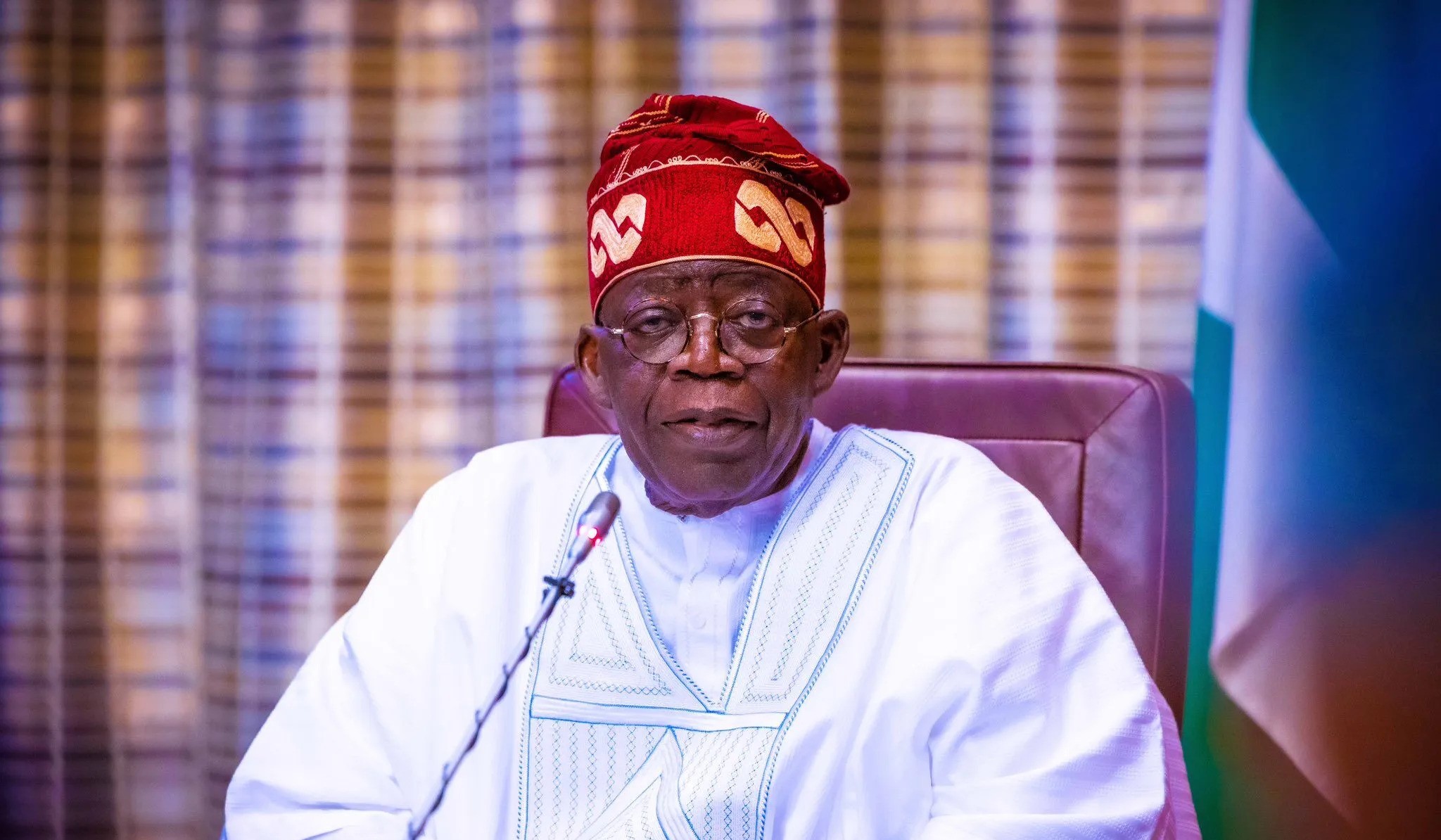

President Bola Ahmed Tinubu on Friday took a direct swipe at opposition parties, accusing them of deliberately misrepresenting the Electoral Act for political advantage, even as he reaffirmed his administration’s commitment to democratic principles and credible elections.
Speaking at the 4th Elective National Convention of the All Progressives Congress in Abuja, the President said persistent attacks on the Electoral Act 2026 by opposition groups were misleading and harmful to the country’s democratic development.
“While we welcome criticism, the constant attacks by opposition groups on the Electoral Act 2026 are a disservice to the Nigerian people,” he said before party delegates at the Eagle Square.
Positioning the issue as a central concern for governance and democratic integrity, the President stressed that the law was not arbitrarily imposed but emerged from a rigorous legislative process involving public participation.
He said, “It is public knowledge that the processes leading to the amendment of the 2022 Electoral Act passed through the crucible of legislative scrutiny, including public hearings. The Electoral Act was passed by the National Assembly, elected by the Nigerian people in accordance with the Constitution.”
President Tinubu argued that criticisms portraying the law as anti-democratic ignored those procedural safeguards and risked undermining public confidence in the electoral system.
According to him, the Act represents a collective national effort to strengthen electoral processes and should not be reduced to a tool for partisan rhetoric.
“The Act reflects our collective quest as a nation to strengthen our electoral system and consolidate democratic rule,” he said.
The President’s remarks come amid heightened political tension and growing accusations from opposition parties that recent political developments, including defections to the ruling APC, could weaken democratic competition.
However, Tinubu dismissed what he described as “deliberate mischaracterisation” of both the Electoral Act and his administration’s broader intentions, insisting that constructive criticism—not distortion—was essential for national progress.
‘We do not seek a one-party state’
The President also rejected claims that the APC was steering Nigeria toward a one-party state, despite a wave of defections from opposition parties to the ruling party.
“Let me reiterate, especially to those who often lament and misunderstand us: we do not seek a one-party state,” he said.
He underscored the importance of opposition in a healthy democracy, noting that governance improves when leaders are challenged and held accountable.
“Democracy thrives on vibrant and healthy competition. As a statesman and political leader, I believe in a credible opposition—one that can challenge, question and help refine policies. That is how statecraft improves, and good governance is achieved,” he added.
Tinubu’s defence comes as the APC continues to consolidate its dominance across Nigeria’s political landscape, controlling the presidency, a majority in the National Assembly, and most state governments.
While critics argue that the scale of defections could erode checks and balances, the President framed the development differently—presenting it as evidence of growing confidence in the party’s vision and leadership.
He said the influx of new members into the APC over the past two years demonstrated “the strength of our beliefs and Nigerians’ trust in our party.”
At the same time, he warned against complacency within the ruling party, cautioning that political dominance alone does not guarantee stability or success.
Warning against internal decay
Tinubu delivered a stern warning to party members, stressing that political parties often collapse not because of electoral defeat, but due to internal divisions and misplaced priorities.
He said, “Political parties do not fail only through electoral defeats. Often, they falter when ego overrides ideology or when ambition replaces discipline.
“They fail when individual interests threaten the collective good. We must guard against those tendencies at all costs.”
The President urged party stakeholders to prioritise unity, discipline, and shared values, describing unity—not numerical strength—as the APC’s greatest asset.
He called on delegates to conduct themselves with maturity during the convention and avoid actions that could fracture the party.
“Let no contest divide us. Let no outcome embitter us. At the end of this convention, our party must be the victor,” he said.
Defending reforms and economic direction
Tinubu also used the platform to defend his administration’s economic reforms, acknowledging their difficulty while insisting they were necessary for long-term national stability.
“We knew the road to reform would be tough. We knew rebuilding Nigeria would require courage, patience, and difficult decisions,” he said.
“No nation rises by hiding from the truth. No economy grows by sustaining wasteful subsidies or dysfunctional priorities.”
The President maintained that recent policy decisions were beginning to yield results, pointing to improvements in key economic indicators.
According to him, inflation has declined steadily in recent months, business confidence is returning, and Nigeria’s economy is gradually transitioning from instability to growth.
“We are moving from survival mode to stability and steadily towards an era of prosperity,” he said.
He also highlighted efforts in infrastructure development, fiscal reforms, and foreign investment attraction, noting that investor confidence had improved significantly.
“Our stock market is booming, listed companies are recording mega profits, and we have recorded trade surpluses,” Tinubu said, adding that Nigeria’s exit from the FATF grey list signalled renewed global financial credibility.
The PUNCH