


The Senate and the House of Representatives’ second extension of the 2024 budget’s capital component to December 31, 2025, has sparked renewed criticism from economists, financial experts, and the Organised Private Sector, who warn it reflects poor execution capacity and risks undermining fiscal discipline.
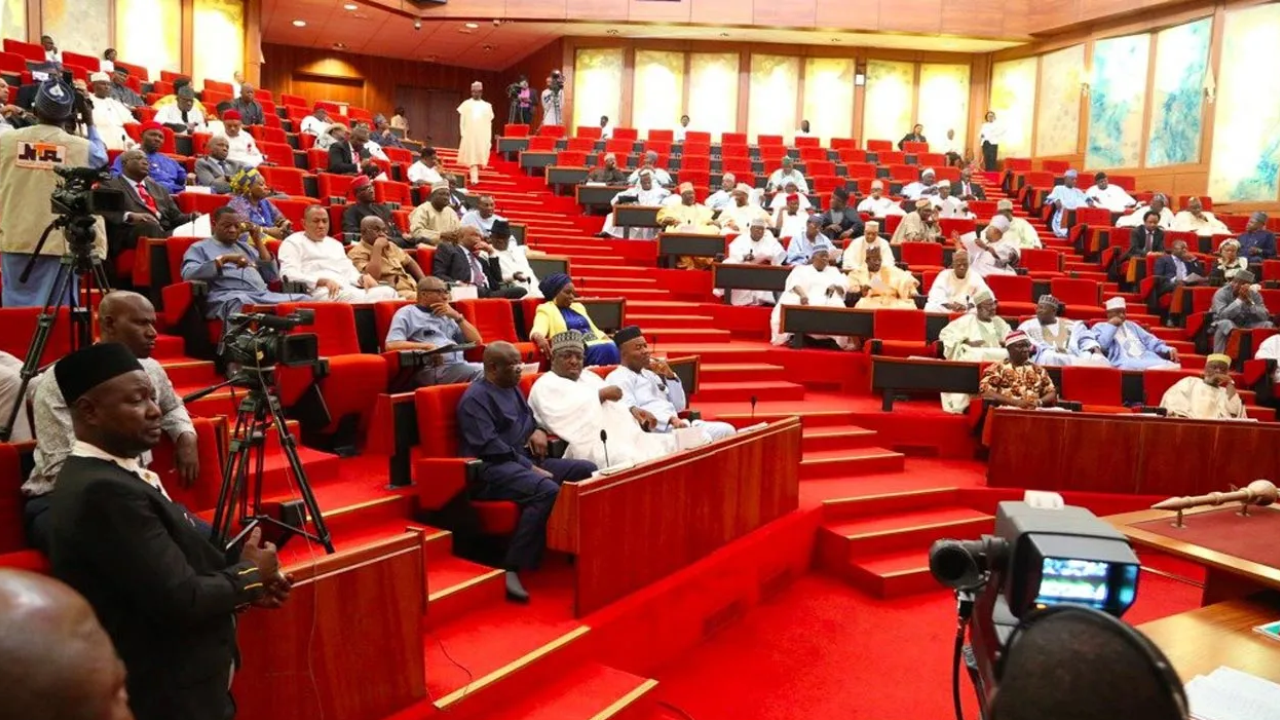
The Red Chamber made the resolution to extend the implementation of the capital component of the 2024 budget to December 31, 2025 during the plenary on Tuesday following the Amendment of the appropriation bill requesting an extension.
The Deputy Senate President, Barau Jibrin, who presided over the plenary announced extension of the appropriation bill following its first, second and third reading expeditious passage. The appropriation bill was considered at the Senate Committee on Supply.
Chairman of the Senate Committee on Appropriation, Olamilekan Adeola, led the debate during the plenary. Adeola, the senator representing Ogun West Senatorial District, explained that the extension was required to allow the Federal Government to complete ongoing projects captured in the budgets.
He also claimed that the Nigerian government does not have enough resources to capture the expenditures proposed in the budget. The appropriations committee chairman, therefore, urged his colleagues to support the extension of the 2024 budget in order to avoid abandoned projects of the Federal Government in different parts of the country.
Also, the House of Representatives on Tuesday passed for second reading, a bill seeking to extend the implementation of the capital component of the 2024 budget.
The bill presented to the House during plenary by the Deputy Majority Leader, Ibrahim Halims, was titled, “A Bill for an Act to Amend the 2024 Appropriation Act to Further Extend the Capital Components of the Act From 30th June 2025 to 31st December, 2025 and for Related Matters.”
Addressing lawmakers at the session, Speaker of the House of Representatives, Tajudeen Abbas noted that “The extension of the budget is necessary because the capital component of the 2024 budget has not been sufficiently implemented.
The bill was passed for second reading after a voice vote and referred to the Committee on Supply for further legislative actions. The capital component of the 2024 budget was initially moved from December 31, 2024 to June 30, 2025 following a request by President Bola Tinubu.
The President’s justification at the time was to enable the executive arm to complete ongoing capital projects and optimise budgetary allocations. That extension was granted after extensive debate and consideration by both chambers of the National Assembly.
However, as the June 30, 2025 deadline approached, it became evident that several critical projects funded under the 2024 budget had not been completed, prompting the fresh extension.
With the new deadline of December 31, 2025, Nigeria is now operating two budgets within a single fiscal year, the 2024 budget which is still being implemented and the 2025 budget which has already passed and is currently in force.
A source at a federal ministry disclosed that the implementation of the 2025 national budget is yet to commence, nearly seven months into the year.
Speaking off the record due to the fear of being victimised, the senior official said all expenses and operations at the ministry were still being executed under the 2024 budget, which has led to widespread delays in payments to contractors and government workers.
“The implementation of the 2025 budget is yet to commence. The information we are getting is that it is still in process and will likely start by August,” the official said on Tuesday.
The source added that the delay is already impacting the ministry’s operations, noting that outstanding duty travel allowances and other staff-related payments for the year remain unpaid.
“So, from January to date, all of our expenses have been from the 2024 budget. It is affecting our work too because some money has not been paid to contractors and even staff. All the duty travel allowances done this year haven’t been paid and people are in debt. We only hope the same extension will be given to the 2025 budget just like the 2024 budget.”
The official expressed hope that the government would grant an extension to the 2025 budget cycle, similar to the extension given for the 2024 budget, which was implemented well into the new fiscal year.
Speaking on the development, the Director of Press and Public Relations at the Office of the Accountant General of the Federation, Mr Bawa Mokwa, said capital funds under the 2024 budget were released to several ministries last week.
He further explained that there was an understanding that the implementation of the 2025 budget would commence only after the 2024 capital component had been officially closed. However, he did not comment further on the extension of the latest implementation of the 2024 budget.
Renowned economist and Chief Executive Officer of Economic Associates, Ayo Teriba, worried that the extension of the budget was becoming a habit and that there were simply no resources to fund the projects.
“It is becoming a habit. The first time it was a mistake, but by the time you do it a second time, it becomes a habit. They did that with the 2023 budget that they inherited. They extended the capital portion up till June, and they extended it until December, and then, they didn’t tell us whether it had been completely executed or not. For 2024, we are going through the same cycle, and by December 2025, we will simply stop talking about it.
“If there is no money, there is no money. You don’t need 24 months to execute a budget that was meant for 12 months. There is no money, and we have to look for money to ensure that capital votes can be funded in 12 months,” he said.
On the 2025 budget, Teriba questioned if the first quarter had been funded. “I heard the minister of finance said they made N6.9tn in the first quarter. How much did they release in capital spending in the first quarter? We need to know to what extent the first quarter was funded,” he asked.
Chief Economist and Partner at SPM Professionals, Paul Alaje, asserted that extending the capital component of the 2024 budget till December would affect the money supply.
“The implication is that the money supply will increase. On one hand, you are going to see projects from the 2024 budget that should have been closed, reopened or continued, while those of 2025 will continue side by side.
“As good as that may be, it will also make inflation spike. At the same time, it might be marginal. We really don’t know the extent until we are sure of how much in terms of volume is left. Two, is it that people have not been paid for their work? In that case, is it the payment component, or is it that projects have not started at all? Those components need to be provided to determine to what extent inflation will remain flat or spike,” he asserted.
Alaje maintained that Nigeria “must get to a point where we understand that budget is a cycle and if there must be any extension, then Q1 of the new year will be the best time to limit it. This allows the current budget to be implemented, and things are predictable, and we can know the inflation expectation in it.”
The PUNCH