

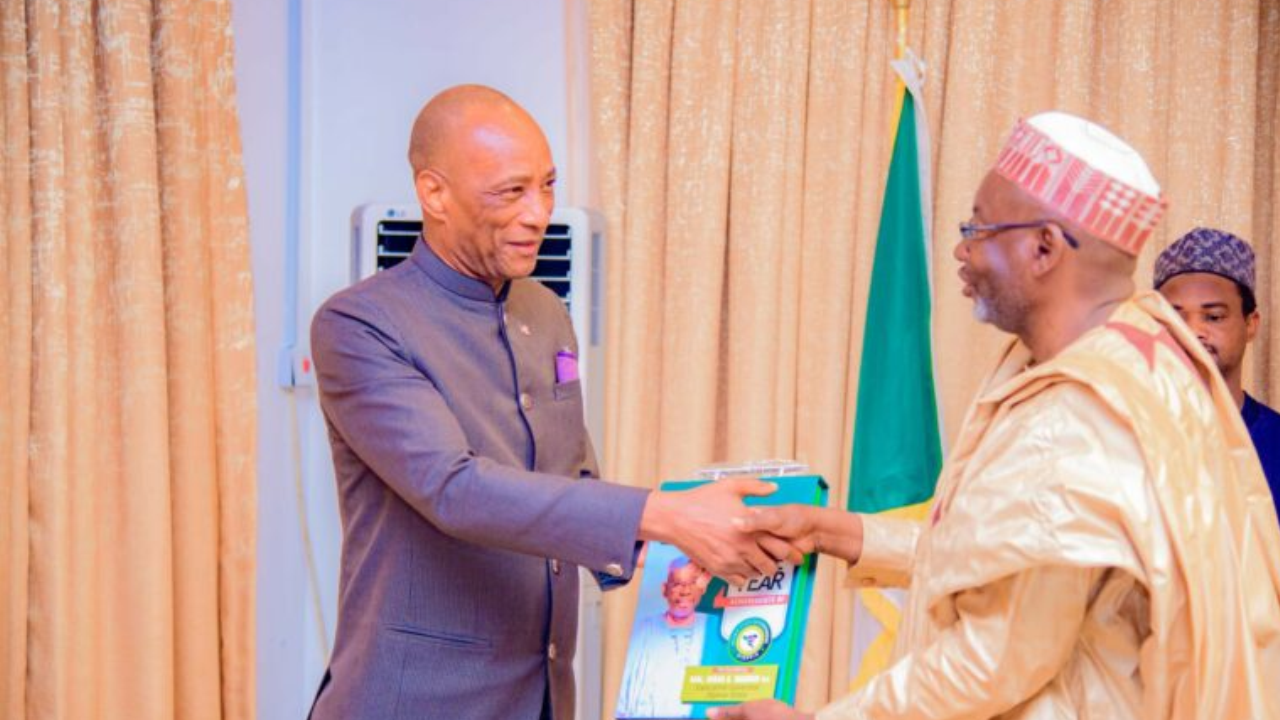

Liberia says it is set to partner with the Jigawa State government on rice farming to boost domestic production, reduce importation, and enhance food security in the West African region.
This came to light when the Deputy Minister of Agriculture from the Republic of Liberia, David Akoi, paid a courtesy visit to Governor Malam Umar Namadi at the Government House in Dutse, the state capital, on Tuesday evening.
Speaking during the meeting with the governor, Mr. Akoi expressed his delegation’s excitement about learning from Jigawa’s expertise in rice production, stating that “Liberia, being a major rice consumer, aims to reduce its reliance on imports and boost domestic production.”
According to Akoi, rice is a staple food in Liberia, consumed three to four times a day. However, the country imports about 70% of its rice needs. “The Liberian government is determined to change this narrative and produce at least 70% of its consumption needs,” he said.
The Deputy Minister revealed that Liberia’s president sent him to Nigeria, specifically Jigawa State, to learn from their experiences in rice production. “We are here to study the rice value chains and learn from Jigawa’s success story,” he said.
Furthermore, Akoi shared Liberia’s history of rice riots, which led to the overthrow of President William R. Tolbert in 1979. He emphasised the importance of rice in Liberia’s politics and economy.
“By partnering with Jigawa, Liberia hopes to transform its rice value chain and increase domestic production. This collaboration could have a positive impact on Liberia’s economy and food security,” he stressed.
In response, Namadi welcomed the Liberian delegation and commended them for choosing Jigawa State for their study tour. “Jigawa’s strides in agriculture, stating that it is the mainstay of the state’s economy,” he highlighted.
The governor noted that his administration has made significant progress in rice production, from 60,000-70,000 hectares in 2023 to over 200,000 hectares in 2024. “Jigawa aims to produce close to 300,000 hectares this year and 50% of Nigeria’s rice needs by 2030,” he explained.
However, Namadi attributed the state’s success to its focus on irrigation farming, which has increased production and helped combat climate change.
He mentioned that the state government has revamped existing irrigation dams, increasing production by over 4,500 hectares.
The governor also highlighted the state’s investment in agricultural equipment, including 300 new tractors, 60 combined harvesters, and 150 planters.
He added that each of the state’s 30 constituencies has a minimum of 10 tractors for subsidised hire services for smallholder farmers.
The PUNCH