

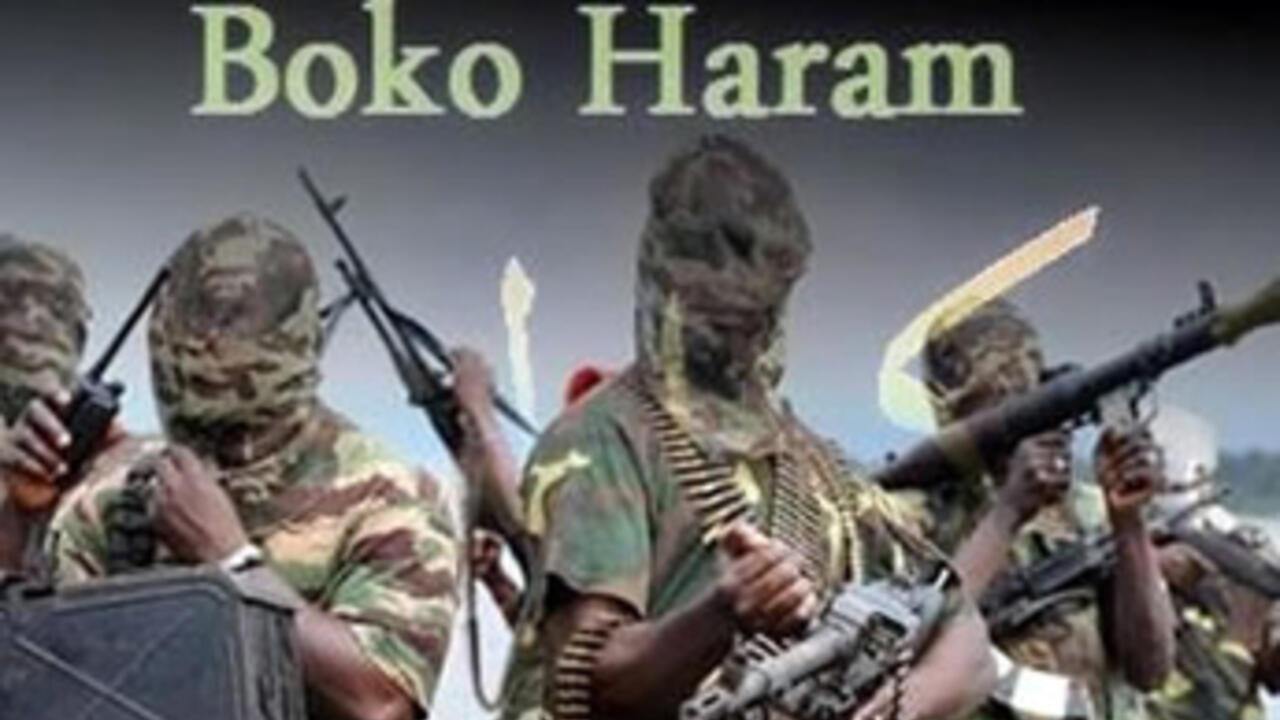

The Nigerian military is monitoring Boko Haram and Islamic State for West Africa Province (ISWAP) fighters who are fleeing their hideouts following the recent United States airstrikes.
U.S. President Donald Trump announced on Christmas Day that the American military conducted lethal strikes against Islamic State targets in north-western Nigeria.
The Federal Government confirmed the operation, describing it as part of ongoing counterterrorism cooperation.
Following the strikes, there were reports of movements by armed groups into other areas.
The Chairman of the Traditional Council in Gwer West Local Government Area of Benue State, Daniel Abomtse, according to a report, raised concern over what he described as an influx of armed herders into some communities after the attack.
Community leaders in Tangaza, Gudu and parts of Illela in Sokoto State also said that there had been noticeable dislocation and movement by the armed groups.
Some of them, who spoke on condition of anonymity, said suspected bandits were seen moving in smaller groups towards remote forest corridors, while others were believed to be attempting to cross into neighbouring border communities.
However, senior military officials said the military was tracking the movement of the terrorists.
“We know they are fleeing. We have information on that and we are working on it. They are being monitored and their movements are being tracked,” one official said.
Another official said intelligence, surveillance and reconnaissance operations were ongoing to monitor the situation.
The official said, “Is it possible for us not to know they are fleeing. We have the information and we are conducting ISR to track them.”
Meanwhile, retired senior military officers have expressed differing opinions on the possible deployment of U.S. troops to Nigeria.
The Minister of Foreign Affairs, Yusuf Tuggar recently said the Ministry of Defence would advise the government on possible next steps when asked on CNN whether Nigeria might consider allowing U.S. soldiers into the country.
A former senior officer, Brigadier-General Peter Aro (retd.), said he does not support the deployment of U.S. soldiers on Nigerian soil, warning that such a move have serious legal, diplomatic and social implications.
He said foreign troops could only be deployed under a formal defence pact approved at the highest level of government, adding that the consequences would be “profound.”
According to him, Nigeria’s fragile internal cohesion could be further strained if foreign military personnel were stationed in the country.
He said, “I strongly do not support the deployment of US soldiers on Nigerian soil. This is a serious matter that must be approached with utmost caution. From a legal and diplomatic standpoint, foreign boots on the ground can only follow a formal Defence Pact approved at the highest levels of government, and even then, the consequences would be profound.
“At a time when our country is already grappling with fragile national cohesion, the presence of foreign troops could deepen internal mistrust, fuel insurgent propaganda, and exacerbate existing regional and religious sensitivities. Notably, even some northern elites and intellectuals: judging by reactions on social media, are uncomfortable with this intervention, and that discomfort speaks volumes.’’
Aro argued that increased U.S. involvement did not require American military deployment, saying Nigeria already had sufficient ground forces, including the armed forces, police mobile units and civil defence personnel.
He said the gaps in counter-insurgency operations were in air power, surveillance and precision strike capability, areas in which the U.S. could support Nigeria without replacing local troops on the ground.
He added that maintaining Nigerian control of land operations was important for legitimacy and long-term stability.
However, another retired officer, Brigadier General Bashir Adewinbi (retd.), supported closer security cooperation with the U.S., saying collaboration among countries was a normal practice.
He said the National Security Adviser’s recent visit to the U.S. was part of ongoing cooperation and linked the Christmas Day strike to a joint Nigeria-U.S. effort.
Adewinbi said that if the deployment of U.S. soldiers was considered necessary to improve security, he would support it provided it followed due diplomatic processes and clearly defined terms of engagement.
The PUNCH