

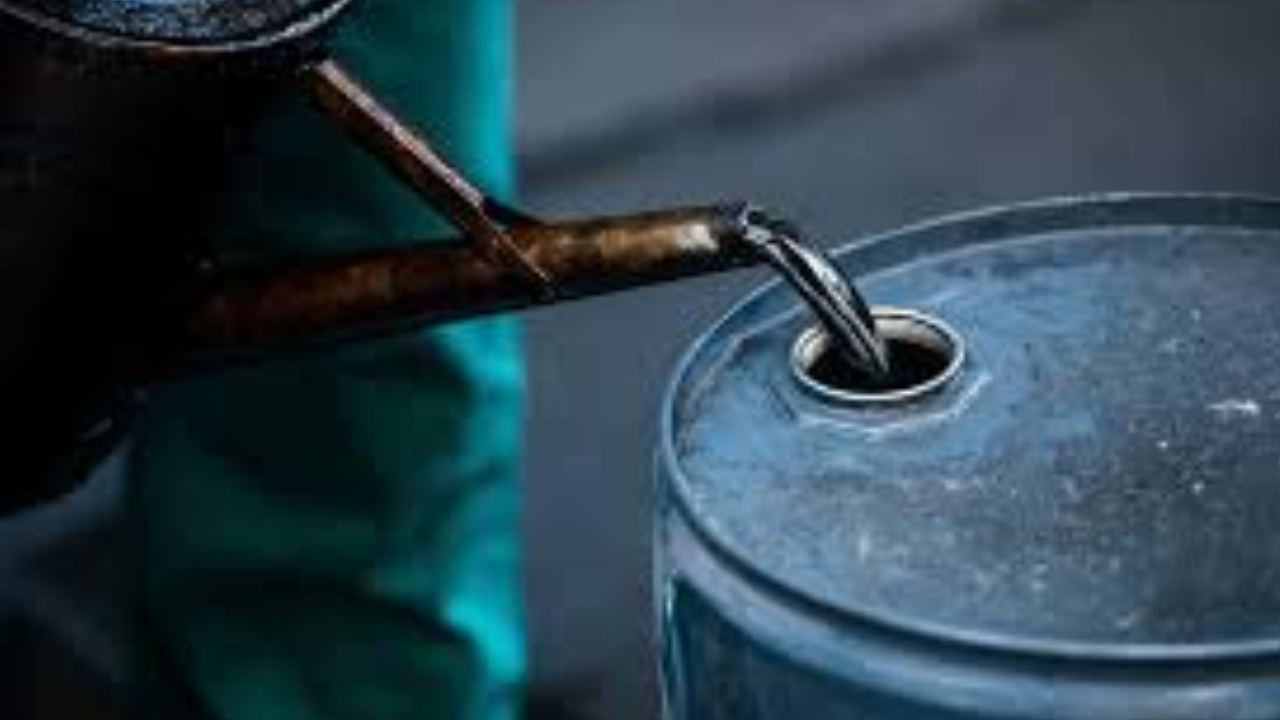

There is pressure on the Federal Government to introduce economic relief measures as the escalating conflict between the United States and Iran drives up global crude oil prices and pushes petrol costs to record levels across Nigeria.
Industry operators, economists, labour unions and private sector leaders have urged the government to deploy the expected windfall from higher oil prices to cushion the impact on citizens and businesses, warning that soaring fuel prices are already deepening economic hardship.
The stakeholders sought some palliative measures to cushion the effect of the rising petrol, diesel, and aviation fuel prices, especially as this may heighten the volatility of the country’s inflation figures. Some even called on the government to subsidise the pump prices of petrol.
The calls come amid reports that petrol prices have climbed to between ₦1,200 and ₦1,300 per litre in different parts of the country, while projections from industry players indicated that prices could exceed ₦1,500 per litre and potentially approach ₦2,000 per litre if the Middle East crisis persists.
As the war involving the United States, Israel, and Iran entered the third week with no reconciliation in sight, there are concerns that crude oil prices would continue to rise, and this would drag petrol prices above the affordability level.
The Dangote Petroleum Refinery has been blaming the war for its recent increase in gantry prices, which rose from less than ₦800 per litre before the war to ₦1,175 as of the time of filing this report. Recall that crude oil was around $68 per barrel during the crisis, but it stood at $103 as of Sunday evening.
Cut down taxes, charges
In an interview, the Independent Petroleum Marketers Association of Nigeria (IPMAN) asked the Federal Government to cut off some taxes and charges on petroleum products to reduce the pump prices of fuel.
IPMAN spokesman, Chinedu Ukadike, said this became necessary to stop the price of petrol from further skyrocketing. According to him, there are charges from the Nigerian Maritime Administration and Safety Agency, the Nigerian Ports Authority, the Nigerian Midstream and Downstream Petroleum Regulatory Authority, and others.
The Managing Director of the Dangote refinery said last week that the company paid over 40 charges and taxes to different government agencies.
“The government should cut down some of these taxes, especially the NIMASA taxes and the rest of them. It will help in bringing down the price of petroleum products. Some of these depot charges, NPA charges, NMDPRA charges, and others – some of these things are supposed to go away now that we are facing a very serious challenge for us to get better. But if they continue to stay, it means petroleum products will continue to go high,” he said.
Aside from this, Ukadike said it is imperative to fix the pipelines to reduce the cost of distribution. “The government should give marching orders to ensure that these pipelines are repaired. Once these pipelines are repaired, it will also ease transportation and haulage, making fuels a bit cheaper. It is cheaper to transport fuel through the pipelines.
Ukadike noted that even if the government cannot subsidise petrol, it can try petroleum equalisation to make sure petrol sells at the same rate in all parts of the country.
“With the petroleum equalisation fund, the government will pay transportation costs of petroleum products to enable everybody to buy petroleum products at lower prices in faraway places. Because now, petroleum products are even higher in the North than in the Southwest, where the refinery is located,” Ukadike noted, praying that the Middle East tension is de-escalated as soon as possible.
He urged the government to deploy more CNG vehicles and kits to reduce transportation costs.
Invest in CNG
Members of the Organised Private Sector urged the Federal Government to channel the additional revenue from rising crude oil prices into strategic investments such as Compressed Natural Gas transportation, support for domestic refineries, and settling outstanding debts to gas suppliers to boost electricity generation, rather than returning to any form of fuel subsidy.
In separate interviews, the stakeholders stated that while the surge in global oil prices due to the Middle East conflict has increased Nigeria’s earnings from crude oil exports, the government should deploy targeted support to the economy and avoid using the extra revenue to cushion petrol prices through subsidy schemes.
The President of the Lagos Chamber of Commerce and Industry, Leye Kupoluyi, said Nigeria must use the opportunity to deepen investments in domestic refining and alternative fuel options.
He urged the government to channel part of the oil windfall into supporting local refining capacity, including modular refineries. “Can we do a naira exchange so that a portion of this crude goes to refineries that are refining locally? People are saying that Dangote is not the only refinery in Nigeria. We have modular refineries that we can encourage to scale up. The government should not go back to fuel subsidies,” he said.
The LCCI president noted that selling crude to domestic refineries in naira could help strengthen the local petroleum value chain and stabilise the supply of refined products in the country. Kupoluyi also urged the government to intensify efforts to promote the use of compressed natural gas in the transportation sector.
“Why can’t we have duty-free incentives in converting many of our vehicles, even private vehicles, from petrol to CNG? If we can take most of our public transport out of this petroleum situation and move them to CNG, you will see that the effect on petrol demand will come down,” Kupoluyi stated.
He added that encouraging solar power adoption would reduce pressure on the national grid and allow the electricity supply to focus more on industrial production.
Similarly, the Director of the Centre for the Promotion of Private Enterprise, Dr Muda Yusuf, urged the government to deploy fiscal incentives to reduce the cost of production for operators in the petroleum value chain.
“The best the government can do is to take advantage of this additional revenue to deploy fiscal incentives to those who are producing the refined petroleum products. If there can be some compassion for players in the value chain to reduce their costs, they can, in turn, reduce their prices,” Yusuf said.
He added that the government could also use the additional oil revenue to expand mass transportation systems across the country. “Government should invest more in mass transit at all levels of government. More investment in public transportation will help reduce the pressure on people who rely on petrol for mobility,” Yusuf urged.
The economist also stressed that improving the electricity supply would significantly reduce the country’s dependence on petrol and diesel. “Government should also do more in providing electricity because if you have electricity, you rely less on diesel,” Yusuf said.
He noted that part of the additional oil earnings could be used to offset debts owed to gas suppliers, which have contributed to the persistent power supply challenges in the country. “If the government can address the debts to gas suppliers and improve electricity generation, people will rely less on buying petrol and diesel,” Yusuf stated.
The PUNCH