

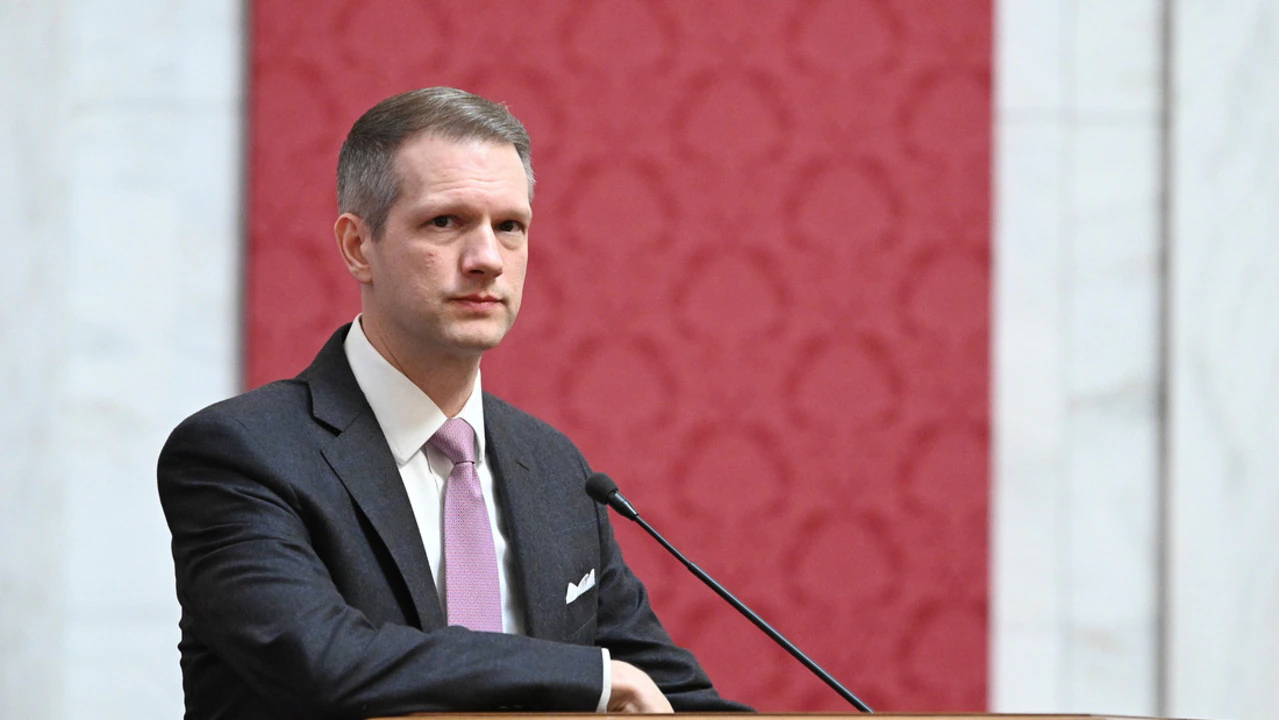

A United States lawmaker, Riley Moore, has criticised the administration of President Bola Tinubu over what he described as a failure to meet conditions attached to U.S. security assistance to Nigeria.
Moore, who represents West Virginia’s 2nd District, made this known in a post on X on Wednesday, urging the U.S. Secretary of State, Marco Rubio, to consider the development when administering upcoming funding cycles.
“In my view, the Tinubu administration has failed to live up to the conditions the appropriations committee placed on security assistance.
“I urge @SecRubio to take this into account in administering both FY26 and FY27 funding,” he wrote.
The reference to FY26 and FY27 relates to the United States fiscal years, which run from October 1 to September 30, covering the next budget cycles during which congress determines allocations for foreign assistance.
The funding under discussion includes U.S. security support to Nigeria, such as military training, equipment supply, intelligence cooperation and counter-terrorism assistance aimed at tackling threats including insurgency, banditry and organised crime.
Such assistance is subject to approval by the U.S. Congress and is often tied to conditions, including compliance with human rights standards, accountability in the use of funds and measurable progress in addressing security challenges.
Moore’s latest comments follow earlier criticism of the Nigerian government over insecurity, particularly violence affecting Christian communities.
In November 2025, it was reported that the lawmaker accused the Federal Government of failing to justify billions of dollars in military assistance received from Washington while alleging continued killings of Christians.
“My brothers and sisters in Christ are murdered for practising their faith and belief in our Lord Jesus Christ,” Moore said at the time, warning that prolonged inaction could worsen the situation.
He further argued that despite years of support from the United States, including provision of training and equipment, the crisis had persisted without sufficient response from Nigerian authorities.
“If we do not address this and some terrorists take hold in Nigeria, we would have to address it one way or the other. I would like to do it cooperatively with Nigerians,” he said.
The Federal Government has, however, rejected claims that the country’s security challenges amount to targeted religious persecution, maintaining that violence affects both Christians and Muslims and is driven by broader security issues.
Earlier this year, the Defence Headquarters stated that military cooperation with the United States does not undermine Nigeria’s sovereignty and comes at no cost to the country.
The military confirmed the arrival of about 100 U.S. personnel and associated equipment in February, noting that the deployment followed bilateral engagements between Nigerian and U.S. officials.
A statement by the Director of Defence Information, Maj. Gen. Samaila Uba, said the collaboration was part of efforts to strengthen Nigeria’s capacity to combat evolving security threats.
Despite these assurances, Moore maintained that how Nigeria meets the conditions attached to U.S. assistance will influence future funding decisions, signalling possible increased scrutiny of support programmes in the coming fiscal years.
The PUNCH