

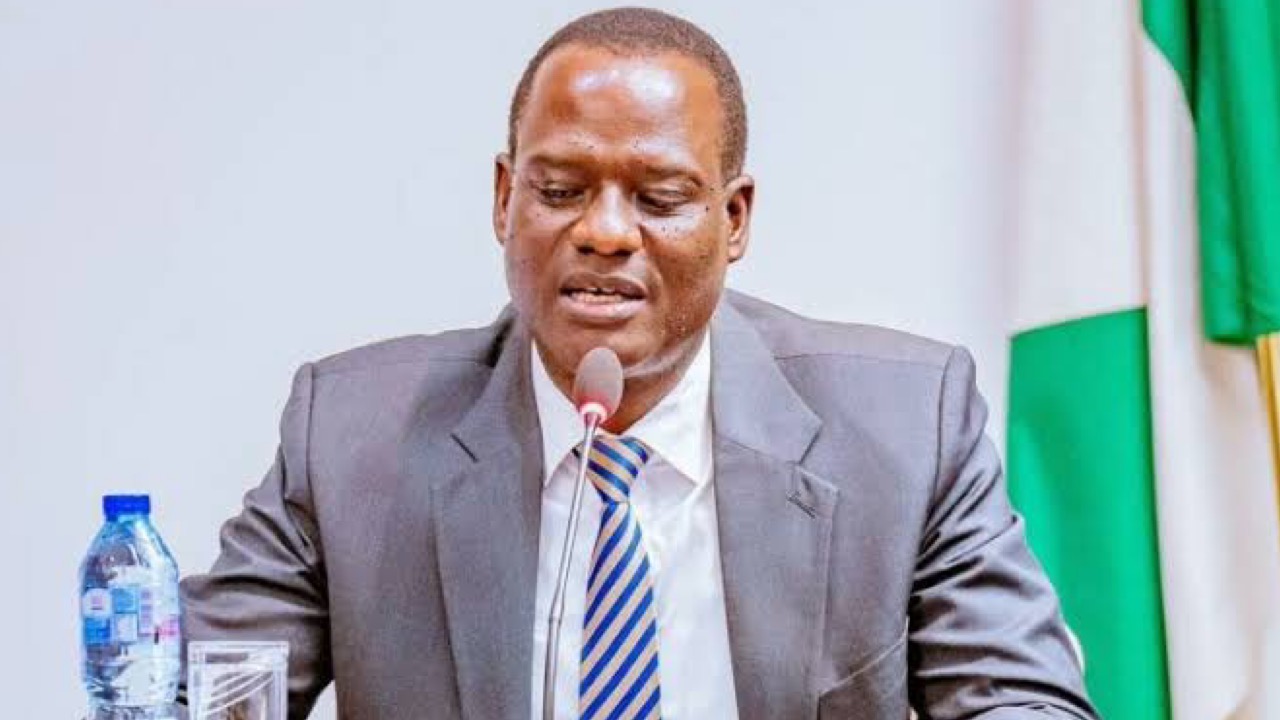

The Minister of Finance and Coordinating Minister of the Economy, Taiwo Oyedele, on Tuesday said Nigeria could no longer rely mainly on borrowing to fund development, warning that the country must build a sustainable fiscal system capable of supporting critical sectors of the economy.
Oyedele stated this while speaking at the 28th Annual Tax Conference of the Chartered Institute of Taxation of Nigeria in Abuja.
The minister’s remarks came barely 24 hours after it was reported that the Federal Government had intensified engagement with the World Bank over a fresh $1.25 billion loan targeted at supporting economic reforms, job creation and competitiveness.
“Nigeria cannot continue to finance development primarily through borrowing. We must build a fiscal system capable of sustainably supporting critical infrastructure, quality education, affordable healthcare, security, and social protection,” he said.
He added that sustainability was not only about generating revenue but also about promoting growth, reducing inequality, protecting vulnerable groups, and encouraging productivity.
According to him, the Federal Government’s ongoing tax reforms are designed to make the economy more investment-friendly while improving fiscal sustainability.
Oyedele said the reforms were necessary because Nigeria’s tax system had long suffered from structural weaknesses, including multiple taxation, fragmented administration, weak compliance, and overdependence on a narrow revenue base.
“Businesses faced overlapping debts, unpredictable enforcements, and rising compliance costs. Citizens often perceived the tax system as unfair because the burden was unevenly distributed,” he said.
He noted that the situation had become unsustainable because government revenues remained insufficient to meet the country’s development needs.
The minister said the reforms were aimed at building a stronger fiscal foundation for long-term national development rather than introducing changes for their own sake.
“Our approach is guided by a simple principle: a good tax system should raise revenue efficiently, support economic growth, protect the vulnerable, and strengthen trust between governments and citizens,” Oyedele said.
He explained that the reforms sought to simplify the tax system, improve fairness, encourage investment, and reduce distortions within the economy.
Oyedele also disclosed that minimum wage earners had been exempted from personal income tax under the ongoing reforms, while the burden on low- and middle-income earners had been reduced.
On corporate taxation, he said the government was proposing reductions in companies’ income tax rates to improve Nigeria’s attractiveness as an investment destination.
Oyedele further said the government was modernising the Value Added Tax framework by expanding input VAT credits and clarifying exemptions for essential goods and services.
“This reduces cost buildup within the economy and improves efficiency across the value chain. This also helps to moderate inflation,” he said.
The minister also lamented the burden of multiple taxes and levies on businesses, saying the government was working with subnational governments to harmonise taxes and reduce compliance costs.
He disclosed that 15 states had already enacted tax harmonisation laws and urged other states to follow suit.
Oyedele stressed that technology would play a central role in the future of tax administration in Nigeria.
“We are therefore prioritising data integration, automation, digital filing systems, and a technology-driven compliance framework,” he said.
The minister, however, acknowledged that challenges remained, including weak institutional capacity, informal sector integration, and public trust issues.
The PUNCH