

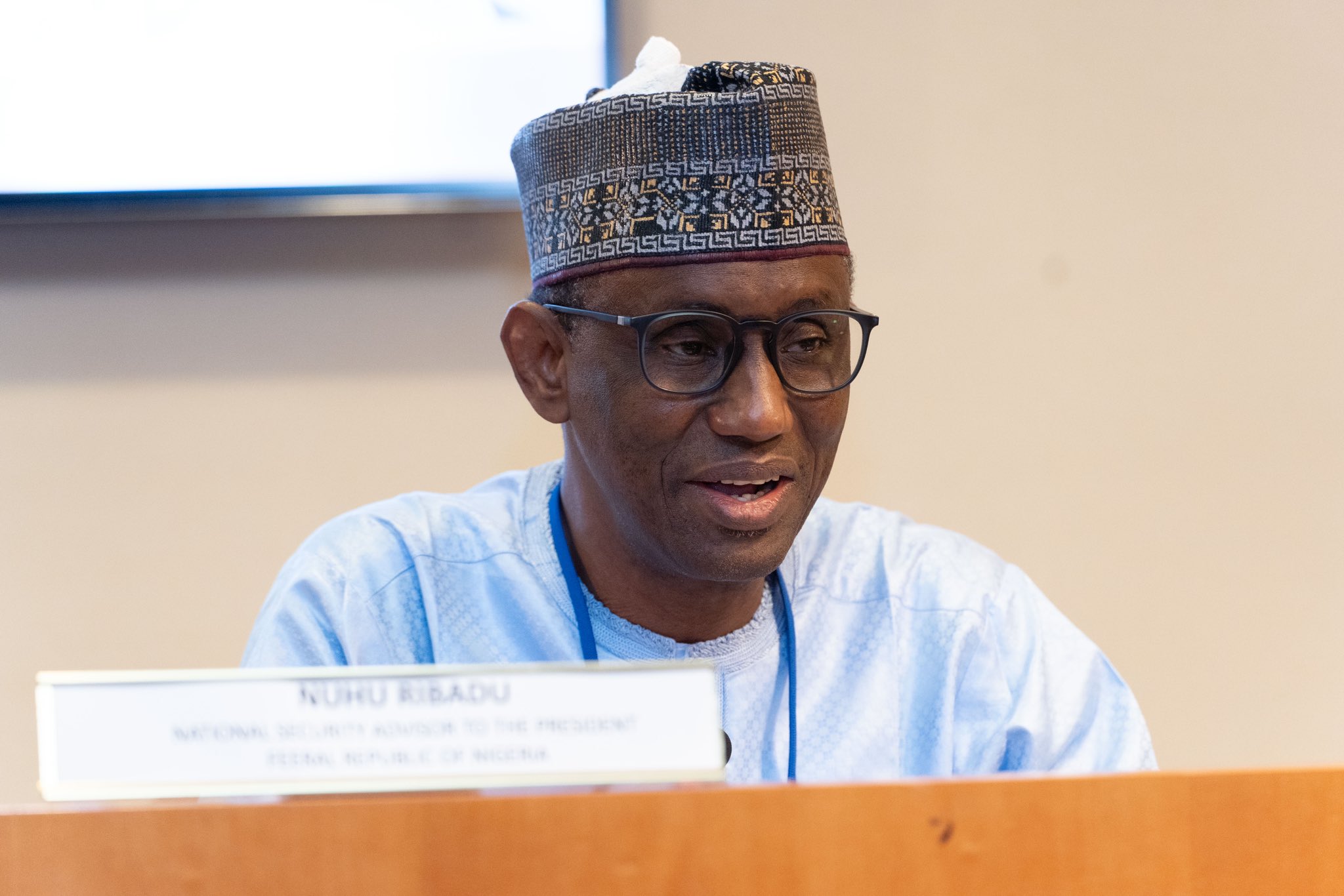

The Presidency says the United States Government has signalled a renewed commitment to boosting security collaboration with Nigeria, including expanded intelligence sharing and the supply of military equipment to support counter-terrorism and counter-extremism operations nationwide.
This assurance followed a series of high-level meetings in Washington last week between senior Nigerian officials and key arms of the U.S. Government, aimed at strengthening defence ties and exploring new areas of cooperation.
The Nigerian delegation, led by National Security Adviser Nuhu Ribadu, held discussions with officials from the U.S. Congress, the White House Faith Office, the State Department, the National Security Council and the Department of War.
Other members of the delegation included the Attorney General of the Federation, Lateef Fagbemi; the Chief of Defence Staff, General Olufemi Oluyede; the Chief of Defence Intelligence, Lieutenant General Emmanuel Undiandeye; the Inspector General of Police, Kayode Egbetokun; and two representatives from the Office of the National Security Adviser.
This was disclosed in a statement issued on Monday by the Special Adviser to President Bola Tinubu on Information and Strategy, Bayo Onanuga.
Onanuga said the Nigerian team used the engagements to dismiss claims of genocide, stressing that violence in Nigeria cuts across religious and ethnic communities and should not be mischaracterised in ways that deepen division.
“The discussions provided ample opportunity to correct misconceptions about Nigeria, forged a constructive, solution-driven partnership with the United States, reinforced mutual trust, and advanced a coordinated approach to protecting vulnerable communities, especially in the Middle Belt.
“The United States also expressed its willingness to extend complementary support, including humanitarian assistance to affected populations in the Middle Belt and technical support to strengthen early-warning mechanisms,” he said.
Onanuga added that both countries agreed to immediately begin implementing a non-binding cooperation framework and to set up a Joint Working Group to coordinate actions in priority areas.
The PUNCH