

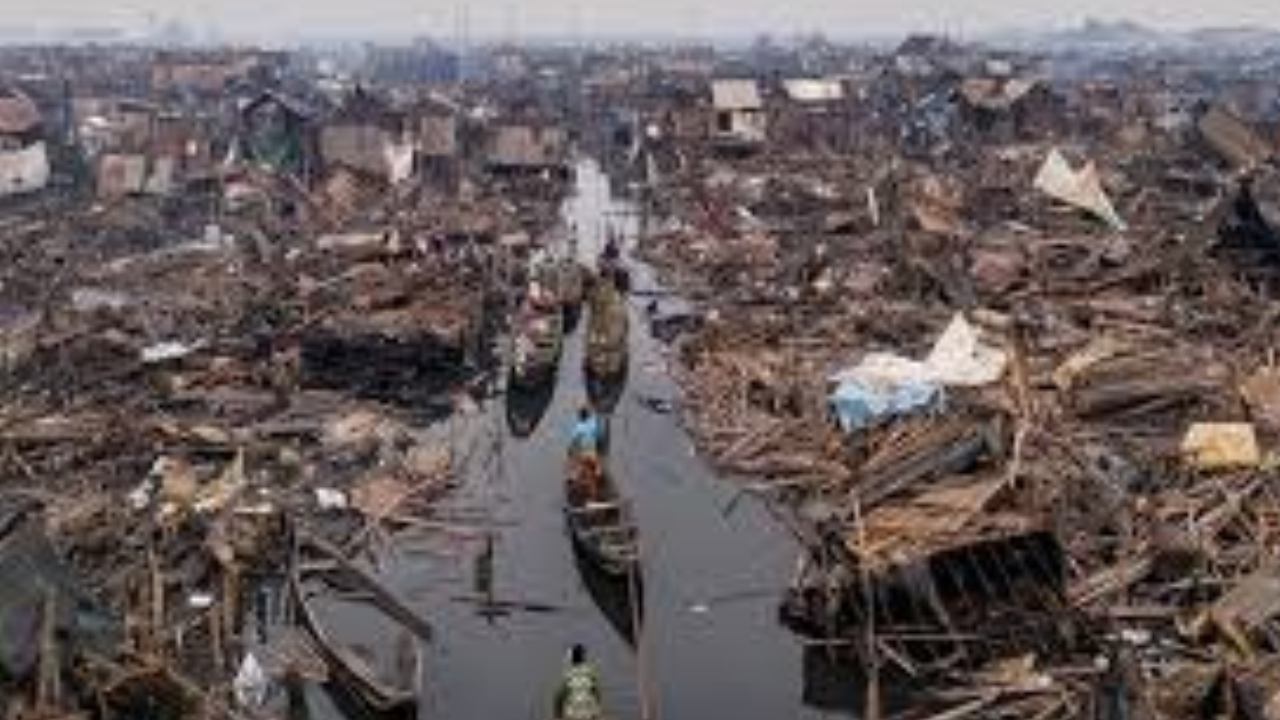

The Lagos State House of Assembly has invited leaders of communities affected by the demolition in Makoko and adjoining waterfront settlements to a meeting on Tuesday.
PUNCH Metro learnt this on Sunday from a letter dated January 26, 2026, and signed by the Clerk of the House, Olalekan Onafeko.
The letter dated January 27, 2026, said the meeting was in response to a petition submitted by the communities over the demolition and eviction of residents.
Addressed to the community leaders, the letter convened a meeting of the Committee on Rules and Business for 10:00 a.m. on Tuesday, February 3, 2026, at the Chamber’s Conference Room, 2nd Floor, Assembly Complex, Alausa, Ikeja, and requested the presentation of relevant documents to facilitate deliberations.
It read, “I write to acknowledge the receipt of your petition dated 14th January, 2026, on the above subject and invite you to a meeting with the Committee on Rules and Business on Tuesday, 3rd February, 2026, at the 2nd Floor, Chamber’s Conference Room, Assembly Complex, Alausa, Ikeja, by 10:00 a.m.
“You are requested to kindly attend the meeting along with heads of the communities as well as relevant documents that would facilitate fruitful deliberations.”
The invitation comes amid sustained unrest and hardship triggered by the demolition of structures in the waterfront communities in recent months.
Residents and human rights groups have repeatedly protested the demolitions, alleging that they were carried out without adequate notice, compensation, or resettlement plans, leaving many families homeless and in dire conditions.
Some displaced persons had resorted to living inside boats, while others now squat with fellow residents whose wooden structures are yet to be demolished.
Similarly, community members said some of those who could not find shelter within the area had relocated to other parts of the state.
Community leaders alleged that the government extended the demolition beyond the initially outlined safety setbacks from high-tension power lines, destroying homes, schools, and small clinics, and forcing children out of school.
A community chief, Francis Samson, said that the initial agreement with the government was to demolish structures within 30 metres of the high-tension power line along the lagoon.
He, however, claimed that the demolition extended to about 520 metres from the high-tension poles, contrary to the agreement reached with government officials.
Samson said, “Before the demolition, the Permanent Secretary for Physical Planning, Gbolahan Oki, called us community leaders three times, and after the meetings, he said they wanted to remove structures within 30 metres of the power line because people had built their houses under it.
“After the meeting, we returned to inform community members. When the government came, we expected them to clear the 30 metres and spare the others, but the demolition continued beyond that. We went to meet them to ask why they exceeded 30 metres, and that was when Oki told us they would extend it to 100 metres.
“We pleaded with them, but they continued. Where they eventually stopped is about 520 metres. Makoko is made up of four communities occupying both land and waterfront areas. With the demolition, the waterfront communities have been destroyed.”
Samson added that many residents, who are fishermen, had been displaced from their means of livelihood, noting that some now live on boats.
He further claimed that reports of deaths had been recorded in different parts of the waterfront communities during and after the demolition exercise.
“About a week ago, when it rained heavily, the condition of our people was terrible. We want the government to come to our aid and listen to our plight.
“During the demolition, tear gas canisters were fired. Three children and two adults have died. One of the children reportedly died from the tear gas incident, while one adult died from hypertension after his house was demolished,” he said.
The PUNCH