

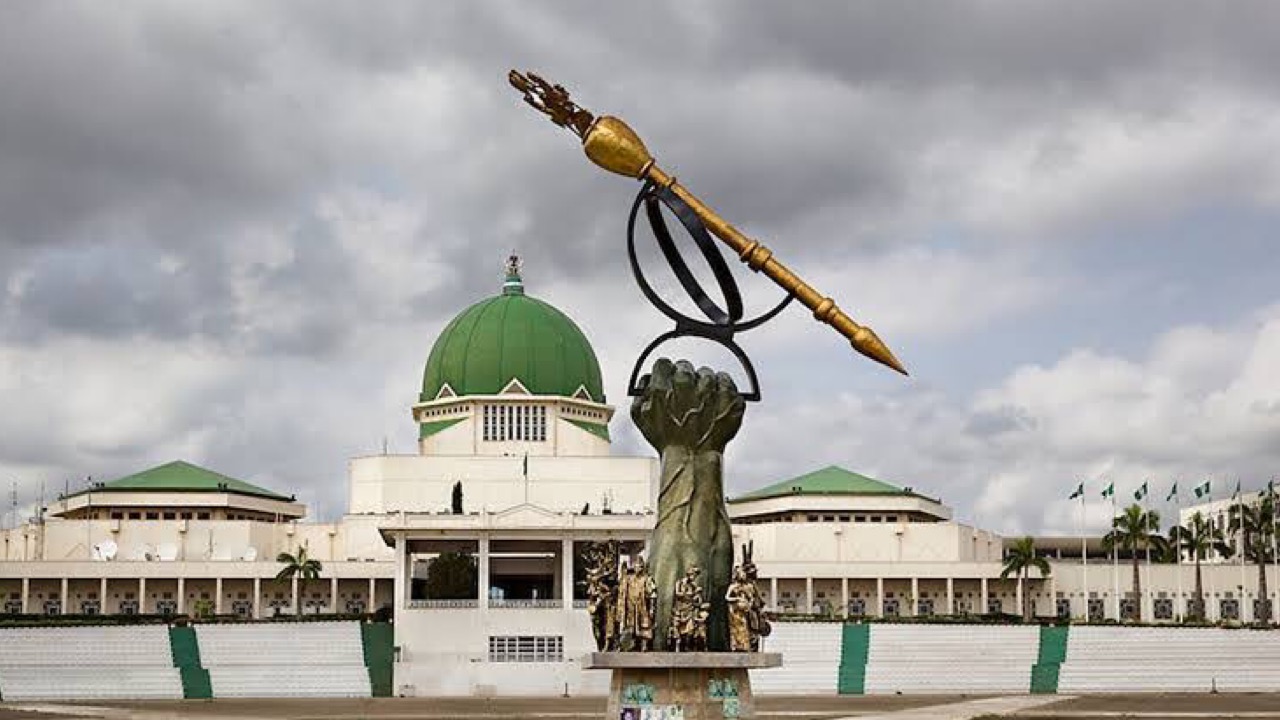

Scores of women on Monday staged a peaceful rally at the main entrance of the National Assembly, urging lawmakers to fast-track the passage of the Women Reserved Seats Bill ahead of the 2027 general election.
The proposed legislation is among the 44 prioritised constitutional amendment bills currently awaiting final voting by the National Assembly and subsequent approval by state Houses of Assembly.
If passed, the bill will alter the 1999 Constitution to create reserved seats for women in the National Assembly and state Houses of Assembly.
The measure is designed as a temporary intervention to address the persistently low representation of women in Nigeria’s legislative chambers by creating special constituencies to be contested exclusively by women.
Addressing the rally, former Convener of the Nigeria Civil Society Situation Room, Ene Obi, commended lawmakers for the progress recorded so far but urged them not to delay its final passage.
“A vote for a woman is a vote for life. Women are the hope of life. And I want to urge the members of the National Assembly, we are not protesting today, we are holding a rally.
“We believe in non-violence. We have organised ourselves. We have not besieged the gates of the National Assembly. We are not going to the Assembly unless they invite us.
“We are calling on the members of the National Assembly to come here and address us. We are waiting for them patiently. We are quite orderly. We don’t fight to go into that house because they have allowed us before. We have been there on the campaign for special seats bill,” she said.
Obi stressed that timely passage of the bill would allow political parties and prospective female candidates adequate time to prepare for the 2027 elections.
Also speaking, Rahila Dauda, who represented the International Federation of Women Lawyers, described the current level of female representation in Nigeria’s legislature as unacceptable.
“We are in total support of the bill, the special seats, and we urge the National Assembly to join with us by passing this bill. It is wrong in our view because it is a shame that in a country like Nigeria, where more than half of the population are women, unfortunately only about 5 or 4 are in the National Assembly and the Senate and the House of Representatives.
“The time is now. The National Assembly should join us and make history to pass this bill. Nigerian women want this bill now,” she said.
Another advocate at the rally demanded that the proposed framework reflect the provisions of the Disability Act by reserving seats for women and girls with disabilities.
“We are here to ask for our rights. Rights for inclusion. Rights for representation, rights for participation in governance. In the Disability Act, five per cent is enshrined for every person with disabilities, including women and girls with disabilities.
“We want five per cent reservation of special seats for women with disabilities and girls. It is time that we move from exclusion to inclusion. We are saying, include us now,” she added.
Nigeria has one of the lowest rates of female parliamentary representation in Africa. Since the return to democratic rule in 1999, women’s participation in elective offices has remained marginal despite repeated commitments to gender inclusion.
In the 10th National Assembly, women account for only a small fraction of lawmakers in both the Senate and the House of Representatives.
The 2023 general election recorded a decline in the number of women elected to federal legislative positions, sparking renewed criticism from civil society groups and international partners.
Previous attempts to secure greater gender representation through constitutional amendments failed. In 2022, several gender bills seeking to expand political opportunities for women were voted down during constitutional review, prompting nationwide protests under the banner “Women Occupy National Assembly.”
Proponents of the reserved seats model argue that it is a temporary corrective measure, similar to systems adopted in countries such as Rwanda, Senegal, and South Africa, where constitutional or legislative quotas have significantly improved women’s representation in parliament.
Supporters insist that without structural intervention, entrenched political, financial, and cultural barriers will continue to limit women’s access to elective office. Opponents, however, have questioned whether reserved seats could conflict with principles of equal competition.
For the women gathered at the National Assembly gate on Monday, the demand was straightforward: passage of the bill in time for implementation in 2027.
Whether lawmakers will heed that call remains to be seen.
The PUNCH