

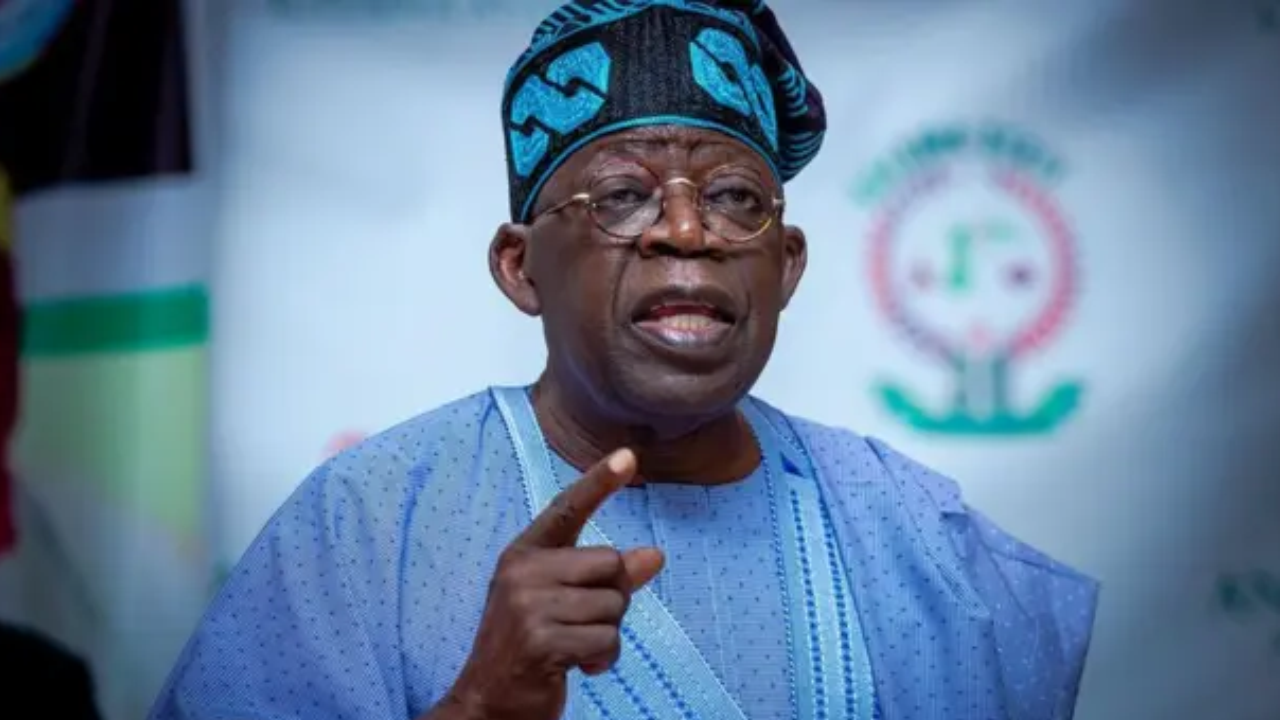

President Bola Tinubu on Monday held a closed-door meeting with the Chief of Defence Staff, General Olufemi Oluyede, and a French General at the Presidential Villa, Abuja.
Sources close to the President, who spoke on condition of anonymity, described Monday’s engagement as part of intensified collaboration on Nigeria’s security situation.
In addition to his earlier engagement, the President also held an emergency security meeting with the service chiefs and intelligence heads.
Those in attendance at the meeting include the Chief of Defence Staff, the Chiefs of the Army, Navy, and Air Staff, the Director-General of the Department of State Services, the Director-General of the National Intelligence Agency, and the Inspector-General of Police.
This meeting occurred after a colonel and six soldiers were killed on Sunday by an Improvised Explosive Device planted by insurgents in Borno State, marking another deadly strike against military personnel in the North-East theatre of operations.
The meeting with the French officer, which began at around 2 pm, was the President’s first official engagement since his return from Bayelsa on Friday.
It comes three weeks after the President announced that France had agreed to supply military equipment and training to Nigerian forces battling insurgency in the North-East.
A source close to the President confirmed the closed-door meeting, saying, “The President met the Chief of Defence Staff and a French General. That is the meeting that happened this afternoon.
“He has always said that he will seek collaboration and support from everywhere he can get help. And he is doing that.
“He is on top of the security issues. That is why he met with the French General and our CDS today.”
A second Presidency official who also spoke on condition of anonymity said, “It is a private meeting. He met with the CDS in the company of a French General. That is all I can confirm.”
The sources, however, did not disclose the name of the French general.
No photographs or visuals were released from the meeting.
The meeting follows a disclosure by Tinubu on Sunday, March 22, that Nigeria had secured French collaboration on military equipment and support after a lengthy discussion with French President Emmanuel Macron.
Speaking to state governors at his Ikoyi residence in Lagos that Sunday, the President said Nigeria was prepared to leverage all its goodwill and existing lines of credit to acquire necessary equipment and training for security forces.
He said, “I can report to you, yesterday again, at a lengthy discussion with Emmanuel Macron, their collaboration with us for equipment and support.
“I’m making frantic efforts to contact other nations. If we have to spend our goodwill and line of credit, we have those who are willing to support us with equipment and training.”
Monday’s meeting comes against the backdrop of rapidly deteriorating security conditions across Nigeria, including a controversial air strike on Saturday that killed over 100 civilians, and a fresh United States advisory authorising the voluntary departure of non-emergency embassy staff from Abuja.
On Saturday, a Nigerian Air Force strike targeting Boko Haram insurgents hit the Jilli market near the Yobe-Borno border, killing over suspected insurgents and civilians.
The military defended the operation as a precision strike on a terrorist logistics hub, but Amnesty International condemned what it described as “reckless use of deadly force” and called for an independent investigation.
The Presidency also defended the operation. Speaking with Bloomberg earlier on Monday, Special Adviser to the President on Media and Publicity, Temitope Ajayi, said, “The market was a legitimate military target because it has been turned into a logistics and trading hub by Boko Haram and ISWAP terrorists.”
Days earlier, on April 8, the United States Department of State authorised the voluntary departure of non-emergency government employees and family members from the US Embassy in Abuja, citing a deteriorating security situation.
The move elevated 23 Nigerian states to a “Level 4: Do Not Travel” warning, the highest risk category, including newly added Plateau, Jigawa, Kwara, Niger, and Taraba states.
The US highlighted threats from Islamist insurgents in the Northeast, criminal gangs in the Northwest, and ongoing violence in parts of southern and southeastern Nigeria, including oil-producing regions.
The embassy said visa appointments in Abuja had been suspended, though the Lagos consulate continues to provide routine and emergency services.
The Federal Government said the travel alert was guided by US internal protocols and did not reflect the overall security situation across Nigeria.
“While we acknowledge isolated security challenges in some areas, there is no general breakdown of law and order, and the vast majority of the country remains stable,” Information Minister Mohammed Idris stated.
The PUNCH