

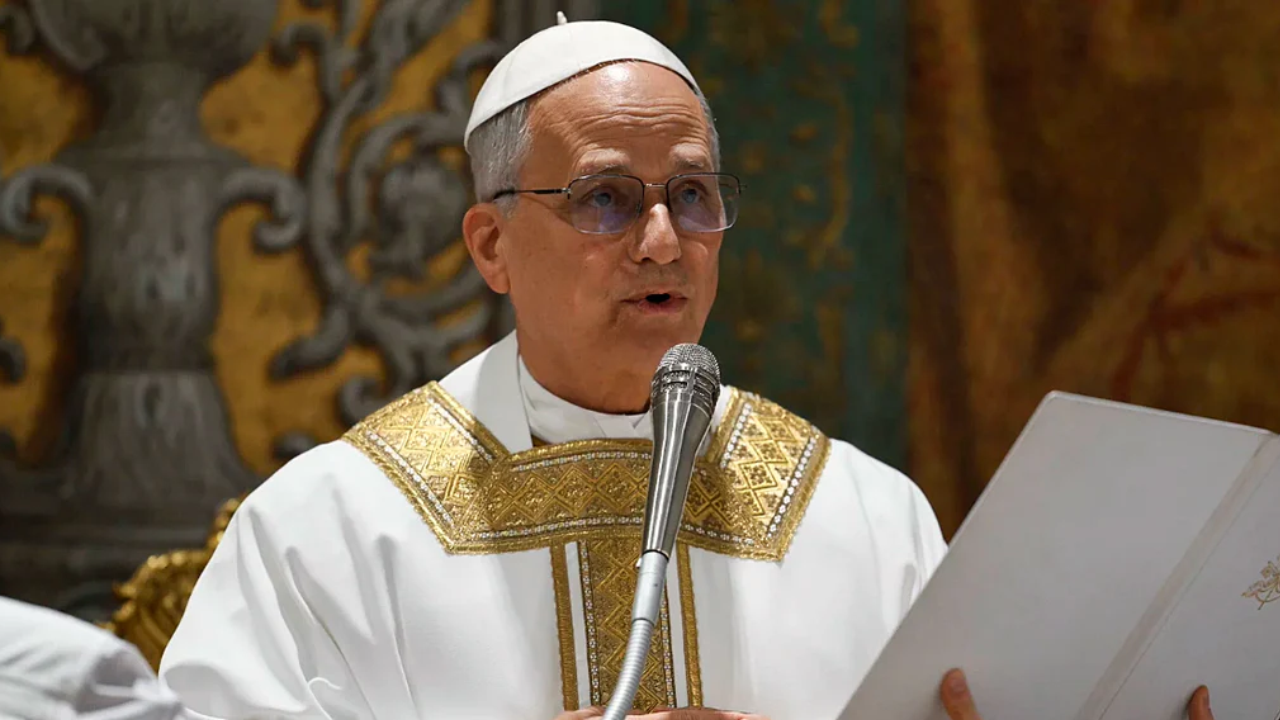

Since becoming the first US-born pope a year ago this week, Leo XIV’s measured style has given way to a trenchant tone in an ongoing confrontation with US President Donald Trump.
There was initially a lot of anticipation over how relations would play out between Robert Francis Prevost and Trump — two very different world leaders at odds over many issues.
But the polyglot pope, a former missionary to Peru, initially cultivated a more sober and discreet style that contrasted with the spontaneity of his predecessor, Pope Francis.
Leo is more of a listener and, in his speeches, he has focused on social priorities like the fight against poverty and repeated warnings over the risks of artificial intelligence.
He has also espoused a more collegiate style of governance, delegating some particularly sensitive topics to his senior clergy.
He at first let the US Church hierarchy take the lead in criticising policies of the Trump administration, particularly on migration.
In November last year, US bishops published an unprecedented letter denouncing as “inhumane” new curbs on asylum rights in the United States.
The Vatican strategy was to try to keep open a channel for dialogue with Washington while giving a moral response on key issues.
– ‘Not afraid’ of Trump –
But the rise of what Pope Leo has called a “diplomacy based on force” under the Trump administration pushed him to gradually abandon his reserve.
In January, he warned that “war is back in vogue”.
Following the US-Israeli attack on Iran and the regional conflict that ensued, Leo’s comments have become ever more pointed.
He condemned a threat by Trump to destroy Iranian civilisation as “truly unacceptable” and urged Americans to demand that US lawmakers “work for peace”.
Trump lashed out, calling the pope “weak” on crime and “terrible” on foreign policy in comments that sparked widespread outrage.
Christopher White, a senior fellow at Georgetown University in Washington DC, said one of the reasons for Leo’s strong reaction was the effort by some US officials “to consistently invoke religious language and try to rely on religious justifications for war”.
Pope Leo has said he is “not afraid” of the Trump administration but has also tried to avoid an escalation, framing the debate in moral terms.
The Catholic leader “doesn’t want to come onto the world stage as an American, as representing a superpower, but as a pastor representing a global church,” said White, author of the book “Pope Leo XIV: Inside the Conclave and the Dawn of a New Papacy”.
“He doesn’t want every word that he says to be seen as a direct response to Donald Trump,” White said.
The latest back-and-forth this week shows that it may be difficult.
Trump again criticised the pope in an interview on Monday with conservative host Hugh Hewitt, alleging that Leo believes it is “OK for Iran to have a nuclear weapon”.
“I think he’s endangering a lot of Catholics and a lot of people,” Trump said.
Asked about Trump’s latest comments, the pope told reporters Tuesday: “The Church’s mission is to preach the Gospel and to preach peace.”
“If anyone wishes to criticise me for proclaiming the Gospel, let them do so truthfully,” he said.
“The Church has spoken out against all nuclear weapons for years, so there is no doubt about that, and I simply hope to be heard for the sake of the value of God’s word.”
– Tour of Italy –
US Secretary of State Marco Rubio, a devout Catholic, will meet with the Pope on Thursday.
Italian media have presented the meeting as an attempt to “thaw” relations, but it remains to be seen whether the tensions will ease.
In any case, Vatican observers agree that Pope Leo is not particularly pressed for time.
Aged 70 and in good physical shape, he could have a long pontificate ahead of him.
To mark his first anniversary in office on Friday, he will begin an extensive tour of Italy over the coming months with a visit to Pompeii and Naples.
AFP