

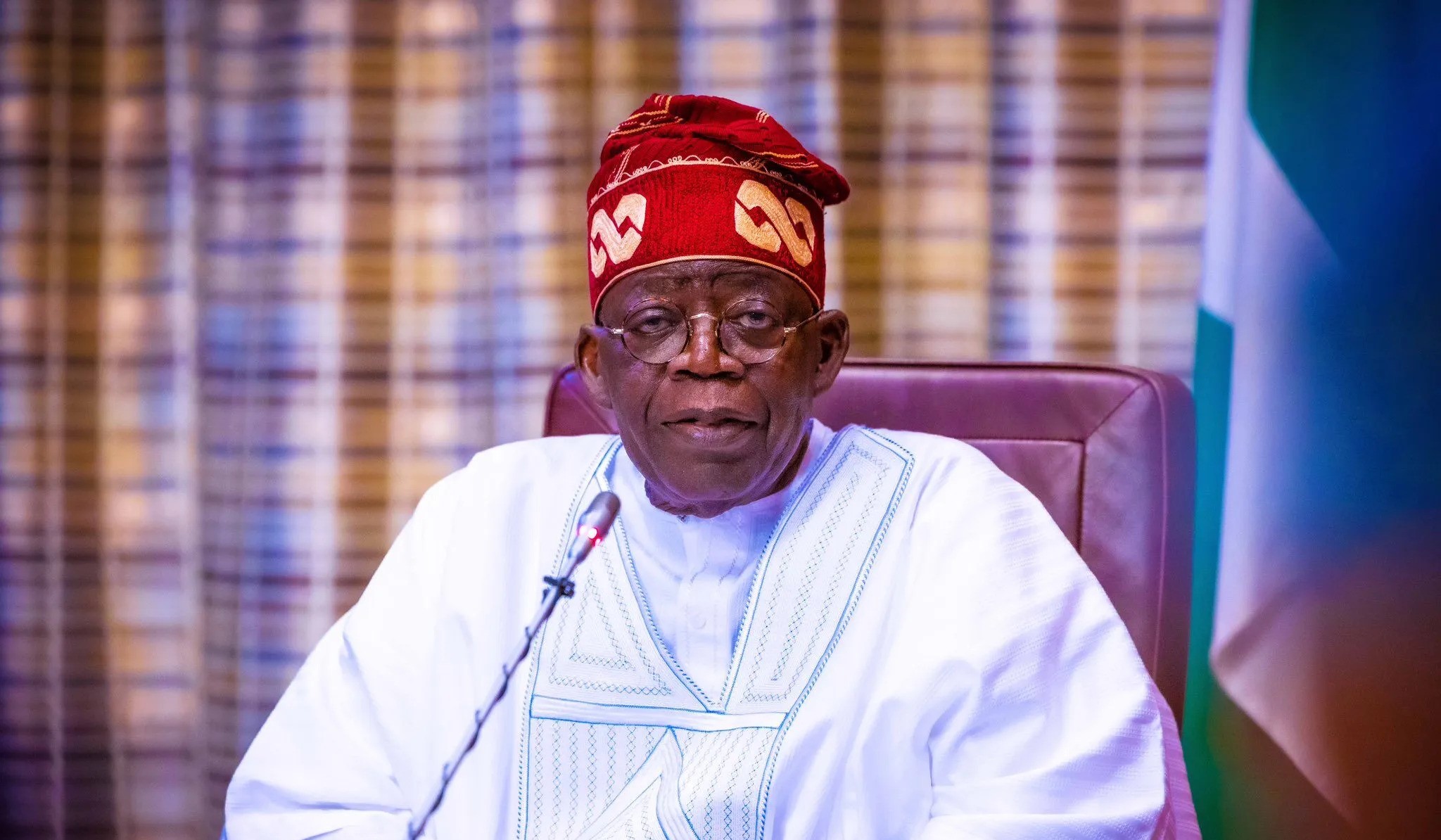

President Bola Tinubu has directed Nigerian missions in South Africa to immediately establish a crisis notifications unit for imperilled citizens, as the Minister of Foreign Affairs, Bianca Odumegwu-Ojukwu, warned that the ongoing anti-foreigner campaign in the country may be more accurately described as “Afriphobia” than xenophobia.
The directives followed a phone conversation between Odumegwu-Ojukwu and her South African counterpart, Ronald Lamola, on Thursday amid worsening tensions in the southern African nation.
Nigerians in danger were advised to contact South African security authorities whenever dangerous situations arise.
“The President of the Federal Republic of Nigeria, President Bola Tinubu, has directed that the Nigerian missions in South Africa set up, with immediate effect, a crisis notifications unit for imperilled citizens who have also been advised first and foremost to contact SA security authorities whenever dangerous situations arise,” the minister said in a statement on Thursday.
Odumegwu-Ojukwu said Lamola expressed concern and misgivings over Nigeria’s evacuation plans during the call, but she held firm, insisting that the government could not stand by while its nationals were being harassed, humiliated, and killed extrajudicially.
“I maintained that our government cannot stand by and watch the systematic harassment and humiliation of our nationals resident in SA as well as the extra-judicial killings of our people, and that the evacuation of our citizens who want to return home remains our government’s priority at this time,” she said.
She also pressed Lamola to ensure that South Africa’s police and justice systems treated cases of extrajudicial killings of Nigerians with greater seriousness, demanding clear and immediate consequences for perpetrators.
“I also highlighted the need for their police and justice systems to take the cases on ground of extra-judicial killings of Nigerians in South Africa more seriously and that there should be clear and immediate consequences for such acts,” the minister said.
On anti-foreigner political rhetoric, Odumegwu-Ojukwu warned that the violent and indiscriminate actions of South Africa’s anti-foreigner political parties were not only threatening the lives and property of Nigerians and other nationals but could also produce dangerous blowback closer to home.
“Our discussions also centred on the violent and indiscriminate rhetoric and actions of South Africa’s anti-foreigner political parties which puts the lives and properties of Nigerian and other nationals at risk, but which conversely might also have the effect of jeopardising the safety of South African interests in Nigeria,” she said.
The minister disclosed a particularly distressing dimension of the crisis, that Nigerian children and those born of both Nigerian and South African parents, referred to as “Sougerians,” were being bullied in schools and taunted to “return to their country.”
“This is reprehensible and capable of causing trauma to young minds for whom such incidents may remain etched in memory,” Odumegwu-Ojukwu said.
She added that Lamola acknowledged South Africa had a responsibility to protect innocent children and that authorities were working through education supervisory bodies to discourage the practice.
Commending the conduct of Nigerians in the volatile environment, the minister said their restraint had been exemplary.
“Nigerians have exercised, and continue to demonstrate, commendable restraint in their response to the ongoing crisis,” she said.
Raising the selective nature of the anti-foreigner campaign, Odumegwu-Ojukwu questioned whether the crisis warranted a more precise label than xenophobia.
“What is worrisome to our citizens both in Nigeria and those resident in South Africa is that the demand that all foreigners leave South Africa appears to be targeted only towards black Africans, which makes one wonder whether what is happening should not be more accurately defined as ‘Afriphobia’ rather than xenophobia,” she said.
Both ministers pledged to continue working together to de-escalate the crisis, noting the condemnations issued by Ramaphosa and his government.
Odumegwu-Ojukwu, however, expressed concern that hostility on the ground had yet to abate.
On the Durban protests of Wednesday, the minister said no violence was recorded owing to a heavy security presence. Nigerians in the city were nonetheless advised by the mission to close their shops and businesses and remain largely indoors.
At least 130 Nigerians have registered for voluntary evacuation flights from South Africa amid rising tensions.
The Federal Government had earlier summoned South Africa’s Acting High Commissioner, Lesoli Machele, to a meeting in Abuja to demand accountability over the deaths of two Nigerians, Nnaemeka Matthew Andrew Ekpeyong and Kelvin Chidiebere Amaramiro, both allegedly linked to assaults by South African security personnel.
Violent anti-foreigner protests have erupted across Pretoria, Johannesburg, Durban, East London, and parts of KwaZulu-Natal, driven by groups including Operation Dudula and the March and March Movement.
The House of Representatives condemned the attacks and recommended a temporary suspension of business permits for South African companies operating in Nigeria.
South Africa has a recurring history of xenophobic violence, with major outbreaks in 2008, 2015, and 2019 repeatedly straining its diplomatic ties with Nigeria.
The PUNCH