

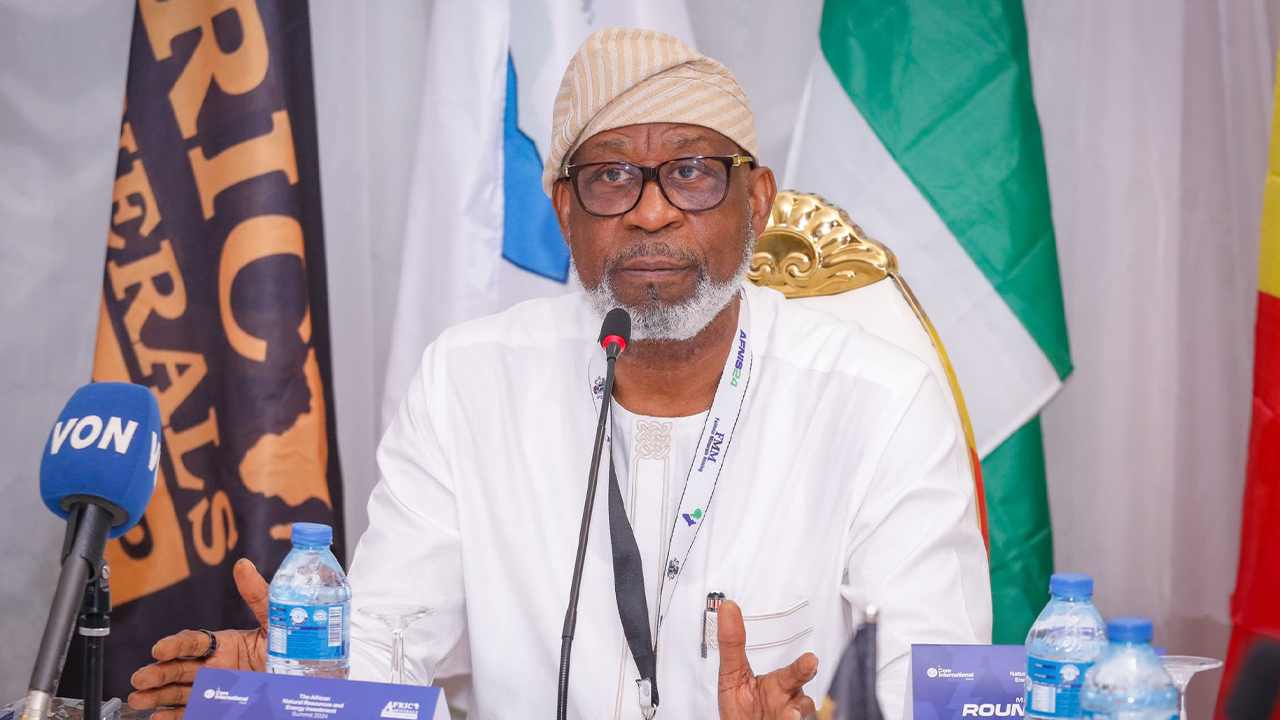

The Minister of Solid Minerals Development, Dele Alake, says the current economic difficulties in Nigeria are painful but part of the necessary transition toward building a resilient and sustainable economy.
Alake stated this at the maiden edition of the Solid Minerals Excellence Awards in Abuja on Thursday.
He said Nigeria was undergoing a decisive economic transformation aimed at achieving long-term prosperity, industrial growth and national development through bold reforms and strategic leadership.
According to him, the administration of President Bola Tinubu remains committed to implementing difficult but necessary reforms to address corruption, weak institutions, economic instability and overdependence on oil revenue.
“Effective leadership must be driven by vision, knowledge and courage,” he said.
Alake said meaningful national progress could only be achieved through policies focused on long-term national interest rather than short-term political considerations.
He added that Tinubu was determined to reposition the economy, noting that reforms previously avoided by past administrations due to political resistance were now being implemented to drive future growth.
Drawing parallels with the transformation of Lagos State, the minister noted that difficult reforms initially met strong opposition before eventually leading to improved revenue generation, stronger institutions and economic expansion.
He said the mining sector had been identified as a strategic pillar of the economic diversification agenda under Tinubu’s Renewed Hope programme.
“The ministry has undertaken comprehensive reforms targeting illegal mining, weak regulatory structures, insecurity, dormant licences and lack of transparency in the sector,” he said.
He added that the digitisation of mining operations and licencing processes had enhanced transparency, simplified access to licences and attracted increased investor participation.
Alake said the government had strengthened enforcement at mining sites by expanding the Mining Marshals initiative and deploying over 2,000 personnel nationwide to combat illegal mining, leading to arrests, prosecutions and improved compliance among operators.
He stressed the need for local value addition and domestic processing of minerals to drive industrialisation, job creation and technology transfer.
According to him, the initiative has already resulted in multiple arrests, prosecutions and improved compliance among operators.
Earlier, the Permanent Secretary of the Ministry of Solid Minerals Development, Yusuf Yabo, said the awards ceremony reflected the Federal Government’s commitment to positioning the mining sector as a globally competitive driver of economic growth.
Yabo said the celebration was also a recognition of partnerships, investments, innovation and transformation under the leadership of the minister.
Also speaking, the President of SOMEA, Oladunmi Owo, described the initiative as a platform to honour contributions to reforms and sustainable development in the sector.
Omar Sahinolu, the Chief Executive Officer of D-Gold, emphasised responsible mining practices, transparent governance and technological innovation.
Awards were later presented to distinguished individuals and organisations for their contributions to Nigeria’s solid minerals industry.
SOMEA was conceived to promote innovation, sustainability, responsible mining and investment in Nigeria’s solid minerals sector in support of economic diversification.
The awards, themed “Unlocking the Future”, recognised winners across high-impact categories reflecting the sector’s direction.
Categories honoured included Leading Mining Company of the Year, Excellence in Sustainable and Safe Operations, and Outstanding Contribution to Sector Growth, among others.
(NAN)