
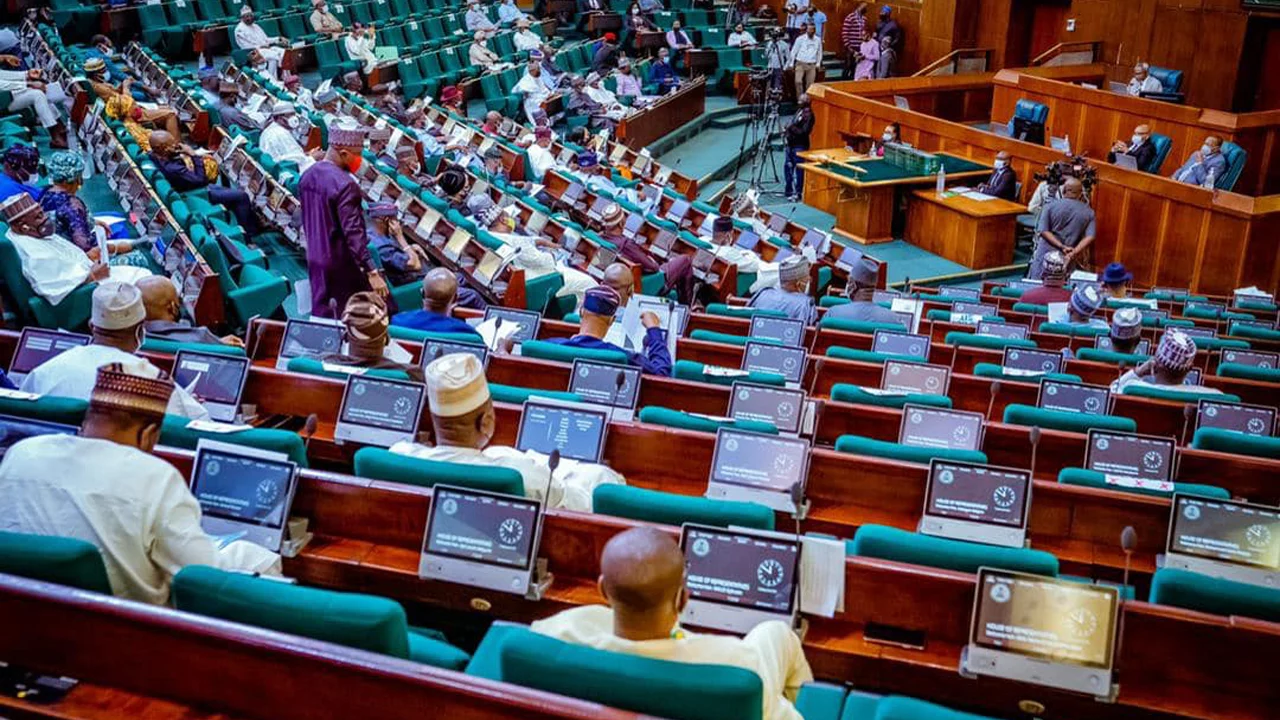

The House of Representatives Public Accounts Committee, on Thursday, approved a package of financial reliefs and a 10-year debt restructuring plan totalling ₦248.64 billion for three electricity distribution companies — Kano, Jos and Ikeja — in a bid to ease mounting liabilities and stabilise Nigeria’s fragile power market.
The figure comprises ₦128.60 billion in accrued interest on debts spanning 2015 to 2025 and ₦120.06 billion in historical principal obligations.
The resolution followed the adoption of a report by a technical subcommittee set up to review issues raised in the 2021 report of the Auditor-General for the Federation on the rising indebtedness of electricity distribution companies to the Nigerian Bulk Electricity Trading Company Plc.
The Chairman of the subcommittee, Mark Obetta, said the recommendations form part of broader legislative efforts to address legacy debts and restore financial stability in the electricity market.
The committee’s findings show that the combined indebtedness of 11 DisCos rose sharply from about ₦1 trillion as of December 31, 2024, to ₦1.3 trillion by September 25, 2025, driven largely by accumulated interest and persistent payment defaults.
Breakdown of the liabilities indicates that Abuja Electricity Distribution Company owes ₦275.17 billion, Kaduna DisCo ₦303.81bn, Kano DisCo ₦96.62 billion, Ajaokuta Disco ₦58.59 billion, Jos DisCo ₦104.38 billion and Ikeja DisCo ₦47.64 billion. Others include Ibadan DisCo (₦103.41 billion), Port Harcourt DisCo (₦88.40 billion), Benin DisCo (₦82.11 billion), Enugu DisCo (₦39.11 billion), Eko DisCo (₦16.49 billion), and the old and new Yola DisCos with ₦61.20 billion and ₦241.68 billion respectively.
At the heart of the dispute during the hearings was the legitimacy of interest charges imposed on outstanding invoices. Kano, Jos and Ikeja DisCos argued that the prevailing market rules did not expressly provide for such charges.
In response, the Nigerian Electricity Regulatory Commission issued a directive in January 2026 stopping NBET from charging interest on unpaid invoices between 2015 and 2020, while permitting interest accrual from 2021 onward. The regulator also directed that any interest tied to delays involving MERISTEM be disregarded.
Following this directive, NBET was asked to recompute the liabilities of affected DisCos, including the disputed ₦128 billion interest component.
The report partly read, “Based on appearance, submissions and requests, the Committee established that Jos and Kano Electricity Distribution Companies remain significantly indebted to NBET. The interest component and accrued debt during the government receivership period form a substantial part of Kano Disco’s liabilities.”
The panel recommended that the three DisCos be allowed to restructure and repay their historical debts over a period not exceeding 10 years.
“NBET and NERC should allow Kano Electricity Distribution Company, Jos Electricity Distribution Company and Ikeja Electricity Distribution Company, with significant legacy obligations to restructure and repay their historical debts totalling N120.06bn (including any obligation accrued during the early stabilisation period) over an extended period of not more than 10 years,” the report stated.
It further recommended that liabilities incurred during periods of government intervention, particularly the ₦13.40 billion linked to Kano DisCo, be transferred to the Nigerian Electricity Liability Management Company.
On interest waivers, the committee said: “That the market regulator, NERC, should issue a directive to NBET to waive all interest accrued in line with the terms of its letter dated January 2026 from 2015-September 2025 totalling N128.58bn for Jos, Kano and Ikeja Disco, representing the new market stabilisation era focused on service-reflective tariffs, massive metering and structural reform.
“This is due to the fact that MERISTEM was introduced as a financial Intermediary to manage liquidity challenges in the sector, including monthly invoice settlements through escrow account arrangements. Moreover, the current structure does not allow DisCos to charge commiserate interest on unpaid invoices to their customers, including Federal and State Government ministries, departments and agencies.
“In addition, these DisCos do not have direct access to their sales collections as the current market settlement system (escrow account) is on a first-line charge to first settle market obligations before operating expenses are released to the DisCos.”
The report added, “All DisCos should ensure strict compliance with their current market obligations going forward to prevent further accumulation of liabilities.”
The Committee Chairman, Bamidele Salam, warned that without decisive restructuring and regulatory discipline, the power distribution segment could remain financially unstable.
Nigeria’s electricity distribution companies have struggled with chronic indebtedness to NBET since the privatisation of the power sector in 2013.
NBET, which acts as the bulk trader, purchases electricity from generation companies and sells to DisCos, effectively serving as a financial buffer in the market.
However, DisCos have consistently fallen short in remitting full payments due to a combination of factors, including high technical and commercial losses, poor metering, tariff shortfalls, and weak revenue collection. The situation has been compounded by government policies that kept tariffs below cost-reflective levels for years, creating a persistent liquidity crisis.
To stabilise the sector, the government introduced several interventions, including payment assurance facilities and the involvement of financial intermediaries such as MERISTEM to manage collections through escrow arrangements. Despite these measures, debts have continued to accumulate, with interest charges significantly inflating liabilities.
The latest intervention by the House Committee is seen as an attempt to reset the financial structure of the distribution segment while aligning it with ongoing reforms aimed at improving efficiency, metering, and cost recovery across the power value chain.
The PUNCH