

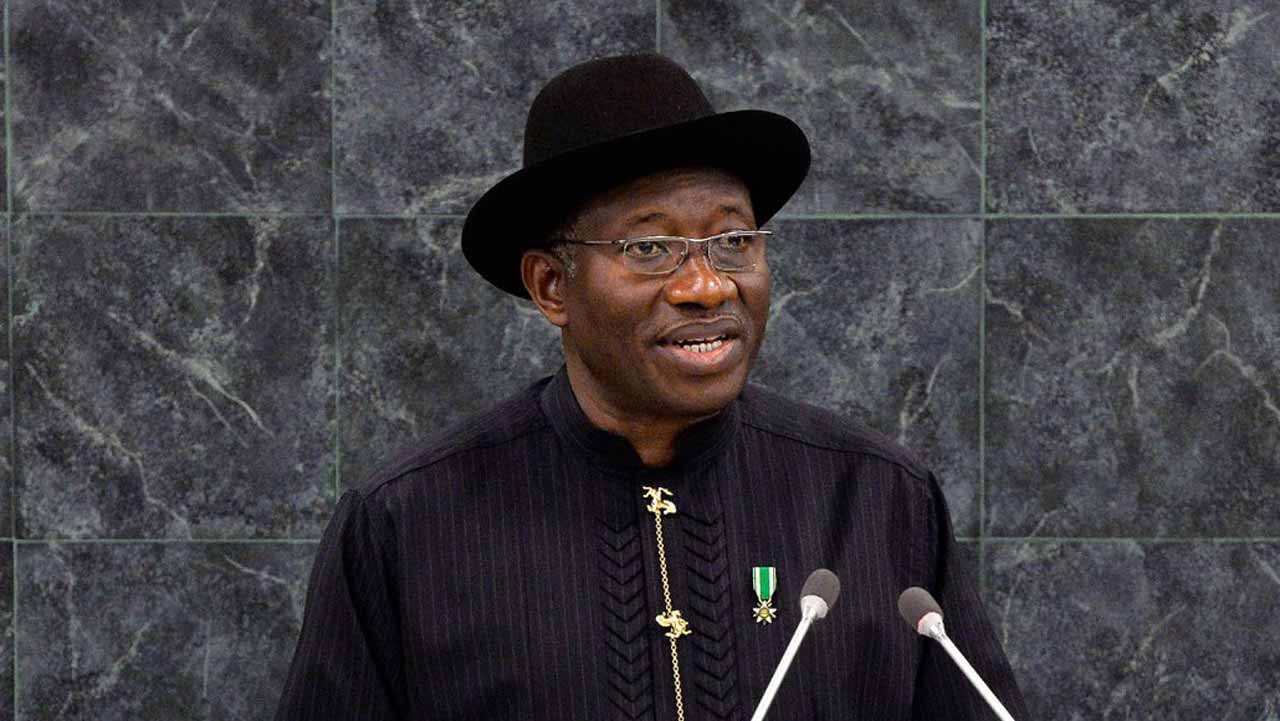

Former President, Dr Goodluck Jonathan, has defended his administration, adding that he did his best while in office.
His reply followed the criticism of his administration by former Vice President Atiku Abubakar during an interview on Prime Time on Arise TV.
Atiku, a presidential aspirant on the platform of the African Democratic Congress, had, during the interview, described Jonathan as inexperienced, stating that he made mistakes while he held sway.
Atiku is contesting the presidential ticket with the presidential candidate of the Labour Party in the 2023 election, Peter Obi, former Minister of Transport, Rotimi Amaechi and former governor of Kano State, Rabiu Kwankwaso.
In the interview, Atiku played down the prominence of Kwankwaso and Tambuwal in the North, limited Obi’s support base to the South-East and Amaechi’s strength to the South-South.
He also expressed disappointment in President Bola Tinubu’s administration and labelled ex-President Jonathan as inexperienced.
“I know Goodluck Jonathan very well. He is a decent young man, but also inexperienced, and I believe that contributed to his inability to manage the affairs of the country, particularly when he was faced with challenges,” he said.
Speaking at the 2025 Association of Retired Career Ambassadors of Nigeria awards ceremony in Abuja, on Monday, Jonathan said nobody who becomes a governor or president would say he did not make mistakes.
“So not too long ago, a very senior politician said, ‘Oh, Jonathan was too young and probably that’s why he made mistakes.’
“If I made mistakes, yes, nobody who becomes a governor or a president will say you did not make mistakes. Even when you promote yourself to the level of a god, you become a deity.
“All human beings must make mistakes. I became president in 2010 at the age of 53. I left in 2015 at the age of 58, and they say I was too young. Must it have been 100 years before I ran the affairs of the state?”
The former President defended his decisions in office, saying that while mistakes are inevitable, he did his best.
The former president highlighted Nigeria’s diplomatic achievements during his tenure, particularly its election to the United Nations Security Council.
“I’m talking to diplomats, so I can say that during my period, I knew what I did for us to appear in the UN Security Council two times… If I were so naive, I don’t think I would have been able to navigate through that process,” he said.
Speaking on the state of the West African countries, Jonathan stressed that political stability remains a critical foundation for economic development, warning that unstable governance systems will continue to hinder progress across West Africa.
He noted that while the founding fathers of ECOWAS had a strong vision, the bloc continues to face instability due to political challenges in member states.
He observed that, particularly in enforcing democratic norms among member states, ECOWAS has suffered setbacks, adding that although the bloc was initially focused on economic cooperation, the region cannot make tangible progress if its societies remain politically unstable.
He stressed, “We cannot progress economically if we are very unstable societies politically.”
He added that efforts to promote democracy and good governance often clash with national sovereignty, making consensus among leaders difficult.
“That means that ECOWAS must interfere with the internal affairs of the states, and the issue of sovereignty becomes a problem,” he said.
Jonathan further urged West African leaders to take collective responsibility for stabilising the region, stating, “the heads of states of ECOWAS must continue to work together and agree on concrete terms and make sure that the sub-region is politically stable.”
He noted that the region’s ambition for economic integration could not succeed without strong democratic institutions.
Jonathan also called on Nigerian diplomats to document the country’s foreign policy experiences to guide future administrations, noting that such efforts would help leaders make informed decisions in international relations.
Paying tribute to the founders of ECOWAS, including former Head of State, Yakubu Gowon, Jonathan praised their foresight in establishing the regional bloc in 1975, describing the vision of a united and economically integrated West Africa as “bold, ambitious, and necessary.”
The PUNCH