

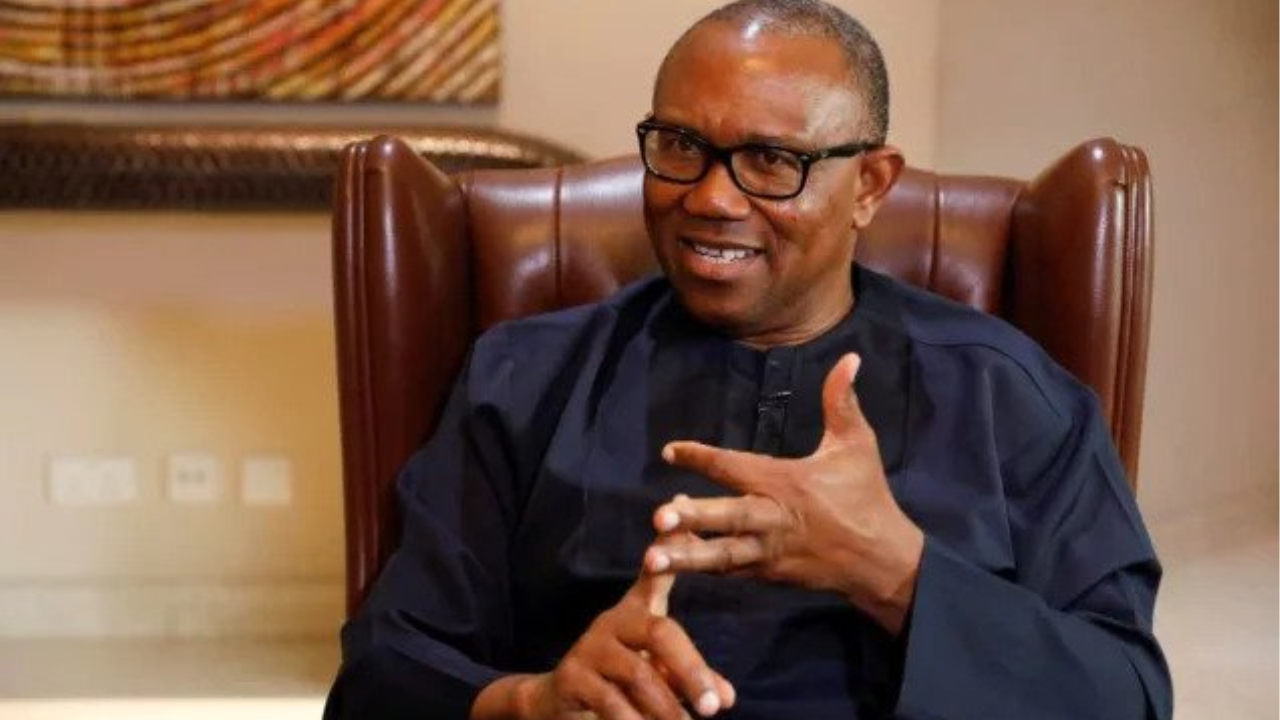

Peter Obi, a presidential aspirant on the platform of the Nigeria Democratic Congress (NDC), has contrasted the lending practices of British banks with what he described as Nigeria’s collateral-dependent banking system.
Obi made the remarks on Friday during the Spier Dialogue 2026 in Cape Town, South Africa, where he addressed members of the Nigerian community before his scheduled appearance at the pan-African governance forum.
“I lived in the UK, my brother. I did business in the UK. Very successful business. I went to the bank. I told them the schools I was from, Cambridge and Oxford, and they gave me money.
“They didn’t ask me about my parents. They gave me this loan based on my intellectual capital, and I paid them back,” he said.
Obi added that the same opportunity would not have been available to him in Nigeria.
“In my country, I wouldn’t get that type of loan. They would have asked me to go and bring my dead mother and father, their properties and all of that,” he said.
He used the remarks to restate his broader argument about governance, drawing a distinction between leaders focused on transactions and those committed to building functional institutions.
“People always believe that every politician is the same because they believe governance is all about transactions. What we want is people that will make the society work,” he said.
In a post on X announcing his arrival in South Africa, Obi described the forum as “an important event centred on the future of Africa and the urgent challenges facing our continent and the globe,” covering governance, democracy, economic inclusion, and leadership.
In a post on X announcing his arrival in South Africa on Friday, Obi described the Spier Dialogue as “an important event centred on the future of Africa and the urgent challenges facing our continent and the globe.”
He said the forum addressed issues including governance, democracy, economic inclusion, urbanisation, migration, and leadership.
“Africa’s future should not be characterised by poverty amid abundance or by division instead of development.
“It is time for us to transition from consumption to production, from divisive politics to politics built on competence and compassion, and from mere promises to tangible progress that serves everyday citizens,” he wrote.
The PUNCH