

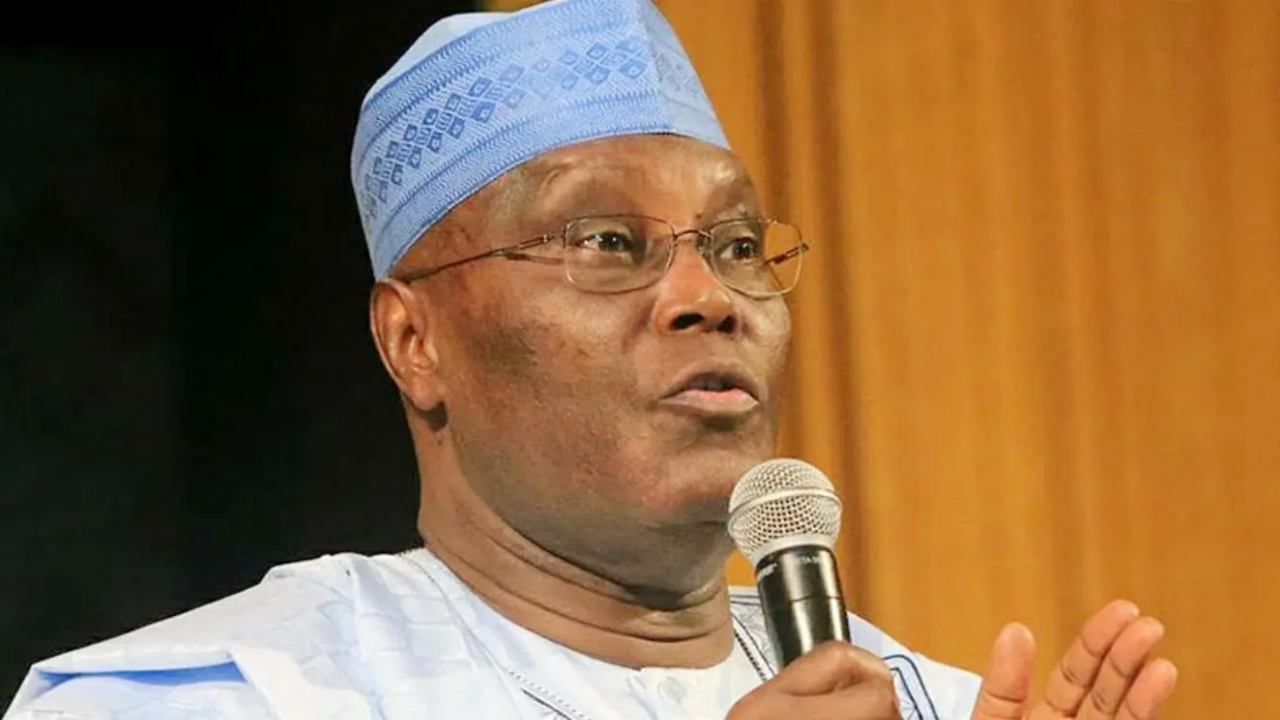

The debate surrounding fuel subsidy has re-emerged as a core issue ahead of the 2027 presidential election, following fresh declarations by the African Democratic Congress (ADC) candidate, Atiku Abubakar.
The former vice-president has reaffirmed his plan to reinstate petrol subsidies, using a meeting with Osun State ADC delegates in Abuja to clarify his policy vision and disown conflicting remarks from his media team.
While talking to the delegates, Atiku explicitly rejected earlier comments by his media aide, Paul Ibe, who had suggested during a television appearance that a reinstated subsidy would be gradually phased out after an initial economic recovery.
“Earlier, one of my press aides contradicted me in a policy statement as far as subsidy is concerned,” Atiku said. “I want to repeat categorically that when I said I would return to subsidy, I will! Nigeria is rich enough to look after the welfare of its citizens. Let it be clearly stated that he was not speaking on my own authority.”
Elaborating on his position in a statement published on X, Atiku insisted that national prosperity should translate directly into household purchasing power rather than state revenues.
“On the question of subsidy, my position has not changed and will not change: I will restore it! A nation as blessed as ours has no business abandoning its citizens to hardship. Nigeria is rich enough to look after her own.”
The ADC candidate linked escalating fuel costs directly to rising transport expenses, surging food prices, and widespread economic strain. He pledged to break what he termed a “wretched chain” established under President Bola Tinubu’s administration by providing targeted intervention aimed at domestic energy production and cost reduction rather than foreign fuel imports.
To further clarify the framework, Atiku’s Senior Special Assistant on Public Communication, Phrank Shaibu, emphasised that the proposed measure is designed strictly as a production-support system rather than a return to the previous import-driven arrangement. Shaibu confirmed that policy decisions remain solely with the candidate, detailing that the administration would deploy a “targeted, capped, transparently budgeted and independently audited subsidy” focused on local refiners.
According to Shaibu, the support mechanism would act as temporary “scaffolding” without a rigid sunset clause, phasing out naturally as domestic refining capacity grows, supply stabilises, and market competition deepens. Rebutting the current economic strategy, Shaibu argued that the Tinubu administration had shifted the weight of its fiscal changes onto households, declaring that the electorate faces a choice between “Expensive Nigeria versus Affordable Nigeria.”
In his prior interview on AIT, Ibe had outlined a similar mechanism of supplying crude oil to domestic refiners at discounted, subsidised rates. He suggested that price monitoring could be maintained within the deregulated sector to ensure lower production costs translate to lower pump prices for consumers. While criticising the current administration’s simultaneous removal of petrol subsidies, foreign exchange controls, and electricity tariffs, Ibe argued that executing multiple major economic shifts without adequate safety nets had inflicted unnecessary strain on the populace.
President Tinubu abolished the petrol subsidy upon taking office on 29 May 2023, defending the decision alongside foreign exchange deregulation as vital steps toward repairing public finances and attracting capital investment. However, the subsequent spike in fuel and transportation costs has kept the policy at the centre of national political debate.