


An International Chamber of Commerce (ICC) arbitration tribunal in Paris has rejected multi-billion-dollar claims brought against Nigeria by Sunrise Power and Transmission Company Limited regarding the long-delayed Mambilla Hydroelectric Power Project.
The 616-page final award delivered on 16 September 2026 ordered Sunrise and its promoter, Leno Adesanya, to reimburse Nigeria for a substantial portion of its legal costs, dismissing their demands for 680 million U.S. dollars plus interest in one arbitration, over 2.7 billion U.S. dollars in another, and a 400 million U.S. dollar claim stemming from a disputed settlement agreement. President Bola Tinubu welcomed the outcome, describing it as the removal of a significant obstacle to the project.
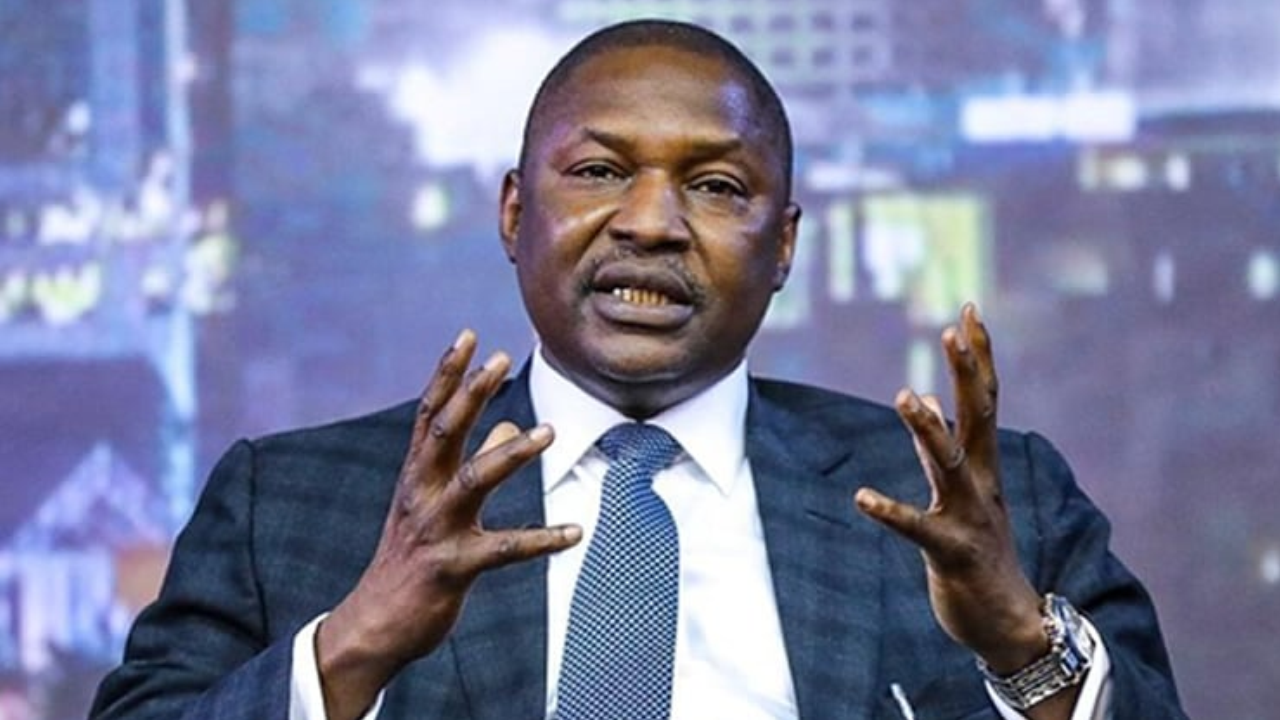
Former Attorney-General of the Federation and Minister of Justice, Abubakar Malami, SAN, welcomed the tribunal’s decision to protect Nigeria’s financial interests, but rejected reports of adverse findings by the tribunal alleging he entered into a corrupt arrangement with Adesanya.
In a statement issued on Tuesday by his Special Assistant on Media, Mohammed Doka, Malami stressed that the Paris proceedings were commercial arbitration rather than a criminal prosecution, stating, “The proceedings were commercial arbitration proceedings between parties to a dispute. They were not a criminal prosecution of Abubakar Malami, SAN, and the award does not constitute a criminal conviction of him.”
The former Justice Minister categorically denied any wrongdoing, with his statement noting, “Malami rejects any suggestion that his official actions were undertaken pursuant to a corrupt agreement or in exchange for personal financial benefit.” He pointed out that while Adesanya reportedly claimed to possess audio or video recordings to support his allegations, these were never produced before the tribunal.
“Where allegations of this gravity are made, the existence, non-production, authenticity and contents of any claimed recordings are matters of obvious evidentiary importance,” Malami asserted, adding that any severe findings should be tested against the complete evidentiary record.
Malami explained that Sunrise’s involvement in the Mambilla project began in 2003, long before his appointment as Attorney-General, and had been handled by successive administrations and Ministers of Justice. He noted that former AGF Michael Aondoakaa had previously recommended an amicable resolution, leading to a General Project Execution Agreement in November 2012.
“The relevance of this history is straightforward: Malami did not create the Sunrise dispute, introduce Sunrise to the Mambilla project, or originate the Federal Government’s attempts to settle the controversy. He inherited a longstanding dispute that had traversed previous administrations, Attorneys-General, ministries and contractual arrangements,” his office stated.
The statement outlined that Malami acted pursuant to a presidential directive issued in April 2016 to resolve legal hurdles obstructing foreign financing for the project, including talks with China Exim Bank.
During negotiations in London in November 2019, Sunrise initially demanded 500 million U.S. dollars in settlement, which Federal Government delegates countered with 100 million U.S. dollars before a 200 million U.S. dollar proposal emerged. However, former President Muhammadu Buhari twice refused to approve the 200 million U.S. dollar settlement, writing “Not approved” in January 2021 after previously stating in April 2020 that the government lacked the funds.
Following former President Buhari’s refusal to approve payment, Malami maintained that he instructed government lawyers to actively defend the country’s position against Sunrise’s attempts to enforce the terms.
“Malami did not simply direct that Sunrise be paid regardless of the President’s position,” the statement affirmed. “When Sunrise asserted that Nigeria was consequently in default… Malami instructed counsel representing the Federal Government to resist Sunrise’s attempt to have the settlement terms adopted or enforced against Nigeria and to preserve the Federal Government’s legal position.”
The former Minister concluded that a comprehensive response to specific aspects of the tribunal’s findings would be released after a thorough review of the complete record.