


The Minister of Power, Joseph Tegbe, revealed that the initial diagnosis of the electricity sector uncovered severe operational bottlenecks across all segments.
“Upon assuming office, the diagnosis we undertook at the onset revealed constraints at every segment of the electricity value chain. Gas supply to power stations was limited by damaged pipelines and commercial terms that discouraged investment,” the minister stated.
He explained that the national power output was heavily reliant on thermal facilities plagued by aging infrastructure, delayed maintenance, and stalled initiatives.
“Our generation fleet was heavily dependent on thermal plants, with ageing equipment, deferred maintenance, stalled projects and capacity unable to reach consumers. The sector diagnosis revealed payment of only 27 per cent of generation companies’ bills, undermining their ability to maintain plants and pay gas suppliers,” Tegbe stated.
Following targeted government interventions, available electricity generation on the national grid climbed to 5,403.3 megawatts on Tuesday, 22 September 2026, falling roughly 399 megawatts short of the all-time peak of 5,801.84 megawatts attained in March 2025.
Data from the Transmission Company of Nigeria’s National Control Centre showed that 4,379.07 megawatts of the available output was assigned to distribution companies (DisCos), while 1,024.18 megawatts was set aside for transmission losses, plant auxiliary usage, and international or bilateral supply agreements.
The latest figure surpasses the 5,330 megawatt peak recorded across August and September, representing a substantial recovery from the first quarter of 2026, when gas shortages forced generation below 3,000 megawatts. Output typically ranged between 3,700 megawatts and 4,700 megawatts prior to June. Although the national installed capacity stands at 13,014.40 megawatts, operational constraints, fuel availability, and fluctuating grid demand continue to restrict total delivered power.
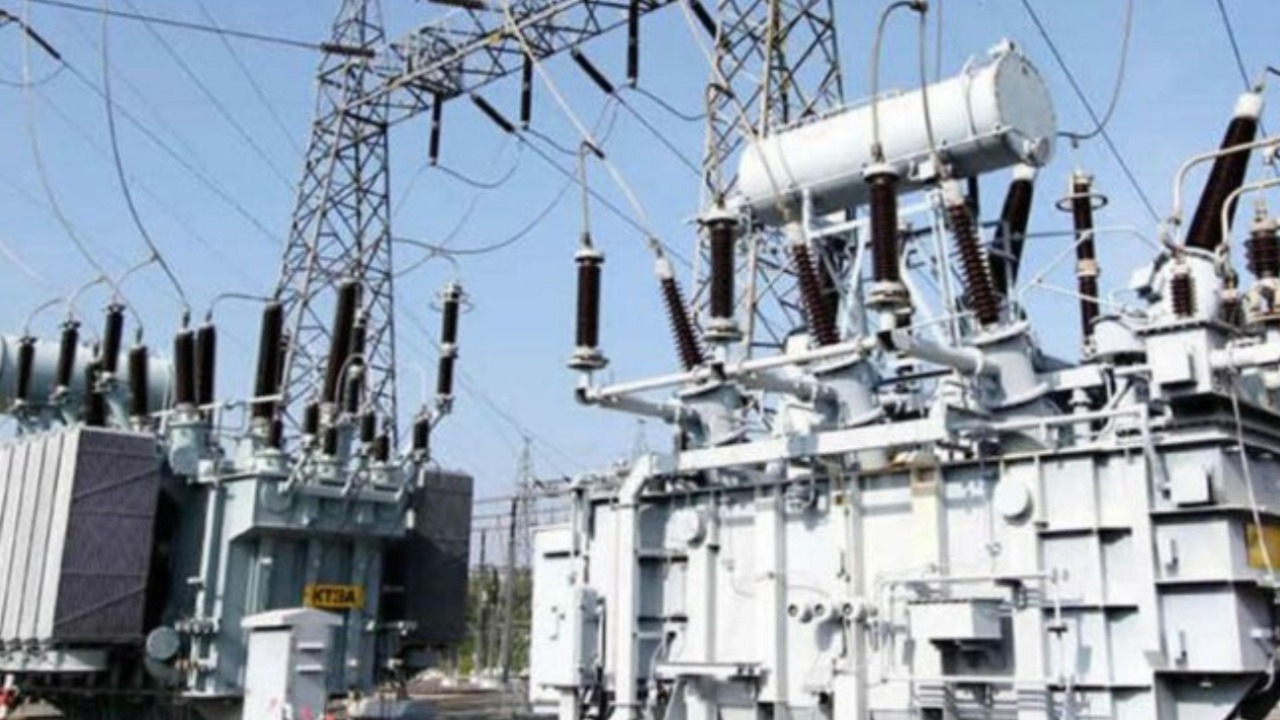
To alleviate these transmission and supply constraints, the government recently restored the 375 megawatt Alaoji open-cycle power station to the grid after a three-year shutdown. Additionally, new transformers installed at Apapa, Ijora, Alausa, and Lekki unlocked 672 megawatts of transmission capacity in Lagos, while a 300MVA transformer in Katampe added 240 megawatts to the Abuja network.
According to the Daily Load Allocation Table, Abuja DisCo received the largest share of the distributed volume at 700 megawatts (15.20 per cent), followed by Ikeja DisCo with 581 megawatts (15.01 per cent), and Ibadan DisCo with 550 megawatts (11.93 per cent). Benin DisCo was allocated 531 megawatts, Eko DisCo received 519 megawatts, Enugu DisCo got 512 megawatts, and Port Harcourt DisCo was assigned 466 megawatts. The remaining volume was split among Kano (161 megawatts), Kaduna (155 megawatts), Jos (134 megawatts), and Yola (70 megawatts).
The official system operator records confirm that the national instantaneous peak generation record of 5,801.84 megawatts was established at 9:15 pm on 4 March 2025. While the recent 5,403.3 megawatt figure denotes available scheduled load rather than an instantaneous peak measurement, it highlights sustained progress above 5,000 megawatts.
The Federal Government plans to concentrate its upcoming interventions on bolstering key transmission lines across Lagos, Enugu-Port Harcourt, and Abuja-Kaduna-Kano, alongside initial planning for a national transmission supergrid.