

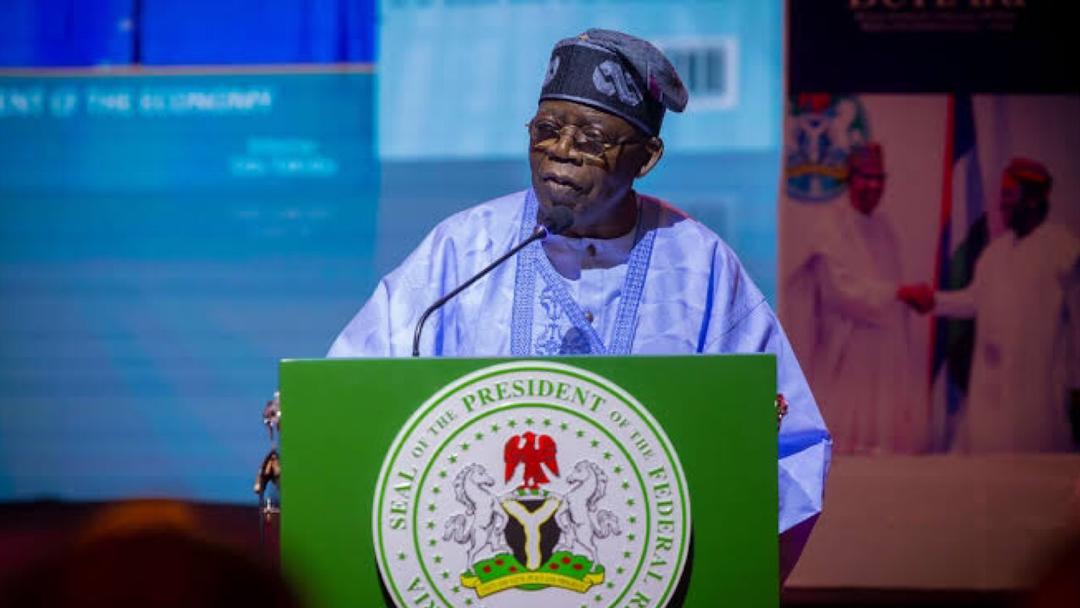

In an address to the General Debate of the 81st Session of the United Nations General Assembly (UNGA) in New York, President Bola Tinubu declared that the UN Security Council must undergo immediate structural reform, asserting that the global balance of power in 2026 can no longer be governed by the geopolitical realities of 1945.
Delivered by Vice President Kashim Shettima on Thursday, the address demanded at least two permanent seats for Africa equipped with full veto powers, alongside five non-permanent seats, citing the Ezulwini Consensus and the Sirte Declaration. Tinubu stressed that Africa cannot remain absent from permanent representation while constantly filling the council’s agenda.
The demand coincides with growing momentum for institutional restructuring at the United Nations. Addressing world leaders at the assembly, UN Secretary-General António Guterres reiterated his position that the lack of permanent African representation on the 15-member council—where China, France, Russia, the United Kingdom, and the United States hold exclusive permanent status and veto power—is both unjust and indefensible, urging structural changes to restore global legitimacy and effectiveness.
Positioning Nigeria as a candidate for expanded responsibilities in maintaining international peace and security, Tinubu highlighted the nation’s historical security contributions in Liberia, Sierra Leone, Darfur, Mali, and The Gambia. He noted that Nigeria continues to advance mediation, counter-terrorism, democratic governance, and maritime stability through regional platforms including the African Union, ECOWAS, and Gulf of Guinea partnerships.
On regional stability, Tinubu reflected on Nigeria’s ongoing military engagement against insurgency, drawing attention to broader global security challenges and domestic operational lessons.
“Nigeria’s prolonged struggle against Boko Haram, ISWAP and other armed groups has taught us that military victories require enduring foundations in education, economic opportunity, accountable governance and communities whose rights and dignity are protected. Development cannot take root where violence repeatedly uproots livelihoods, and peace cannot endure where injustice and exclusion replenish the ranks of those who threaten it,” he said.
He urged enhanced international collaboration against cyberattacks, organized crime, illicit finance, and terrorism, while voicing deep concern over ongoing conflicts in Sudan and other war-torn nations. Emphasising diplomacy and international humanitarian law, Tinubu reaffirmed Nigeria’s commitment to peaceful dispute resolution under the UN Charter.
Turning to economic growth and regional trade, the President identified the African Continental Free Trade Area as a vital driver for expanding intra-African trade and building regional value chains. He argued that Africa must transition away from raw material extraction towards domestic manufacturing, value addition, technological innovation, and knowledge-based economies to ensure its natural wealth creates widespread prosperity rather than ongoing dependency.
To support this economic transition, Tinubu called for fundamental reforms to the international financial system, pointing to inadequate financing as a primary barrier to sustainable development. He advocated for accessible debt sustainability frameworks, broader access to concessional funding, and dynamic capital partnerships, which includes blended finance and South-South cooperation, to construct resilient infrastructure and support climate adaptation.
Regarding climate policy, Tinubu rejected any perceived conflict between industrialisation and environmental responsibility, stating that developing nations require technology transfer, capacity building, and climate finance to expand energy access and reduce poverty via low-carbon pathways.
He noted that despite producing under four per cent of global greenhouse emissions, Africa suffers disproportionate climate impacts. Reaffirming Nigeria’s commitment to the Paris Agreement, he outlined the national Energy Transition Plan, which targets net-zero emissions by 2060 by integrating renewable power, clean cooking, and natural gas as a transitional fuel alongside climate-smart agriculture.
“Finance must be governed by equity and shared responsibility rather than charity, with international commitments translated into accessible, predictable and adequately funded mechanisms enabling developing countries to pursue climate action without compromising development objectives,” he stated.
Addressing modern technological developments, Tinubu advocated for the constructive deployment of artificial intelligence across critical sectors such as healthcare, agriculture, education, and economic productivity. He noted that AI’s impact depends entirely on human intent, comparing the technology to a knife that can either take a life in the hands of an assailant or save one in the hands of a surgeon.
Highlighting Nigeria’s investments in broadband connectivity, digital public infrastructure, research, and tech entrepreneurship, he called on global partners to collaborate with young Nigerian innovators to direct AI towards human progress.
Tinubu urged the United Nations to evolve alongside changing global needs or risk losing its structural relevance, reiterating that developing states must be treated as indispensable partners in global progress.
“A reformed, inclusive and effective United Nations is indispensable to the peaceful, just and sustainable world that future generations deserve. Whatever our differences, we must remember that humanity is our oldest citizenship, and peace is the inheritance we owe every child,” he said.