

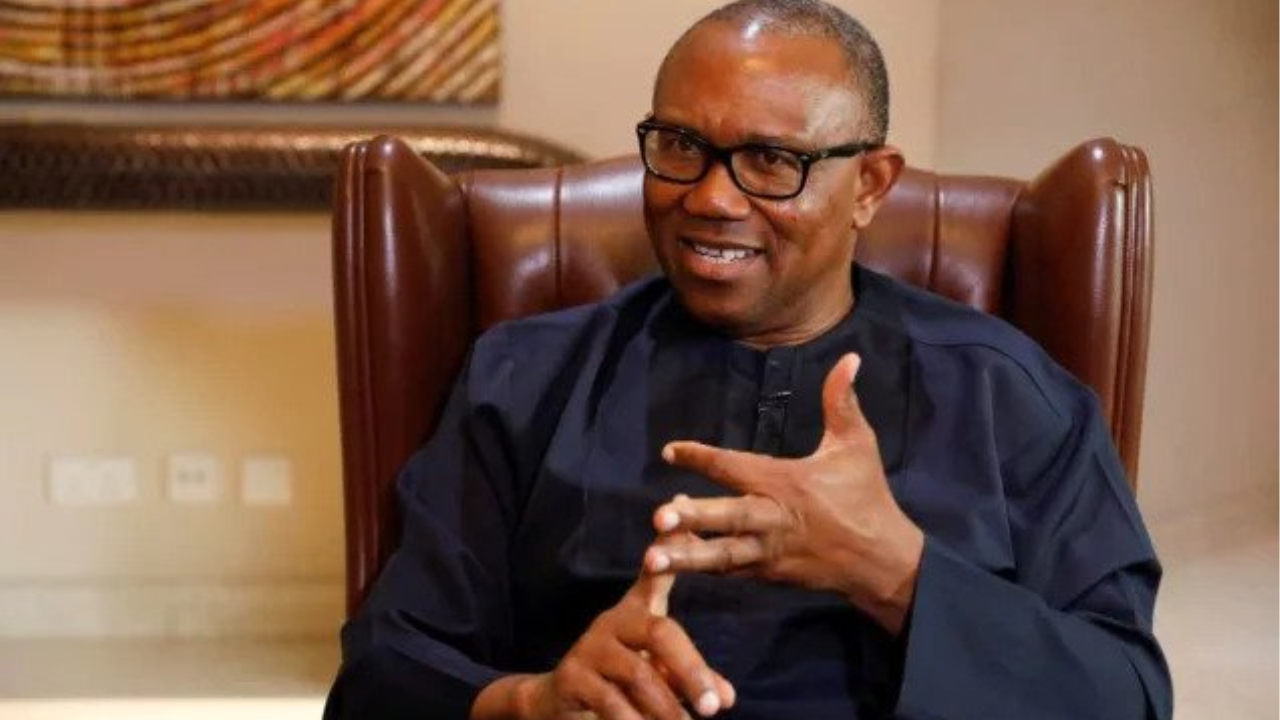

The presidential candidate of the Nigeria Democratic Congress (NDC) and former Anambra State Governor, Peter Obi, has said that despite reported increases in government revenue under President Bola Tinubu’s administration, Nigerians are facing worsening economic hardship due to rising debt and declining socio-economic indicators.
In a statement issued on Wednesday via his X handle, Obi said that, in marking three years in office, Tinubu listed an increase in revenue from ₦16.8 trillion in 2022 to ₦35 trillion in 2025 as one of his achievements, describing it as a rise of over 100 per cent.
He, however, said that instead of a reduction in borrowing alongside the revenue increase, the administration had continued what he described as “excessive and imprudent borrowing,” claiming that Nigeria’s total debt now stands at about ₦200 trillion.
“Shockingly, while Nigerians expected a reduction in borrowing with the exponential increase in revenue, the opposite is the case.
“In just three years, President Bola Tinubu’s government seems to be obsessed with excessive and imprudent borrowing, with our total debt currently about N200 trillion—a deeply disturbing increase of over N100 trillion,” he said.
Obi further stated that Nigeria had recorded higher-than-budgeted revenue inflows due to global and regional geopolitical tensions.
He also claimed that key socio-economic indicators had worsened despite the reported revenue and debt increases, alleging that multidimensional poverty had risen from 87 million people in 2023 to over 140 million in 2025, while unemployment had increased and GDP per capita had declined from $1,597 in 2023 to $1,223 in 2025.
“Alarmingly, even with the astronomical increase in both revenue and debt, almost all key socio-economic and governance indicators are worse than in 2023,” he said.
Obi asked: “Where did all the money go?”
He called for what he described as a detailed and transparent explanation of Nigeria’s economic and financial management since 2023, and urged an end to what he termed “imprudent, unaccountable, and opaque management” of public resources.
The latest statement follows another on Tuesday, wherein the former governor criticised the Tinubu administration over what he described as excessive borrowing and poor fiscal accountability.
He said Nigeria’s total public debt had risen to about ₦200 trillion, which he attributed to what he called imprudent governance.
He argued that the debt level represented an increase of more than ₦100 trillion in three years, contrasting it with the approximately ₦49 trillion accumulated during the eight-year administration of former President Muhammadu Buhari.
However, the Presidency has dismissed the claims, arguing that a significant portion of the country’s debt profile predated the current administration, noting that the government inherited about N20tn in Ways and Means debt, which was later securitised.
Special Assistant to the President on Social Media, Dada Olusegun, maintained that Nigeria’s public debt figures include obligations incurred by state governments over the years and should not be attributed solely to the Federal Government.
Questioning Obi’s interpretation of the debt figures, the presidential aide said fluctuations in exchange rates significantly affect the naira value of external debt.
The PUNCH