

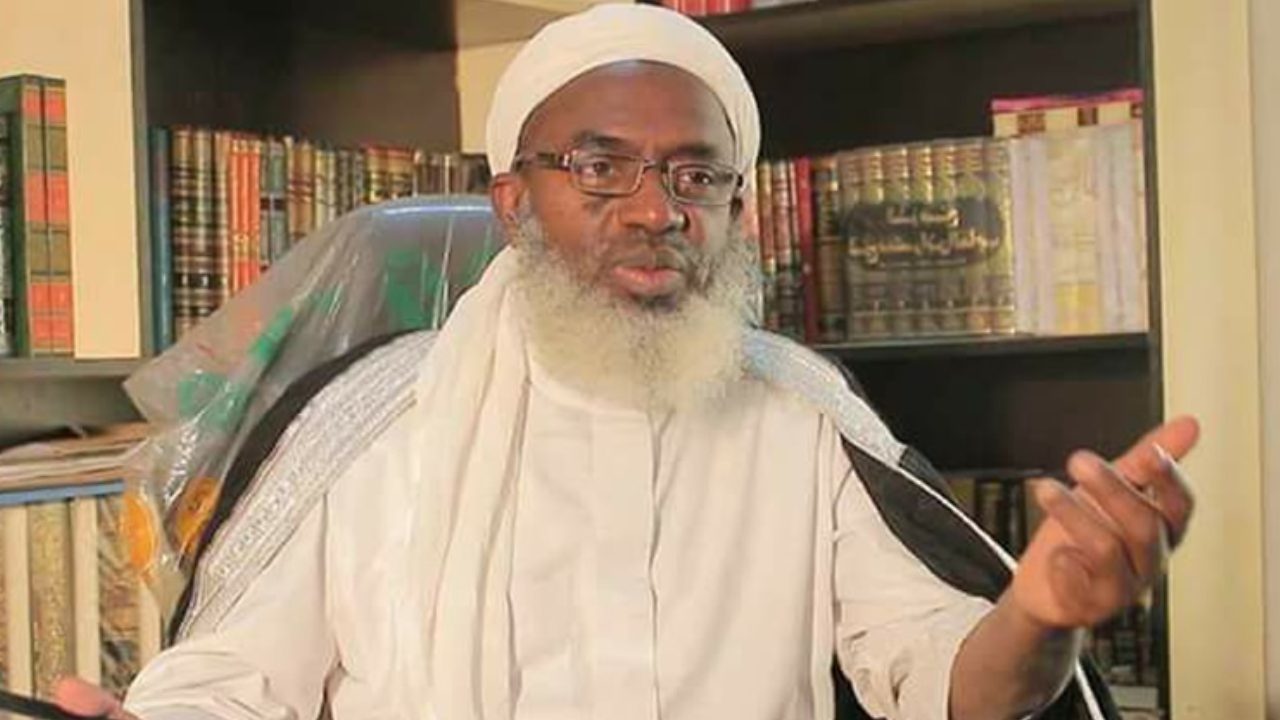

Prominent Islamic cleric Ahmad Gumi has drawn sharp comparisons between the government’s handling of northern insecurity and past peace efforts in the Niger Delta, questioning why officials have not directly engaged Boko Haram and bandits to end regional violence.
In a Facebook post on Saturday, the retired soldier argued that dialogue, rather than military action, successfully quelled insurgency in the South-South and should be replicated in the North. He cited past peace missions by former President Goodluck Jonathan and former Vice-President Yemi Osinbajo, both of whom visited militants in the creeks to broker peace.
“The former President Jonathan visited delta militants in the creeks, so also the former vice president Osinbajo. They all came up with a program to tame the militants,” Gumi wrote, before asking: “Who is going to visit BH and Bandits to tame them without fools castigating them?”
The Niger Delta peace process began in 2007 when Jonathan, then vice-president, travelled unarmed into the creeks to meet ex-militant leader Government Ekpemupolo (Tompolo). That meeting laid the foundation for the 2009 presidential amnesty scheme under the late President Umaru Yar’Adua.
The initiative disarmed thousands of fighters in exchange for stipends, vocational training, and rehabilitation, drastically reducing attacks on oil infrastructure. In 2017, Osinbajo, acting as president, similarly toured the region, maintaining that those in the creeks were citizens with genuine grievances rather than simple security threats.
Gumi’s advocacy for a similar approach in the North-West and North-East remains deeply polarising. For years, the cleric has visited bandit camps across Zamfara and neighbouring states to hear the grievances of armed groups responsible for widespread killings, cattle rustling, and kidnappings.
While supporters credit his mediation with securing the release of abducted victims, critics accuse him of legitimising terrorists. Gumi has repeatedly denied supporting terrorism, maintaining that his sole objective is to end the bloodshed through dialogue, rehabilitation, and government engagement.