

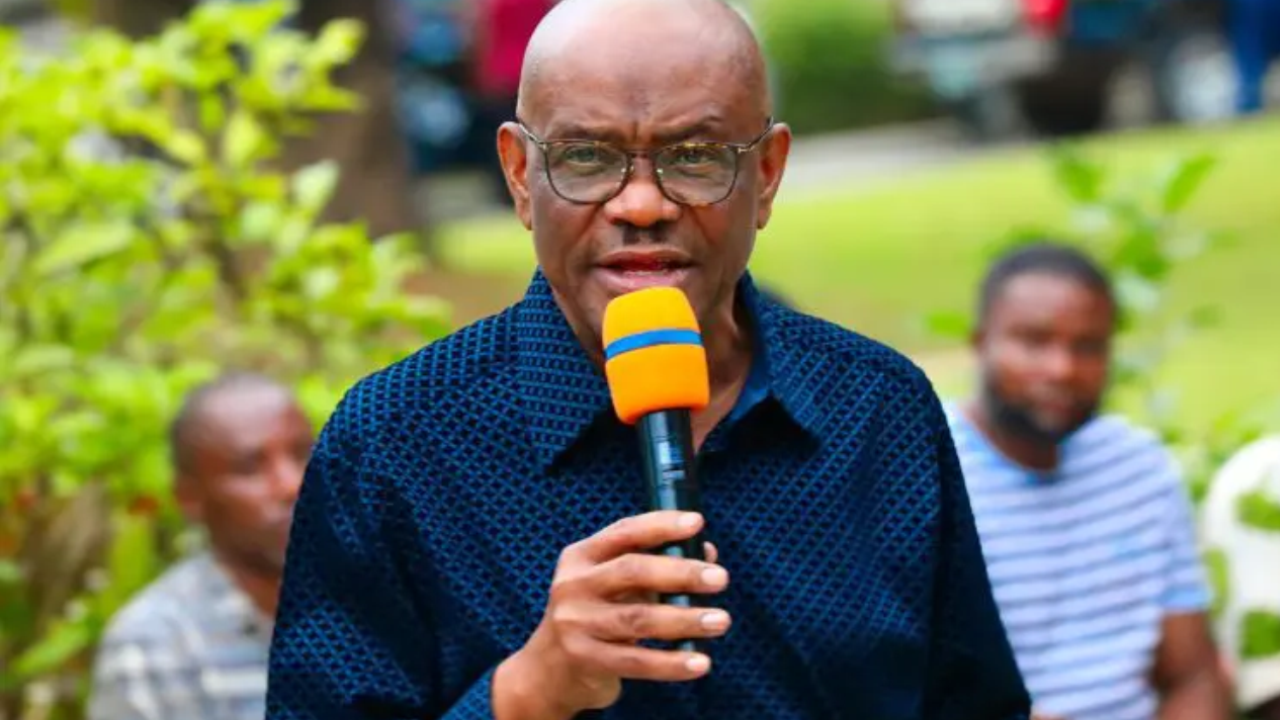

The Federal Capital Territory Minister Nyesom Wike has cited Governor Siminalayi Fubara’s attempt to build an independent political structure early in his tenure as the main catalyst behind their political falling-out and the widening infrastructural gap between Rivers State and Lagos.
Speaking on Saturday during a media chat monitored in Port Harcourt, the former Rivers State governor expressed surprise that his successor began dismantling the alliance that brought him to power within his first 100 days in office, arguing that Governor Fubara isolated himself by listening to detractors who wished to see him fail.
Dismissing rumours that the rift stemmed from financial demands, Mr Wike questioned why he would ask his successor for funds when his current ministerial budget is comparable to that of a state government. He highlighted that under his stewardship, the FCT’s monthly Internally Generated Revenue (IGR) surged from ₦8 billion to ₦40 billion.
“If it was money that we were asking for we wouldn’t have prevailed… The budget of the FCT this year is about N1.8 trillion, So I don’t know what I want. All I wanted was to look, stabilize the place, move on from where I stopped, and I laid a fantastic foundation so we will be able to compete with Lagos,” Mr Wike said.
The minister recalled laying an infrastructural foundation intended to help Rivers State rival Lagos, citing key projects such as 12 commissioned flyovers and the multi-billion-naira Port Harcourt Ring Road. He expressed disappointment that political missteps derailed this vision, adding:
“You have to think well. If you make the mistake which he made by saying that yes I can do it alone, those who gave me support I don’t care, I don’t need them. Those who didn’t want you will come in. There is no way anybody who didn’t want you to be in a position will want you to succeed.”
Mr Wike contrasted his administration’s month-long project commissioning drives with what he described as a loss of direction under the current leadership, concluding that Governor Fubara’s early structural moves ultimately widened the development gap with Lagos.