

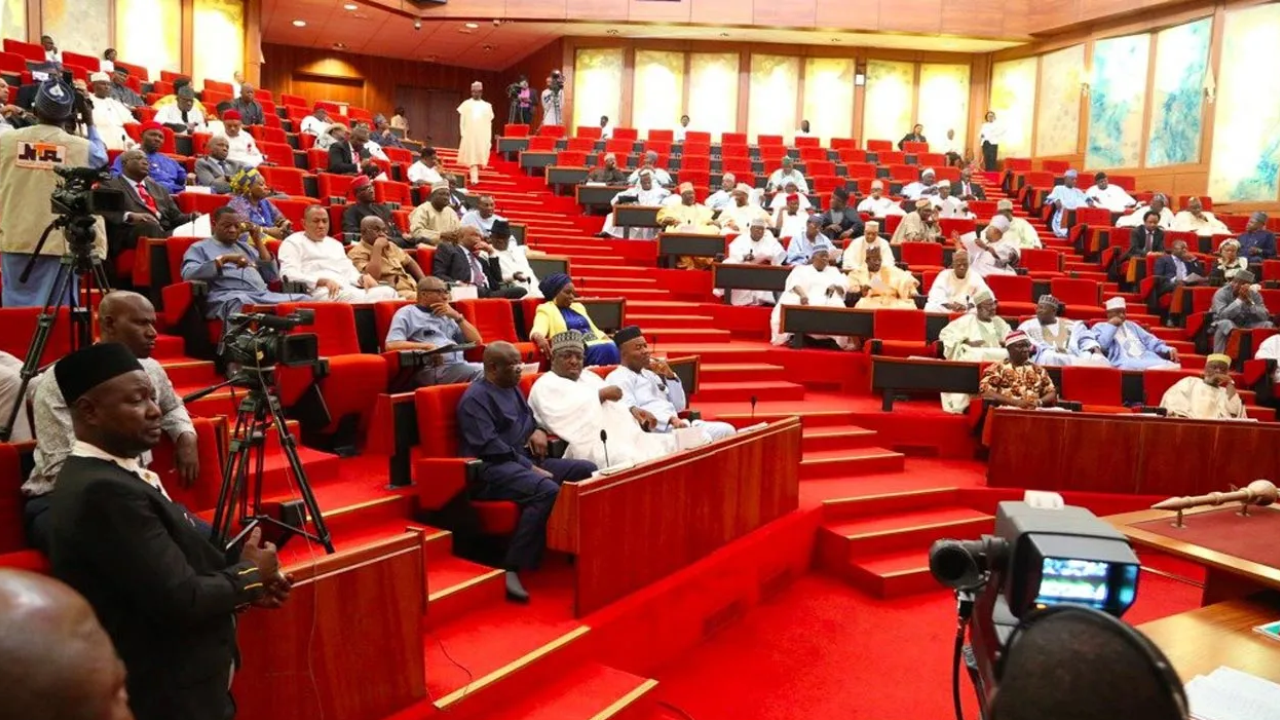

The Senate has dismissed widespread reports linking Senate Leader Opeyemi Bamidele and Media Committee Chairman Yemi Adaramodu to a controversial legislative proposal penalising preaching, hawking, and trading inside commercial vehicles.
Addressing the online backlash in an exclusive interview, Senator Adaramodu faulted claims circulating on social media that he and Bamidele introduced the measure.
“Even erroneously, some people are saying… that it is the Senate Leader, Senator Opeyemi Bamidele and Senator Yemi Adaramodu who proposed it. How? I find that baffling because I did not raise my hand, nor did the Senate Leader,” Adaramodu said. “Notwithstanding, we are in the Senate together and take responsibility for anything that comes up.”
The outcry followed the Senate’s passage of the Federal Road Safety Corps (FRSC) Amendment Bill 2026, which retains a ₦50,000 fine for trading or street evangelism in commercial vehicles. Designed to improve road safety enforcement and reduce accidents, the measure has drawn fierce criticism from religious groups, civil society organisations, opposition parties, and members of the public, who labelled the penalties insensitive given Nigeria’s economic climate.
However, the Senate previously clarified that the contentious clause is not a fresh ban on religious activities, but a long-standing provision of the FRSC Act in effect since 2007. The upper chamber added that the amendment originated in the House of Representatives, not from Bamidele.
Clarifying the legislative process, Adaramodu cautioned the public against assuming that every debate or motion on the National Assembly floor automatically becomes law, noting that resolutions on motions remain merely advisory.
He explained that proposed bills must navigate rigorous stages: initial debates, public hearings, concurrence between both chambers, and joint conference committee harmonisation to resolve differences. Once both the Senate and the House of Representatives agree on a final version, the legislation undergoes scrutiny by the Federal Ministry of Justice and relevant ministries before being presented for presidential assent.
“So it is until then that we can now say that a law is made or not,” Adaramodu stressed, urging the public not to mistake general chamber contributions for enacted legislation. “And before that can be done, it will go through so many tests, platforms and stages before it can become law.”