

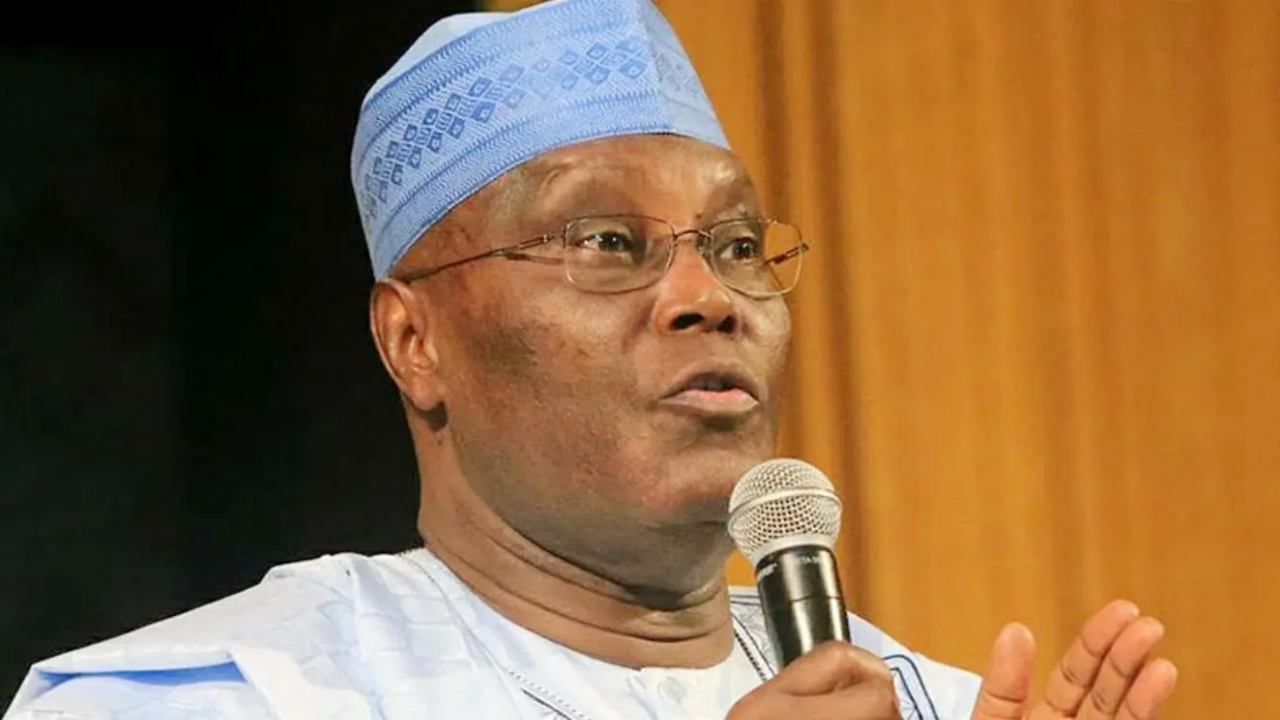

Former Vice President Atiku Abubakar has criticised the Federal Government following revelations that ₦1.08 trillion was allocated to the Federal Cooperative College in Oji River, Enugu State, under the 2026 Appropriation Act, describing the arrangement as “a blueprint to defraud Nigerians.”
The controversy erupted after budget monitoring group Tracka, a public accountability initiative operated by BudgIT, disclosed that the institution had been tasked with executing 2,791 capital projects across all 36 states and the Federal Capital Territory.
Tracka’s findings add to long-standing concerns raised by civil society groups regarding budget distortions and the practice of assigning constituency projects to agencies lacking the mandate or capacity to oversee them.
In a statement issued on Tuesday by his Senior Special Assistant on Public Communication, Phrank Shaibu, the African Democratic Congress (ADC) presidential candidate praised Tracka’s exposure of the scheme, arguing that it completely undermines the administration’s claims of fiscal discipline during a period of widespread citizen hardship caused by subsidy removals, tax hikes, and mounting debt.
“Nothing exposes the hollowness of that claim more than a budget that turns a federal cooperative college into one of Nigeria’s largest project-implementing agencies,” Atiku stated.
While questioning how an educational institution dedicated to cooperative training was transformed into a pseudo-ministry, Atiku highlighted that the allocated schemes span roads, drainage systems, streetlights, markets, sports facilities, dialysis centres, ambulances, and recycling plants nationwide.
“It defies logic, public finance principles and the institution’s statutory mandate that a college established to promote cooperative education should suddenly become responsible for roads, drainage systems, solar streetlights, markets, football pitches, dialysis centres, ambulances, water schemes, recycling plants, empowerment programmes and thousands of other projects scattered across the federation,” the statement read.
Demanding an immediate explanation regarding who nominated, approved, and would oversee the vast project list, the former vice president accused the government of operating an opaque financial framework at the public’s expense.
“This government operates a medieval financial system in which the national treasury is treated as the personal purse of the ruler—available to be spent, diverted or dispensed at will, with little regard for transparency, accountability or the public interest,” he noted.
Atiku maintained that a government asking citizens to make sacrifices while channeling over a trillion naira through a single college cannot credibly claim to be curbing waste.
“A government that plans to spend ₦1.08tn through a cooperative college cannot claim to be fighting waste or promoting fiscal discipline,” he added. “It looks less like governance and more like a blueprint to defraud Nigerians.”