

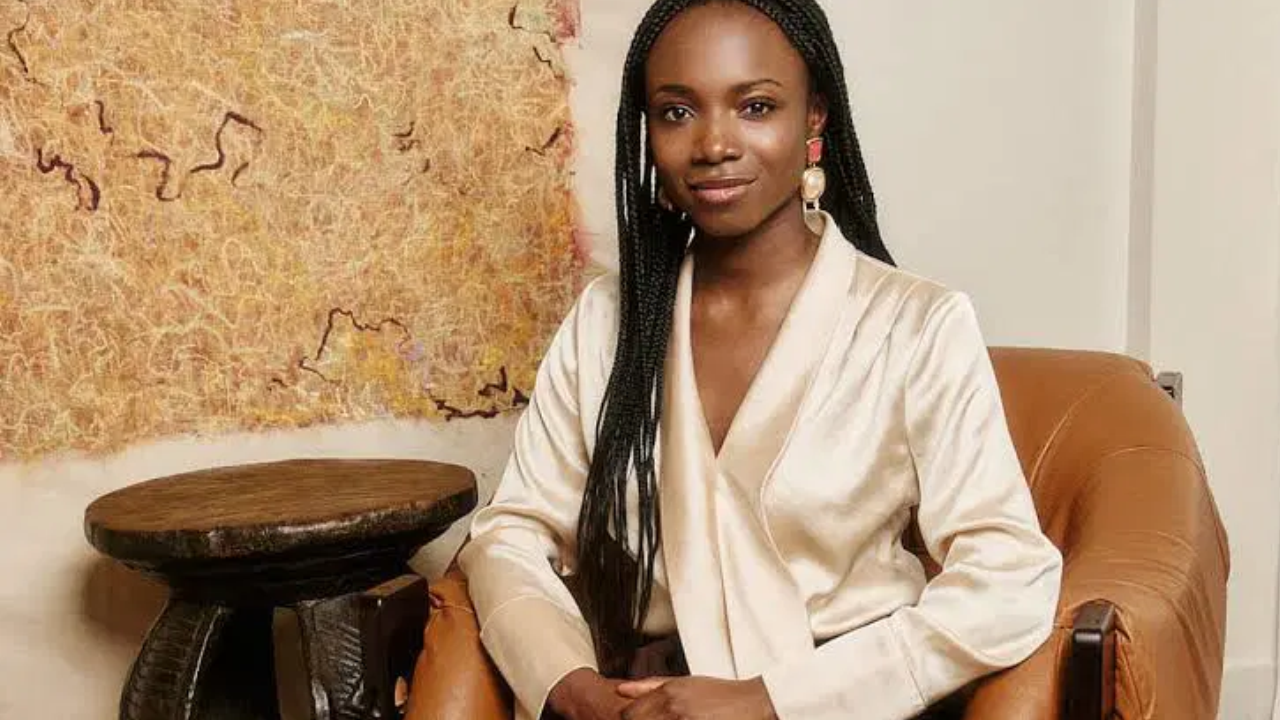

A Harvard-educated engineer has raised $7 million (£5.5 million) in seed funding for the world’s first patent-pending hair braiding device, drawing a waiting list of more than 7,000 salons.
Yinka Ogunbiyi, a Nigerian-American entrepreneur, developed HaloBraid alongside co-founder David Afolabi to modernise a protective styling process relied upon by 20 million Americans every two months.
Details of the project gained widespread online traction on Friday after the U.S. Mission in Nigeria highlighted Ogunbiyi’s work on X (formerly Twitter), featuring footage from her 2025 presentation at the Harvard Innovation Challenge.
The seed funding round was led by Alexis Ohanian’s venture firm Seven Seven Six, alongside backing from AlleyCorp and Bling Capital.
The concept originated during the COVID-19 pandemic when Ogunbiyi, who holds a joint Master of Science and MBA from Harvard and previously developed smart home consumer electronics, spent four days installing her own knotless braids.
“Imagine if every time you got your hair cut, it took six hours, cost $200 to $300 and gave your hairstylist arthritis at age 29,” Ogunbiyi said during her presentation. “This is what it’s like to get your hair braided. And I know this firsthand because I’ve worn braids all my life.”
She noted that despite being the most popular choice for millions of Black women, the core technique behind hair braiding had seen no major technological innovation in 5,000 years.
Driven by machine learning algorithms, the device automates the time-intensive mid-section of the weave. The automated assistant works alongside professionals rather than replacing them: the stylist prepares the initial root anchor, the mechanism carries out the repetitive weaving sequence at five times normal speed, and the stylist steps back in to finish and seal the tips.
Addressing concerns regarding potential cultural dilution, Ogunbiyi emphasised that the automation target is purely physical strain. By absorbing the most repetitive motions, the technology helps stylists avoid long-term joint damage while cutting salon visits from hours down to minutes.
Company data indicates that nearly 95 per cent of surveyed Black women would choose protective hairstyles more frequently if salon appointments were less physically demanding and time-consuming.