

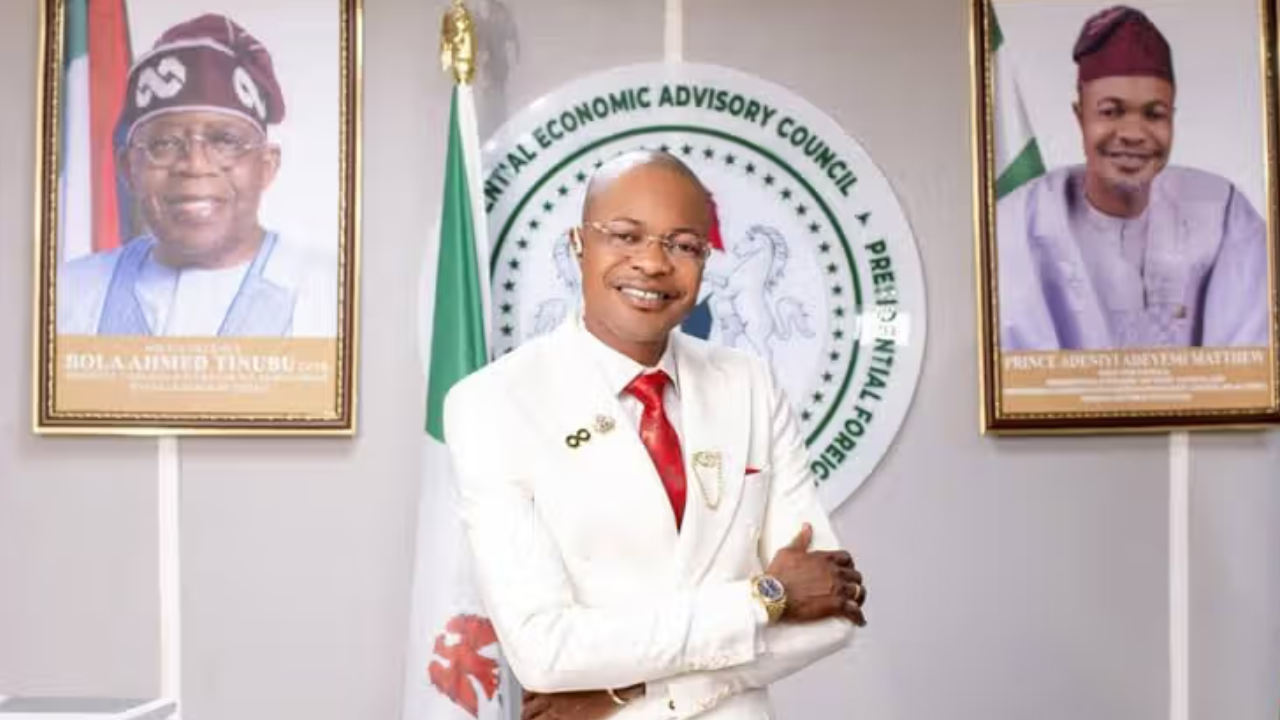

A local businessman has recounted to a House of Representatives Ad-hoc Committee how he was duped out of ₦400 million after being promised a government contract by a self-styled senior official.
Gbenga Collins, Managing Director of Divine Dopacy Nigeria Limited, revealed that he handed over the funds to Adeniyi Adeyemi, who purported to be the Director-General of the Presidential Foreign Investment Promotion Council (PFIPC). The money was purportedly meant to facilitate the contract and secure mobilisation funds to refurbish and furnish Adeyemi’s official residence.
The revelations emerged during an ongoing parliamentary probe into the creation and operations of the alleged fake agency. Committee Chairman Yusuf Gagdi confirmed that lawmakers intend to question Adeyemi privately at a later date so as not to compromise parallel investigations by the Economic and Financial Crimes Commission (EFCC), the Independent Corrupt Practices and Other Related Offences Commission (ICPC), and the police.
Describing how he fell victim to the scheme, Collins explained that he first met Adeyemi, a fellow Ogbomoso indigene, at a community event in December 2024. Adeyemi subsequently invited him to Abuja in early 2025 under the guise of a business opportunity.
Collins, a graduate of the Federal University of Agriculture, Abeokuta, noted that it was his first trip to the nation’s capital. Upon arrival, an official Lexus SUV bearing Federal Government registration plates picked him up from the airport and conveyed him to an office within the Federal Secretariat.
Once there, Adeyemi claimed to head both the Presidential Economic Advisory Council and the PFIPC. Collins recalled seeing armed police officers, a security detail, and several high-profile dignitaries waiting to meet the alleged official, creating a convincing illusion of legitimacy.
The following day, Adeyemi led a convoy of over five vehicles with security escorts to inspect the residential property earmarked for renovation.
Convinced by the display of authority, Collins agreed to execute the project. By April 2025, Adeyemi had issued him a contract award letter, project scope, and an official agreement. However, he told Collins that a ₦400 million deposit was required to demonstrate the company’s financial capability and fast-track mobilisation funds.
Having no prior experience with federal procurement, Collins admitted to lawmakers that he bypassed all formal statutory procedures required under the Public Procurement Act.
Trusting the process, he raised the capital from business associates who relied on his personal account of Adeyemi’s elaborate operation. The funds were paid in instalments between May and July 2025 into two separate corporate bank accounts: ₦380 million to World Entrepreneurs Limited at Guaranty Trust Bank, and the remaining ₦20 million to Sunshine Confectionery and Catering Services at Access Bank. Collins confirmed the funds were transferred strictly in local currency.
Promised that mobilisation fees would be released by August 2025, Collins was instead met with repeated delays, which Adeyemi initially attributed to pressing security matters.
After further promises of a November payout failed to materialise and Adeyemi became unreachable, Collins engaged an Abuja-based solicitor who immediately alerted him to the fraud.
A formal petition was submitted to the EFCC on 13 November 2025, which Collins adopted six days later. Law enforcement officers subsequently disclosed that Adeyemi had consistently evaded EFCC summonses, with his legal team citing ill health to explain his absence.
Under questioning from the committee, Collins strongly rejected the suggestion from Chairman Gagdi that the ₦400 million constituted a bribe, maintaining that he acted entirely in good faith and viewed the sum as a standard administrative prerequisite. He further noted that during a separate interview at the police Cybercrime office, Adeyemi did not deny receiving the money.
Appealing for legislative intervention, an emotional Collins revealed that the fallout from the scheme has ruined his business, ruined his reputation with creditors, and forced him to sell off personal assets.
“I just want to beg the Chairman and the honourable members to help me talk to all the agencies involved because I have been frustrated, especially by those people who gave me the money,” Collins told the panel. “My business is not going well again.”