

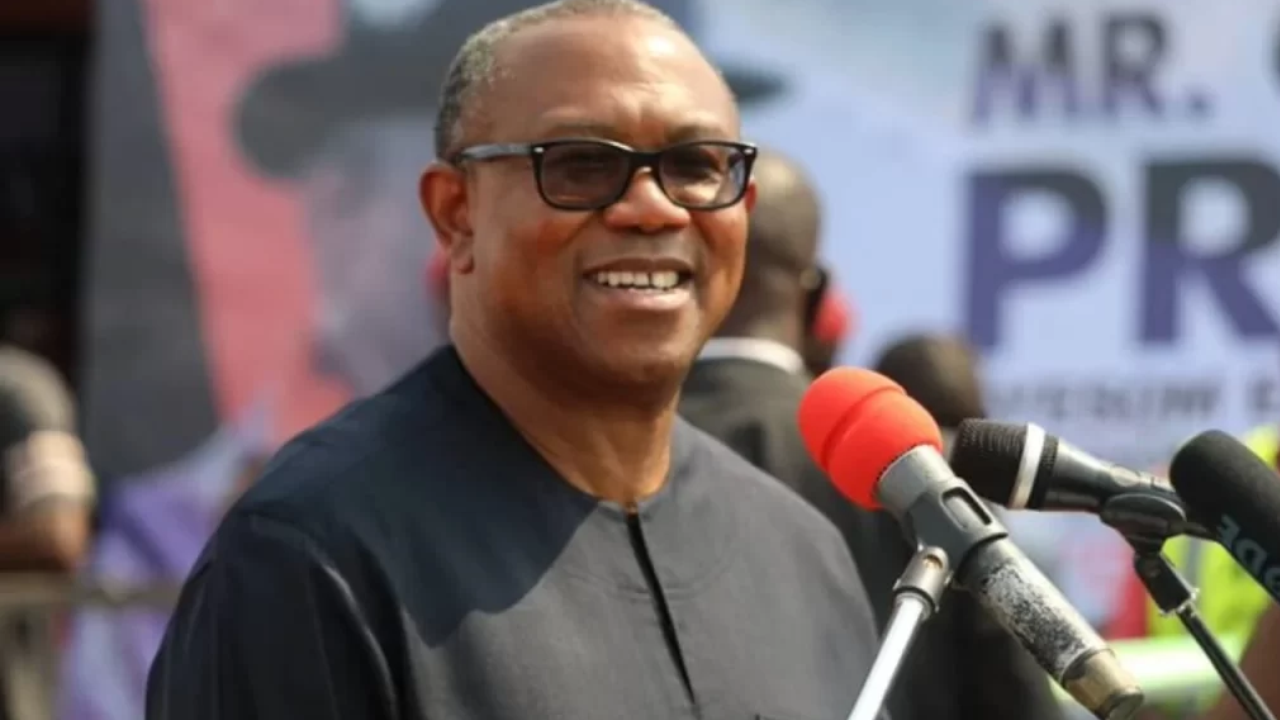

Former Anambra State Governor and Nigeria Democratic Congress (NDC) presidential candidate, Peter Obi, has firmly rejected claims that his administration left the state burdened with debt, maintaining that he exited office in March 2014 without incurring commercial loans, issuing bonds, or leaving unpaid obligations to verified workers and contractors.
Speaking on Arise TV’s Prime Time programme on Thursday, Obi set out to correct recent allegations from the Anambra State Government. State officials, including Commissioner for Information and Value Reorientation Dr Law Mefor, had called on Obi to withdraw from the 2027 presidential race, asserting that eight foreign borrowings under his tenure left an outstanding balance of approximately 127.4 billion naira (123.77 million dollars) as of 30 June 2026, alongside liabilities at the Water Corporation and disputed ecological funds.
Obi reaffirmed his standing pledge to abandon his political ambitions if proven to have left Anambra in debt or with unpaid certified liabilities.
“Let me categorically state again: I, Mr Peter Obi, did not approach any financial institution to borrow money or issue bonds on behalf of Anambra State in the eight years I was in government.
“On the day I left office, the government of Anambra State, which I headed, was not owing any salary, gratuity, or pension to those scheduled to be paid by the state government.
“We were not owing any contractor or supplier who executed his job, certified and verified—not one,” he said.
Obi argued that attributing these foreign liabilities to his government stems from a fundamental misunderstanding of public sector accounting. He clarified that the facilities in question were not commercial bank loans sought by Anambra, but concessionary multilateral interventions arranged by the Federal Government and the World Bank to support states demonstrating exceptional performance in education. Anambra was selected alongside Ekiti and Bauchi states for the support.
Crucially, Obi stressed that undrawn approval amounts do not constitute active debt left behind by an outgoing administration. He noted that key disbursements under initiatives such as the State Education Programme Investment Project (SEPIP) took place long after he left office. Furthermore, he maintained that even if those funds had been accessed during his tenure, the state held more than sufficient financial reserves to absorb them completely.
“Even if I had gone to a bank and borrowed money—even if I had gone to a bank and borrowed money, but I did not spend the money, you cannot call it debt I left.
“Assuming I have gone to the bank and said, ‘Bank A, borrow me loan, Give me a loan of N10 billion. And they gave me a loan of 10 billion Naira, and I only drew down 500 million; you cannot now say I’m owing 10 billion because you know the amount. That’s why I said it is not proper public sector accounting,” he explained.
Addressing how such claims are framed to the public, Obi questioned why an incoming administration would highlight liabilities while ignoring substantial assets.
“I didn’t go to obtain it. But what I’m saying, assuming that your father left you with an inheritance of N100m, and suddenly somebody comes up and says your father is owing N10m. Are you going to go to the market and say your father left you with debts? Unless there’s another thing, you’ll be unfair,” he said.
To substantiate his record of fiscal discipline, Obi cited testimony from former Debt Management Office (DMO) Director-General, Abraham Nwankwo, who led the agency for ten years. Obi recalled that Nwankwo invited him to chair his send-off ceremony, where the former DMO chief publicly acknowledged Obi’s unique record among state executives.
“To even confirm this: the then DG… Abraham Nwankwo, who was DG of Debt Management Office, served for 10 years. The day he left office, at his send-off party, he invited me as the chairman, and he announced to everybody at that party that the reason why he made me chairman is that I was the only governor in Nigeria who never came to his office for approval to borrow money,” Obi stated.