

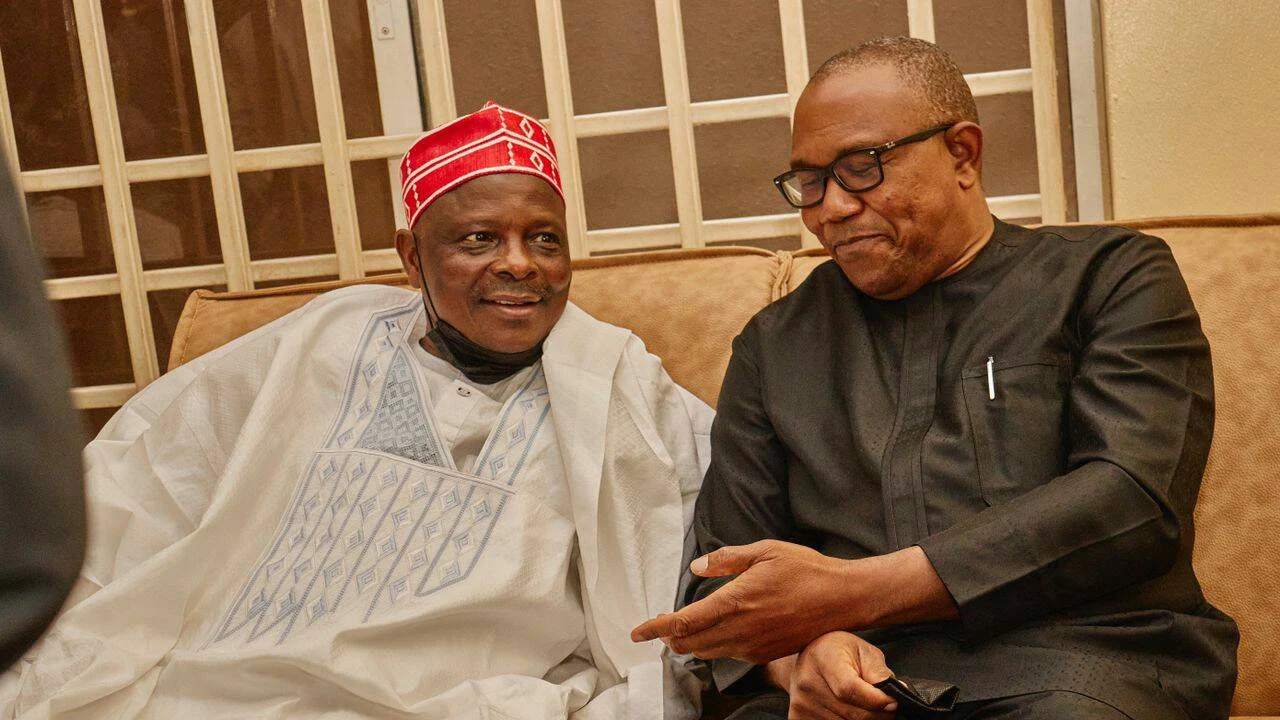

The Nigeria Democratic Congress (NDC) has locked horns with one of its prominent support platforms following the controversial launch of a 59-member Presidential Campaign Council for the Peter Obi and Rabiu Kwankwaso ticket.
In response to opposition from party leaders, the Obi-Kwankwaso (OK) Movement has affirmed the validity of its council, maintaining that its internal affairs and leadership framework remain fully operational and independent of the main party.
This dispute unfolds alongside the NDC’s official launch of support group registrations ahead of the 2027 elections. The party’s National Publicity Secretary, Osa Director, announced that the national headquarters in Abuja would handle all registrations free of charge, following reports of state chairmen demanding unauthorised fees. Director warned that any state chapter or official collecting money or registering groups independently would face strict disciplinary measures.
Addressing the friction in a statement issued in Abuja, Director General of the OK Movement, John Ughulu, clarified that the group operates as a distinct political entity that does not rely on the NDC or its presidential candidate for financial backing.
Ughulu stated: “The mechanism through which the OK Movement operates is founded upon its established principles and values. Consequently, the movement does not and has not required any financial support from His Excellency, Peter Obi, the NDC presidential candidate, or the NDC to establish or operate its own organisational structure.
The rift escalated after NDC leadership disowned the newly unveiled campaign council, asserting that only the party’s National Working Committee possesses the authority to form an official presidential campaign team. However, Ughulu dismissed the party’s claims to control, explaining that the movement’s model deliberately prevents financial dependence on Obi, Kwankwaso, or the NDC structure. He added that the group makes no claim of superiority over the party, recognizing both as separate bodies with their own constitutional frameworks.
Ughulu further maintained that neither national nor party laws grant the NDC control over outside political groups. He said: “There is no provision of the Constitution of the Federal Republic of Nigeria, nor any provision of the NDC Party Constitution brought to our attention, that automatically vests exclusive authority in a political party or its candidate to determine the internal organisational structure of an independent political organisation. The NDC Party is entitled to constitute its own campaign structures, just as the OK Movement is entitled to organise and manage its own affairs within the limits of applicable law.”
Ughulu stressed that their stance aims to protect organisational identity rather than invite conflict with the NDC hierarchy. He noted: “Our position is not about confrontation. It is about clarity, institutional respect and the protection of organisational independence. If the party chooses to work with the principles, values and structures of the OK Movement, we remain prepared to engage constructively. However, the movement cannot be compelled to abandon its principles or organisational identity to satisfy the ambitions or preferences of any individual or group.”
He concluded: “The meaning of ‘independent’ is straightforward. The NDC has the right to constitute and manage its own campaign structures. Likewise, an independent political organisation has the right to constitute and manage its own organisational structures, subject always to the law.”