

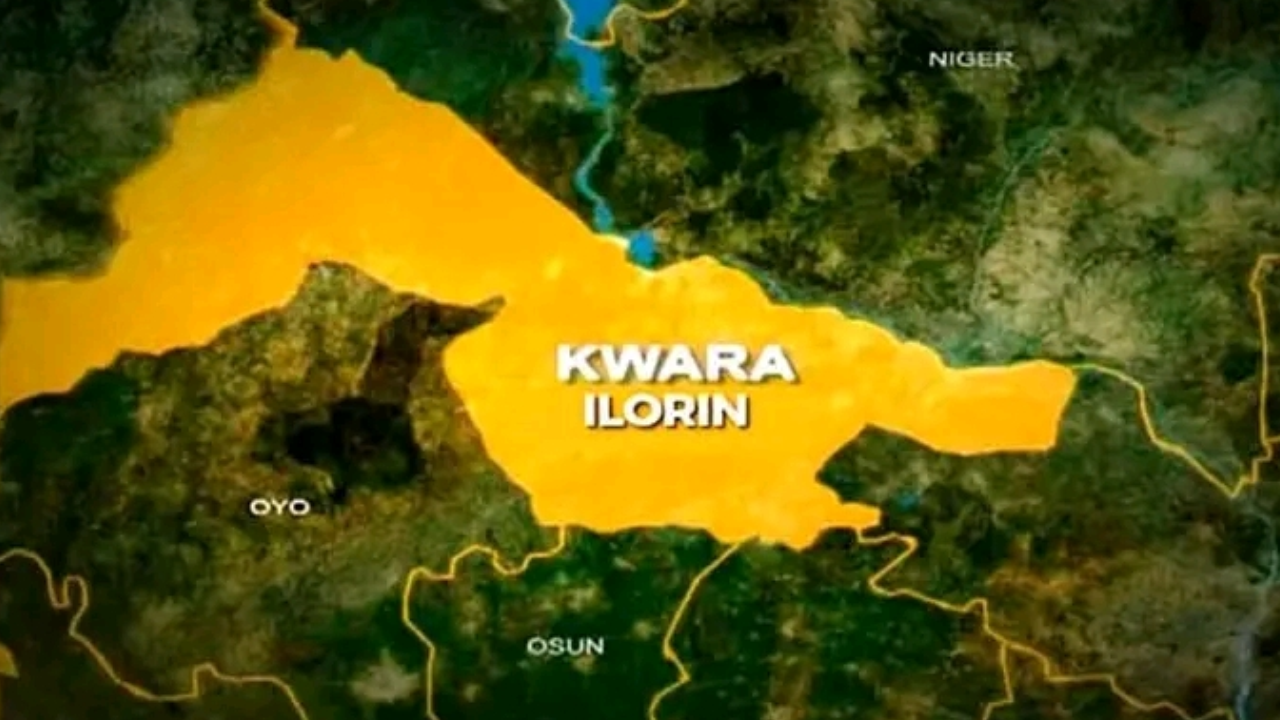

The security situation across the Kaiama and Baruten Local Government Areas of Kwara State has reached a critical stage, as community leaders warn that escalating violence could degenerate into a full-scale insurgency similar to those in the North-East and North-West unless governments intervene immediately.
Speaking at a press conference in Abuja on Saturday, Alhaji Umar Gunu, President of the Abuja Branch of the Kaiama Development Association (KDA), raised the alarm on behalf of the KDA and the Batombu Unity and Development Initiative. He revealed that over 500 people have been killed, thousands displaced, and multiple communities repeatedly targeted since early 2026.
A central demand of the pressure groups is the immediate rescue of the 176 people, including women, nursing mothers, and children, abducted during the 3 February attack on Woro and neighbouring Nuku communities, where more than 200 residents were slaughtered.
Gunu stated: “The attack on Woro remains one of the darkest chapters in our recent history… Since then, we have received no meaningful update on their condition or whereabouts, and we have seen no evidence that any sustained operation has been mounted to bring them home.”
The community leader revealed that violence has since spilled into several other localities, including Tungan Maje, Kemanji, Tungan Aboki, Karonji, Sekugbe, Kenugbe, and Yashikira, where armed men recently raided the Emir’s palace and abducted his wives and children. He explained that intelligence reports suggest the crisis has transcended conventional banditry, pointing to links between local armed groups and wider Sahelian jihadist networks.
“Our situation can no longer be treated as an isolated local security problem. It bears disturbing similarities to the early stages of the insurgency that engulfed North-East Nigeria and banditry in the North-West,” Gunu cautioned.
Despite making up over half of Kwara State’s total landmass and serving as a key agricultural zone, Kaiama and Baruten remain the only two local government areas without direct paved road access to Ilorin, the state capital. Gunu pointed out that this infrastructure deficit heavily favours the insurgents, who launch attacks and retreat into surrounding forests while security forces struggle to traverse the terrain.
“Our poor road infrastructure has compounded this crisis,” he noted, adding that “better roads are no longer simply a development issue; they are an urgent security imperative.”
Addressing the broader impact on the region, Gunu highlighted collapsed markets, closed businesses, lost access to education, and severely disrupted healthcare across displaced farming communities. He also voiced concerns that the approaching political campaigns for the 2027 general elections might cause politicians to ignore the humanitarian crisis.
The groups called on the federal government, the Kwara State Government, the National Assembly, security agencies, and international bodies to take decisive measures. These include rescuing all abductees, clearing terrorist camps in and around the Borgu Game Reserve, providing relief to displaced populations, and constructing vital access roads.
Gunu concluded the briefing by declaring: “The people of Kaiama and Baruten are not asking for special treatment. We are asking for what every Nigerian is entitled to: security, dignity, equal citizenship, and the protection guaranteed by our Constitution… The time to act is now, before more lives are lost, more communities disappear, and more of our people are forgotten.”