

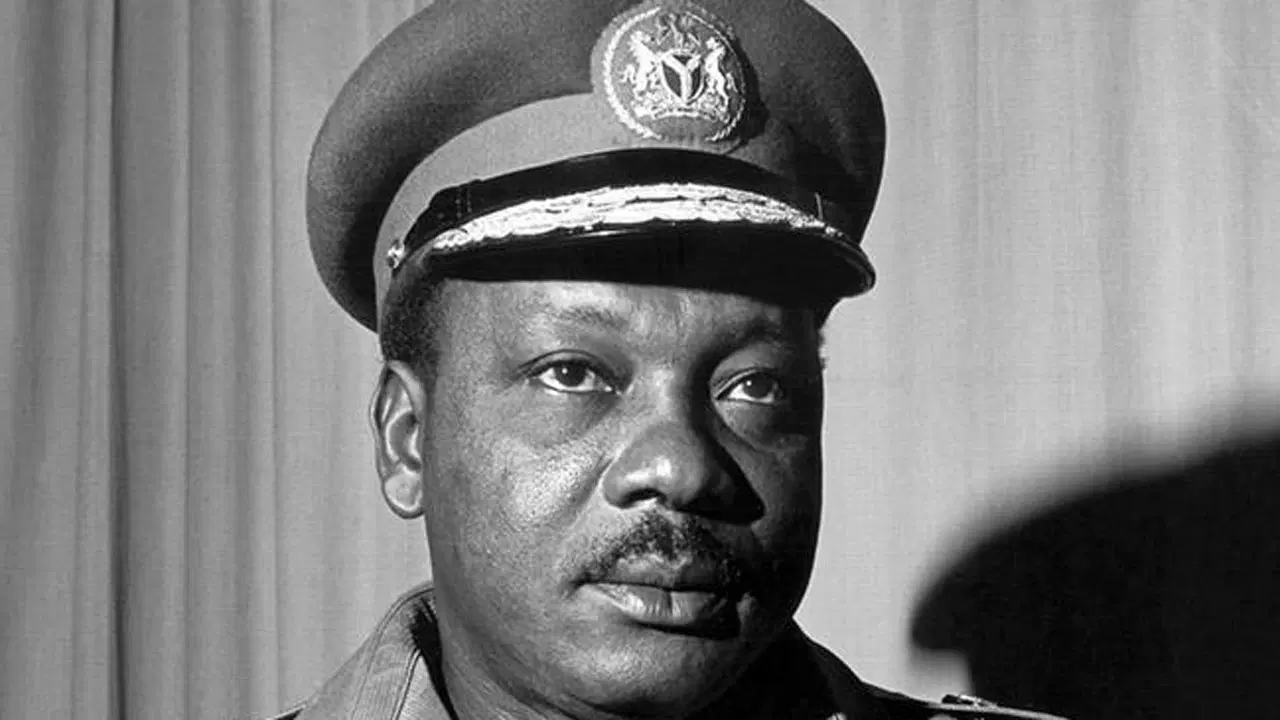

The family of Nigeria’s inaugural military Head of State, Major General Johnson Aguiyi-Ironsi, has called on the Federal Government to issue an official apology, provide compensation, and foster genuine reconciliation over his assassination six decades ago.
Aguiyi-Ironsi’s brief tenure ended violently on 29 July 1966 when he was murdered alongside his host, Lieutenant Colonel Adekunle Fajuyi, during a mutiny by northern soldiers known as the July counter-coup.
He had assumed power on 16 January 1966, stepping in to quell a mutiny after a bloody coup claimed the lives of key national leaders. However, his subsequent centralisation of state authority under Decree 34 and a failure to prosecute the January plotters sparked deep resentment among northern military officers, culminating in his overthrow.
Speaking in an interview on Arise News on Thursday, the head of the family, Imo Aguiyi-Ironsi, insisted that his uncle was completely blameless in the events that led to his death, emphasizing that he was merely a detribalised leader caught in the crossfire of his duty.
“He occupied the seat of head of state for only six months, and he was taken away from us. Not because of a sin he committed, because he wasn’t part of the January 1966 coup,” he stated.
Describing the late General as a visionary leader, Imo Aguiyi-Ironsi explained that his uncle was simply tasked with taking control of the nation as its most senior military officer, a duty that ultimately cost him his life.
“I think the family needs apology. The family needs to be compensated. We need sincere apology. We need sincere reconciliation,” he said.
The family head expressed hope that those in positions of power were listening to the appeal and would finally take meaningful steps to address the historical grievance.