

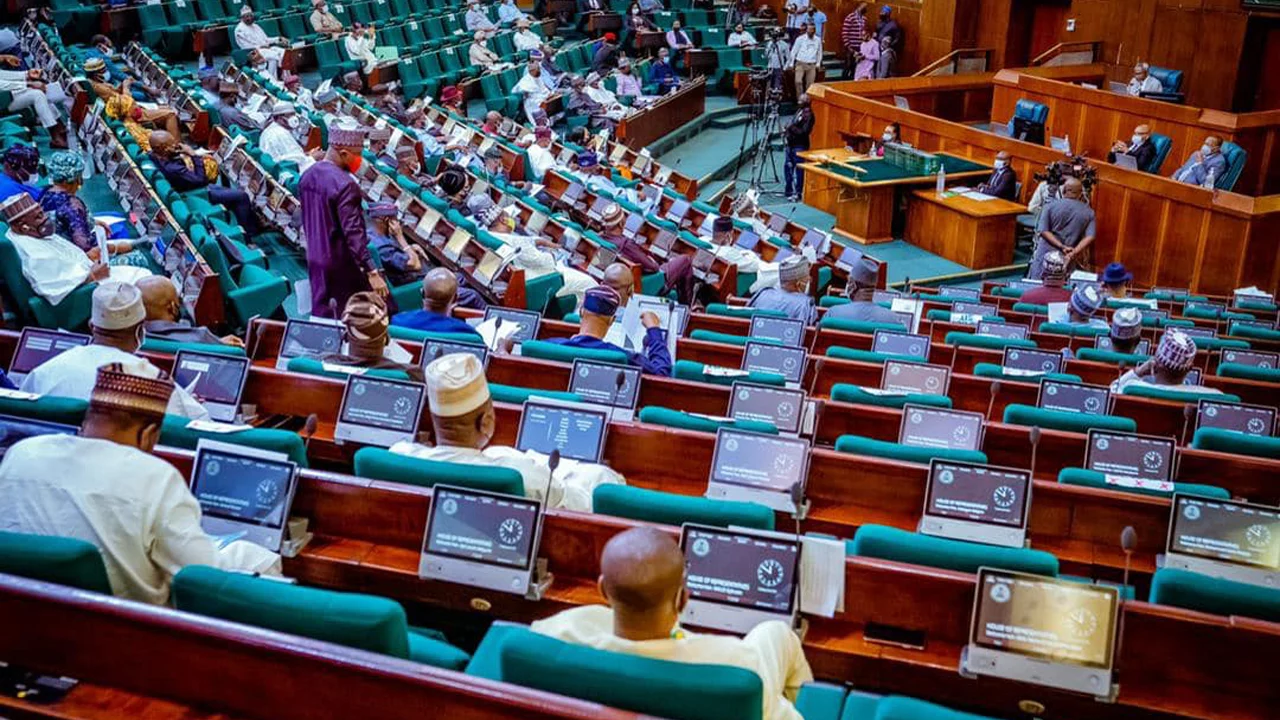

The House of Representatives Ad Hoc Committee is currently probing how falsified documents, including counterfeit presidential approvals, fake Acts of the National Assembly, and forged correspondence, were used to set up and operate the non-existent Presidential Foreign Investment Promotion Council (PIFPC) and the Presidential Economic Advisory Council.
Appearing before lawmakers, the Accountant-General of the Federation (AGF), Shamseldeen Ogunjimi, revealed that a “hijacked” letter purportedly from the presidency misled his office into granting official status to the fake body.
“The letter that was received by the Treasury was respectfully addressed as coming from the State House. That letter was never issued by the State House,” Ogunjimi stated.
Despite the council seeking an establishment grant of ₦27.4 billion, requesting self-accounting status, and attempting to open bank accounts, the AGF confirmed that no public funds were disbursed.
“It is important to note that no funds were released under salaries, overhead, capital, or any form of intervention or special allocation to the council,” Ogunjimi told the committee. He added that while the Central Bank of Nigeria opened two domiciliary accounts for the council, these remained inactive as regulatory conditions were never met.
The committee also questioned how civil servants became attached to the fraudulent agency. Ogunjimi explained that two officers assigned to the Office of the Chief Economic Adviser in 2010 and 2013 were effectively absorbed when the fake council took over the office premises.
“It was when all this matter came to light that I got to know that two of our staff were actually working or being absorbed by the agency. We never knew,” Ogunjimi admitted, noting that three additional staff members were deployed later after the fake agency requested five.
Interactions between the AGF’s office and the entity began in November 2024 following a request bearing a State House reference number to create an administrative code. The Treasury processed the request and notified both the State House and the Auditor-General’s office, assuming the correspondence was genuine.
Lawmakers expressed grave concern over how the phantom agency bypassed multiple layers of government oversight.