

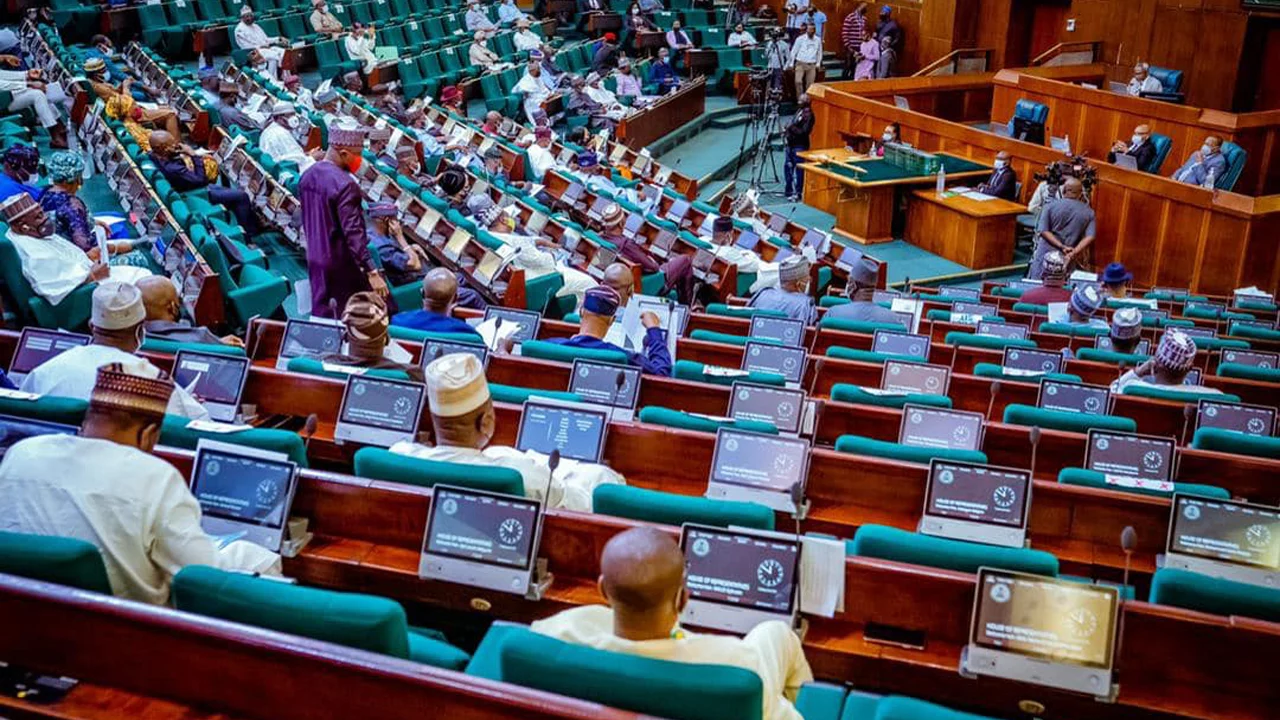

A chaotic session in the House of Representatives on Thursday culminated in the passage of the Constitution Alteration Bill for State Police, following a dramatic walkout by opposition lawmakers over alleged breaches of legislative protocol.
Despite fierce pushback from the minority caucus, the executive bill transmitted by President Bola Tinubu secured the mandatory two-thirds majority required for constitutional amendments. The proposed reform aims to overhaul Nigeria’s security architecture by decentralising law enforcement to combat widespread insurgency, kidnapping, and banditry across the country.
Deputy Speaker and Chairman of the House Committee on Constitution Review, Benjamin Kalu, lauded the development as a historic shift toward localised policing and improved intelligence gathering. He emphasized that the vote provides the baseline framework, while finer operational details—such as recruitment, funding, and accountability—will be resolved in future legislation.
“We must not allow the pursuit of perfection to become the enemy of meaningful progress,” Kalu urged during his presentation.
The session deteriorated into a rowdy contest when Speaker Tajudeen Abbas bypassed the customary clause-by-clause consideration of the bill’s 26 provisions, opting instead for a single voice vote for the entire document.
Prior to calling the vote, Speaker Abbas announced that 311 lawmakers, exceeding the required 240-vote threshold, supported the measure, including 211 All Progressives Congress (APC) members, 65 physically present opposition members, and 35 virtual participants.
However, minority lawmakers accused the leadership of violating Section 9(2) of the 1999 Constitution and internal House rules, which demand individual two-thirds approval for every clause. Protests erupted when Minority Leader Frederick Agbedi was denied a point of order to contest the procedure, prompting opposition members to exit the chamber as Speaker Abbas repeatedly gavelled for order.
Addressing journalists after the walkout, minority caucus spokesman Afam Ogene challenged the legitimate quorum of the vote, noting that official attendance registers were ignored.
“We were shocked to hear names being read out that we do not know where they came from,” Ogene stated, stressing that attendance logs are the sole legal measure of a sitting’s composition.
Despite their walkout, opposition leaders maintained they support the concept of decentralised policing but object to passing a flawed framework without adequate scrutiny.
In a formal letter dated July 22, 2026, addressed to the Speaker, the minority caucus cautioned against establishing an “unfunded constitutional mandate” that could overwhelm state budgets. To address the financial burden, the caucus recommended reallocating 15 per cent of the Federal Government’s share of the Federation Account directly to the states.
“The minority caucus unequivocally supports the principle of state police. Our concern is not against state police; it is against adopting an incomplete constitutional framework,” the letter read.
The caucus called on the House leadership to temporarily suspend the process and recommit the bill for a technical review involving legal experts, fiscal authorities, and security agencies to fix jurisdictional and governance gaps.
“Nigeria deserves the right state police framework that is constitutionally sound, adequately funded and capable of withstanding future legal and operational challenges,” the caucus added.
The push for state-controlled law enforcement has remained one of Nigeria’s most polarising debates for over two decades. Proponents maintain that a centralised force is ill-equipped for local security threats, while critics warn that state governors could weaponise local police against political opponents.
While the House approval represents a significant hurdle cleared, the bill still faces a lengthy constitutional path. To become law, the legislation must be harmonised with the Senate’s version, ratified by at least 24 of the 36 State Houses of Assembly, and ultimately receive presidential assent.